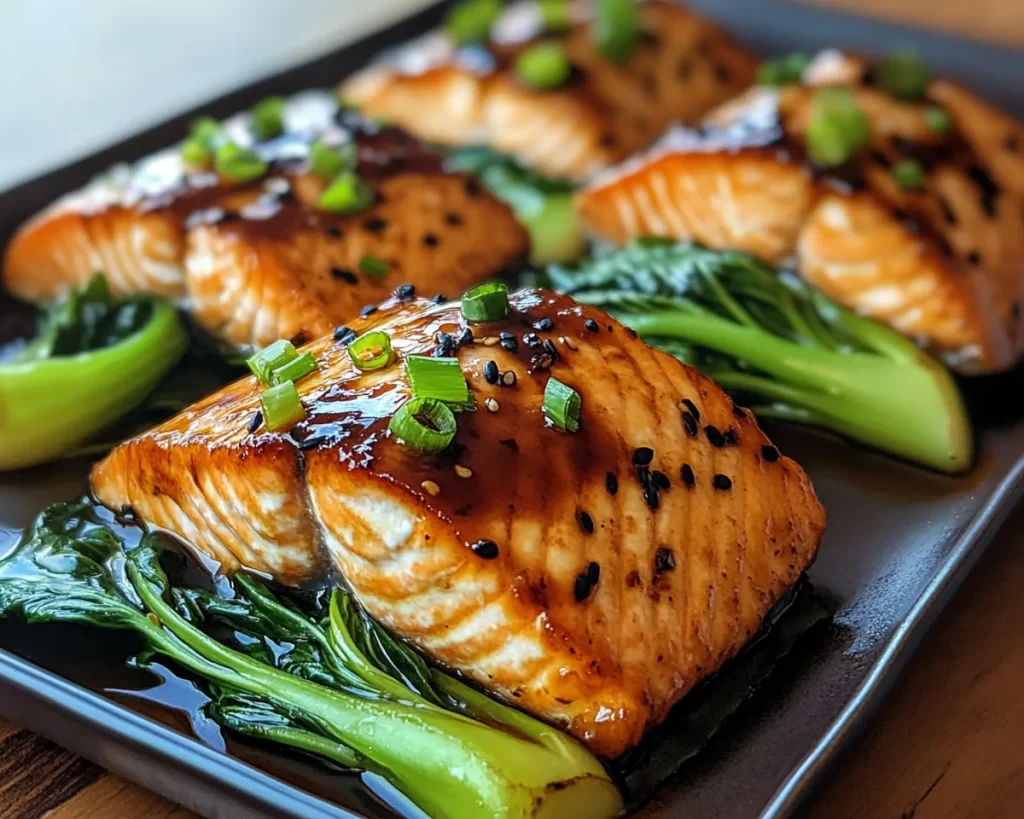
Prep time: 10 minutes
Cook time: 10 minutes
Total time: 20 minutes
Servings: 2
If you’re looking for a delicious yet quick meal idea, look no further! This Salmon Recipes: Miso Glazed Salmon with Baby Bok Choy is your perfect option. In just 20 minutes, you can whip up something that tastes gourmet without requiring culinary school skills. The combination of savory miso and tender salmon, paired with fresh baby bok choy, brings a burst of flavor that will satisfy anyone—ideal for busy parents, kitchen beginners, or those engaging in healthy eating!
What Is Salmon Recipes: Miso Glazed Salmon With Baby Bok Choy in 20 Minutes?
This recipe is a delightful, flavorful dish that combines baked salmon fillets glazed in a rich miso sauce served alongside crisp-tender baby bok choy. It’s a meal that balances nutrition and taste, showcasing how easy it can be to create something special in a short amount of time. Miso, fermented soybean paste, lends its unique umami flavor to the salmon, while the bok choy provides an excellent source of vitamins and minerals. These two components come together to create a beautifully plated meal that is as pleasing to the eye as it is to the palate.
Why You’ll Love This
This Miso Glazed Salmon with Baby Bok Choy is not only quick to make, but it’s packed with health benefits and flavor. The salmon offers high-quality protein and omega-3 fatty acids essential for a balanced diet. The miso glaze adds an extra depth of flavor, making even the simplest ingredients shine. Additionally, baby bok choy is an excellent crunchy green that takes just minutes to cook, making this dish perfect for a weeknight dinner. You can prepare everything in one sheet pan, minimizing cleanup and effort, which is perfect for busy families or anyone short on time.
Ingredients You’ll Need
- 2 salmon fillets (about 6 ounces each): Salmon is rich in omega-3 fatty acids, which are beneficial for heart health.
- 3 tablespoons white miso paste: This paste adds a savory richness to the sauce, enhancing the flavor of the salmon.
- 1 tablespoon soy sauce: Soy sauce contributes saltiness and depth of flavor to the glaze.
- 1 tablespoon maple syrup: Adds a hint of sweetness balancing the savory notes.
- 2 cloves garlic, minced: Garlic provides aromatics that amplify the overall taste.
- 1 tablespoon sesame oil: This oil infuses the dish with a nutty aroma and flavor.
- 2 cups baby bok choy, halved: A crisp vegetable that cooks quickly and provides nutrients.
- Salt and pepper to taste: Enhances the flavors of your ingredients.
- Sesame seeds, for garnish: Adds a finishing touch and extra crunch.
How to Make
- Preheat the oven: Preheat your oven to 400°F (200°C). This helps cook the salmon evenly and quickly.
- Prepare the miso glaze: In a small bowl, mix together the white miso paste, soy sauce, maple syrup, minced garlic, and sesame oil until smooth. The mixture should have a creamy consistency that clings well to the salmon.
- Arrange the salmon: On a baking sheet lined with parchment paper or lightly oiled, place the salmon fillets skin-side down. Brush generously with the miso glaze, making sure to coat the top well. Reserve a little glaze for drizzling later.
- Add the bok choy: Surround the salmon with the halved baby bok choy, cut side up. Drizzle lightly with olive oil, and sprinkle with salt and pepper. The bok choy will soak up the flavors of the glaze during cooking.
- Bake in the oven: Transfer the baking sheet to the preheated oven and bake for about 10 minutes. The salmon should become opaque and flake easily with a fork, while the bok choy should be tender yet still crisp.
- Garnish and serve: Once cooked, remove from the oven and drizzle with remaining glaze. Sprinkle sesame seeds on top before serving, and add a side of steamed rice or quinoa if desired.
Variations & Substitutions
Spicy Miso Glazed Salmon: For those who enjoy a little heat, add a teaspoon of sriracha or your favorite hot sauce to the miso glaze. This variation introduces a delightful kick that pairs beautifully with the salmon. If you don’t have white miso paste, you can substitute with red miso for a bolder flavor. Just keep in mind that red miso is saltier, so reduce the soy sauce slightly.
Vegan Option: To create a vegan-friendly version, swap out the salmon for tofu. Press tofu to remove excess moisture, then slice it into medium-thick pieces. Follow the same glaze preparation steps and bake until the tofu is heated through. You could also use tempeh for a nuttier flavor profile.
Seasonal Vegetables: Feel free to mix in various seasonal vegetables. Asparagus or snap peas could work beautifully. Go ahead and toss in whichever veggies you love or have on hand!
Common Mistakes to Avoid
When cooking salmon, one common mistake is overcooking it, leading to a dry texture. Always keep an eye on the cooking time; salmon is perfectly done when it flakes easily with a fork and has a slightly translucent center. If you’re uncertain, investing in a cooking thermometer can be a game-changer. The ideal internal temperature for salmon is around 145°F (63°C).
Another challenge arises with the bok choy. It’s easy to overcook it, resulting in mushy greens. To avoid this, ensure you add it to the oven with just enough time to become tender while still retaining some crunch. If you find that you’re often ending up with overcooked vegetables, consider stir-frying as an alternative method of cooking bok choy for a quick and effective result.
Storage, Freezing & Reheating Tips
To ensure food safety, always store your leftover salmon and bok choy in airtight containers within two hours of cooking to prevent the growth of bacteria. You can safely keep them in the fridge for 3 to 4 days. When reheating, opt for the oven or stovetop instead of the microwave to maintain texture. The oven method works best—set it at 350°F (175°C) and reheat for about 10-15 minutes, just until warmed through. The salmon can also be frozen for up to three months; however, the quality of the bok choy may suffer when frozen. If you plan to freeze, do so with only the salmon.
Frequently Asked Questions
Can I use fresh salmon fillets instead of frozen?
Yes, fresh salmon fillets are ideal for this recipe. They cook more evenly and have better texture compared to their frozen counterparts. If using frozen, ensure they are completely thawed before cooking for the best results.
What sides go well with this dish?
This Miso Glazed Salmon pairs excellently with steamed rice or quinoa, which can soak up the flavorful glaze. Additionally, consider serving it alongside a simple salad or perhaps vegetable stir-fry to complement the salmon and add variety.
Is this recipe healthy?
Absolutely! Salmon is packed with essential nutrients, including omega-3 fatty acids, protein, and various vitamins. Pairing it with bok choy offers a low-calorie, nutrient-dense side that enhances the dish’s health profile. It’s a fantastic choice for those aiming for wholesome meals.
How do I know when the salmon is done cooking?
One telltale sign of perfectly cooked salmon is its color; it should turn from translucent to a light pink. Using a fork, you can also check if it flakes easily. If you have a cooking thermometer, the internal temperature should reach 145°F (63°C) for safe consumption.
Can I make the miso glaze ahead of time?
Yes, the miso glaze can be made in advance. Store any leftover glaze in an airtight container in the fridge for up to one week. It can also be used as a marinade for vegetables or other proteins, making it a versatile addition to your cooking repertoire.
Conclusion:
In just 20 minutes, you can indulge yourself in an exquisite dish of Miso Glazed Salmon with Baby Bok Choy. Perfect for busy weeknights yet impressive enough for guests, this recipe is a delightful explosion of flavor and health benefits. Whether you’re a seasoned cook or just starting on your culinary journey, this dish is uncomplicated and packed with zest. Enjoy every bite, and don’t hesitate to get creative with your variations!