Prep time: 15 minutes
Cook time: 10 minutes
Total time: 25 minutes
Servings: 6 servings
Italian Pasta Salad with Olive Oil is the perfect dish for hot summer days, picnics, and family gatherings. Imagine biting into a cold, refreshing salad filled with various colorful vegetables and al dente pasta, all coated in a luscious olive oil dressing. This dish evokes nostalgia, taking many of us back to family barbecues or potlucks where everyone eagerly awaits to taste each other’s specialties. Not only does it taste incredible, but it also embodies the spirit of Italian cuisine: simple ingredients creating an exquisite meal.
In this article, you will learn how to make a classic Italian Pasta Salad with Olive Oil, understand the various components that make it so delectable, and explore ways to customize it to fit your own taste preferences or dietary needs. With easy step-by-step instructions, you’ll find that this dish is not just simple but also highly versatile, enabling you to become the star of your next gathering.
What Is Italian Pasta Salad with Olive Oil?
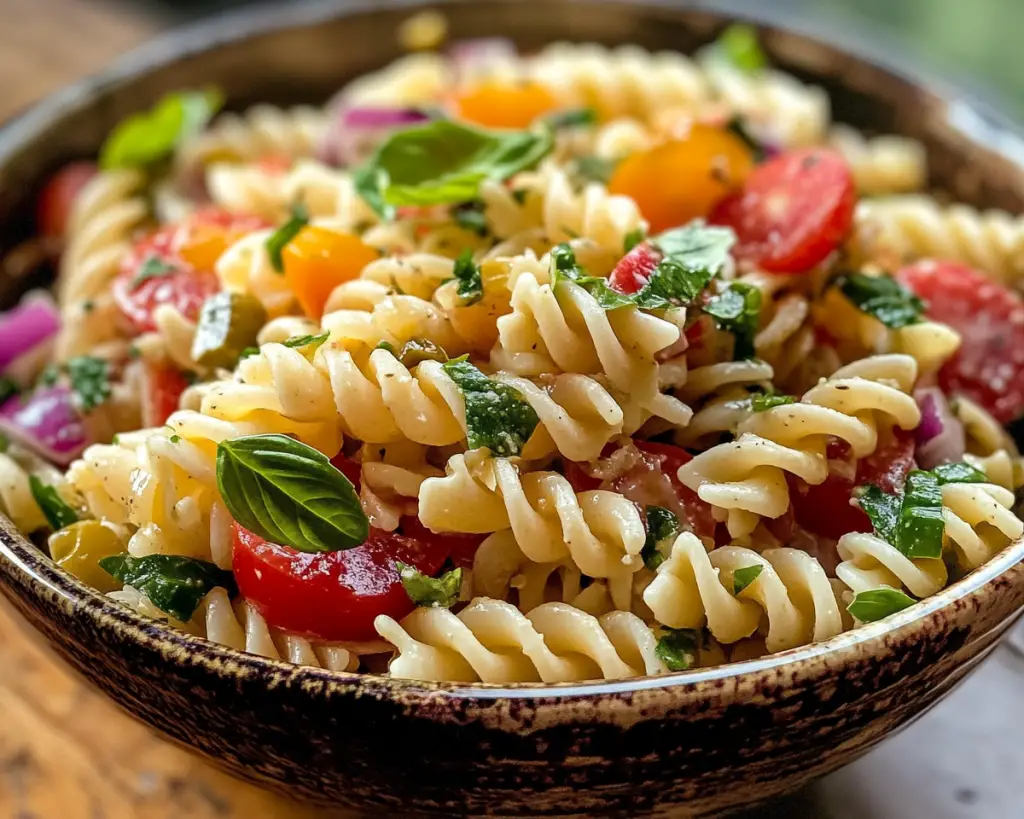
Italian Pasta Salad with Olive Oil originated from the traditional Italian antipasto, which is a starter. The fusion of flavors, textures, and colors gives this salad its unique appeal. It’s typically made with short pasta, like penne or fusilli, which holds dressing and toppings brilliantly, ensuring that each bite is packed with flavor. The combination of fresh vegetables—such as bell peppers, cherry tomatoes, and olives—with the rich, fruity notes of olive oil creates a beautiful contrast that is both satisfying and refreshing.
The flavor profile is incredibly well-balanced. The olive oil adds richness, while vinegar lends a tangy note. Fresh herbs like basil and parsley infuse a fragrant element that ties all the ingredients together seamlessly. Additionally, the crunch of vegetables enhances the overall experience, making each mouthful an exciting mix of textures ranging from tender pasta to crisp vegetables and chewy olives. This salad is as beautiful to look at as it is enjoyable to eat, making it ideal for any occasion.
Why You’ll Love This
You will fall in love with Italian Pasta Salad with Olive Oil for many reasons. First and foremost, the taste is simply delightful. The combination of fresh ingredients and quality olive oil ensures each bite bursts with flavor, making it a crowd-pleaser at any gathering. Moreover, it is embarrassingly easy to prepare. You can whip it up in under 30 minutes, making it an excellent choice for busy weeknights or impromptu get-togethers.
The cost-effectiveness of this dish cannot be overlooked either. With inexpensive ingredients, you can create a lush and filling meal without straining your wallet. Healthy eating enthusiasts will appreciate the nutritional value: it is packed with vitamins from the vegetables and healthy fats from the olive oil, making it not just a delicious option but also a wholesome one. Furthermore, this Italian Pasta Salad is incredibly versatile. You can easily modify it to cater to dietary restrictions or preferences, ensuring that anyone can enjoy it.
Despite its charms, many may have misconceptions about pasta salads, believing them to be heavy or dull. The truth is, when made correctly, especially with the added vibrancy of fresh ingredients and a flavorful dressing, they can be light, refreshing, and utterly scrumptious. You’ll realize that Italian Pasta Salad with Olive Oil is a standout dish that should have a permanent spot in your recipe rotation.
Ingredients You’ll Need
- Short Pasta: Use penne, fusilli, or rotini for texture. They hold the dressing and other ingredients well.
- Cherry Tomatoes: Juicy and sweet, they add a burst of flavor. You can substitute with grape tomatoes or diced regular tomatoes.
- Cucumber: Provides a crisp texture. English cucumbers work well, but feel free to use any variety you have on hand.
- Bell Peppers: Any color will do. Red, yellow, or orange will add sweetness and color. Avoid green as they can be bitter.
- Red Onion: Adds a sharp bite, balancing the freshness of vegetables. You can substitute with green onions for a milder flavor.
- Olives: Kalamata or green olives give a briny flavor that elevates this salad. If you prefer, you might use capers for a similar taste.
- Feta Cheese: Adds creaminess and saltiness. For dairy-free options, use tofu or omit entirely.
- Olive Oil: A key ingredient, it brings richness. Use extra-virgin for the best flavor.
- Red Wine Vinegar: It provides acidity to balance the richness of the olive oil. Apple cider vinegar is a good substitute.
- Fresh Herbs: Basil and parsley are great choices. They brighten the dish. Dried herbs can be used in a pinch.
- Salt and Pepper: Basic seasonings that enhance all the flavors.
Understanding the role of each ingredient is crucial to achieving that perfect balance of flavor and texture. Always choose the freshest ingredients possible to make this salad shine.
How to Make
1. **Cook the Pasta**: Start by boiling a large pot of salted water. Once the water is at a rolling boil, add your chosen short pasta. Cook according to the package instructions until al dente, typically around 7-10 minutes. Stir occasionally to prevent sticking. Once done, reserve a cup of the pasta water, then drain the pasta in a colander and rinse it under cold water to stop the cooking process. This step also makes sure the pasta doesn’t clump together.
2. **Prep the Vegetables**: While your pasta is cooking, chop the vegetables. Dice the cherry tomatoes in half and slice the cucumber into bite-sized pieces. If you’re using bell peppers, remove the seeds and chop them into small cubes. Finely chop the red onion. Aim for uniform sizes to ensure even mixing and ease of eating. This will help maintain consistent textures throughout the salad.
3. **Mix the Dressing**: In a small bowl, whisk together 1/2 cup of extra-virgin olive oil and 1/4 cup of red wine vinegar. Add salt and pepper to taste. You can also include a squeeze of lemon juice for extra brightness. If you’re a fan of garlic, a crushed garlic clove can be added for depth of flavor. Remember to taste and adjust seasoning as necessary; the dressing is crucial for enhancing your salad.
4. **Combine Ingredients**: In a large mixing bowl, combine the drained pasta, chopped vegetables, olives, and crumbled feta cheese. Pour the dressing over the top and mix gently but thoroughly to ensure all ingredients are well coated. If the salad seems dry, add a splash of the reserved pasta water to loosen it up. This will keep your salad moist and flavorful.
5. **Add Herbs**: Finally, chop your fresh herbs and fold them into the salad. Fresh basil and parsley will add an aromatic element that’s just lovely. Toss everything together gently, making sure to incorporate all ingredients without mashing them. Allow the salad to sit for at least 15-30 minutes before serving. This resting time helps all the flavors meld together beautifully, providing a more harmonious taste experience.
6. **Serve**: Once marinated, serve the salad chilled or at room temperature. It can be garnished with additional herbs or a sprinkle of feta cheese if desired. For an added crunch, top with roasted pine nuts or sunflower seeds. Enjoy the refreshing burst of flavors that come together in this Italian Pasta Salad with Olive Oil!
Variations & Substitutions
Vegetarian Variation: For a heartier salad, consider adding chickpeas or cannellini beans. These legumes not only boost the protein content but also enhance the salad’s texture, making it even more satisfying. This variant is perfect for those who want a filling meal without using meat. You can substitute the feta cheese with a dairy-free version or simply omit it entirely to maintain the lightness of the dish.
Summer Vegetable Variation: Don’t shy away from seasonal produce! You can include summer favorites like zucchini, asparagus, or even artichoke hearts. Simply grill them lightly or sauté if desired. These vegetables introduce wonderful flavors, making your pasta salad both vibrant and nutritious. The summer veggie twist works splendidly for barbecues or outdoor gatherings, offering a delightful way to utilize fresh produce.
Gluten-Free Variation: To make this dish gluten-free, simply swap out the standard pasta for a gluten-free version made from rice, quinoa, or lentils. There are many delicious gluten-free pasta options available that will absorb the dressing well and maintain that satisfying bite. This adaptation opens the door for those with dietary considerations to enjoy the meal without feeling left out.
Mediterranean Flair Variation: For a more Mediterranean twist, integrate ingredients like sun-dried tomatoes, artichoke hearts, and a sprinkle of capers for a sharper flavor. You can replace the olives with more famous Greek varieties like Kalamata. This variation is full of rich flavors and adds a whole new perspective to the traditional Italian pasta salad, making it perfect for a more sophisticated palate.
Protein-Packed Variation: Want to make this pasta salad more filling? Add grilled chicken, shrimp, or even flaked tuna. These proteins will transform the dish into a complete meal, suitable for lunch or dinner. Consider marinating your proteins first in lemon juice and herbs to enhance the flavor further. This makes the pasta salad not just a side dish but a satisfying main course.
Common Mistakes to Avoid
One common mistake when preparing Italian Pasta Salad is overcooking the pasta. If you cook it too long, it can become mushy, ruining your salad’s texture. Always be sure to follow the cooking time on the package and aim for al dente, which means it should still have a little bite to it. The pasta will continue to soften slightly while cooling.
Another pitfall is skipping the chilling time. Allowing your salad to marinate for at least 30 minutes helps the flavors mingle, resulting in a more flavorful dish. Skipping this step often results in a salad that tastes bland and disconnected.
Finally, be cautious with the dressing. Adding too much olive oil can overpower the dish, while too little can make it dry. Start with smaller amounts of dressing and gradually add more as needed. Always mix thoroughly to ensure every ingredient is dressed evenly.
Storage, Freezing & Reheating Tips
Proper storage is essential for maintaining the freshness of your Italian Pasta Salad. Store leftovers in an airtight container in the refrigerator. It will keep for about 3-5 days, making it perfect for meal prep or quick lunches. Just remember that the pasta may absorb the dressing, making it drier. If this happens, adding a splash of olive oil or vinegar before serving will revive it.
Freezing is not recommended for prepared pasta salad, as it can alter the texture of the vegetables and the pasta itself once thawed. However, you can freeze the components separately. Pasta and vegetables can freeze well for about a month; just be sure to store them in airtight freezer bags. When you’re ready to serve, thaw everything overnight in the refrigerator and reassemble the salad fresh, adding new dressing as desired.
For leftover salad, avoiding reheating is best since it is served cold or at room temperature. Find creative ways to incorporate it into a new meal; for instance, you can mix it into omelets, grain bowls, or even use it as a topping for baked potatoes.
Frequently Asked Questions
Can I make Italian Pasta Salad a day in advance?
Absolutely! In fact, making it a day in advance allows the flavors to meld beautifully. Just be sure to store it in an airtight container in the refrigerator. If you find the pasta has absorbed too much dressing, add a splash of olive oil or vinegar before serving.
What type of pasta is best for this salad?
Short pasta varieties like fusilli, penne, or rotini work best. They hold onto the dressing and vegetables nicely, ensuring that every bite is flavorful. While you can use long pasta, it tends to be less efficient for salad purposes.
Can I add protein to this salad?
Yes, absolutely! Adding grilled chicken, shrimp, or even canned tuna can make this salad a complete meal. Just ensure that the proteins are well-cooked and appropriately seasoned to complement the flavors in the salad.
Is olive oil really necessary for this pasta salad?
Yes, olive oil contributes richness and moisture to the salad. While you can substitute with other oils, such as avocado oil, opting for olive oil enhances the overall Mediterranean flavor and provides healthy fats.
What if I want a vegan option for this salad?
No problem! Simply omit the cheese or replace it with a dairy-free version made from nuts or tofu. Additionally, you can enhance the flavor by increasing the herbs or adding extra vegetables to maintain a satisfying texture and taste.
Conclusion:
Italian Pasta Salad with Olive Oil is a simple yet elegant dish that offers a burst of fresh flavors, making it a fantastic addition to any meal or gathering. The versatility, coupled with its health benefits and ease of preparation, makes it an essential recipe in your culinary arsenal. Whether you stick to the classic version or explore various adaptations, this salad is sure to impress and satisfy. I encourage you to try it, tailor it to your liking, and share it with friends and family. Your next gathering deserves this vibrant and delicious dish!