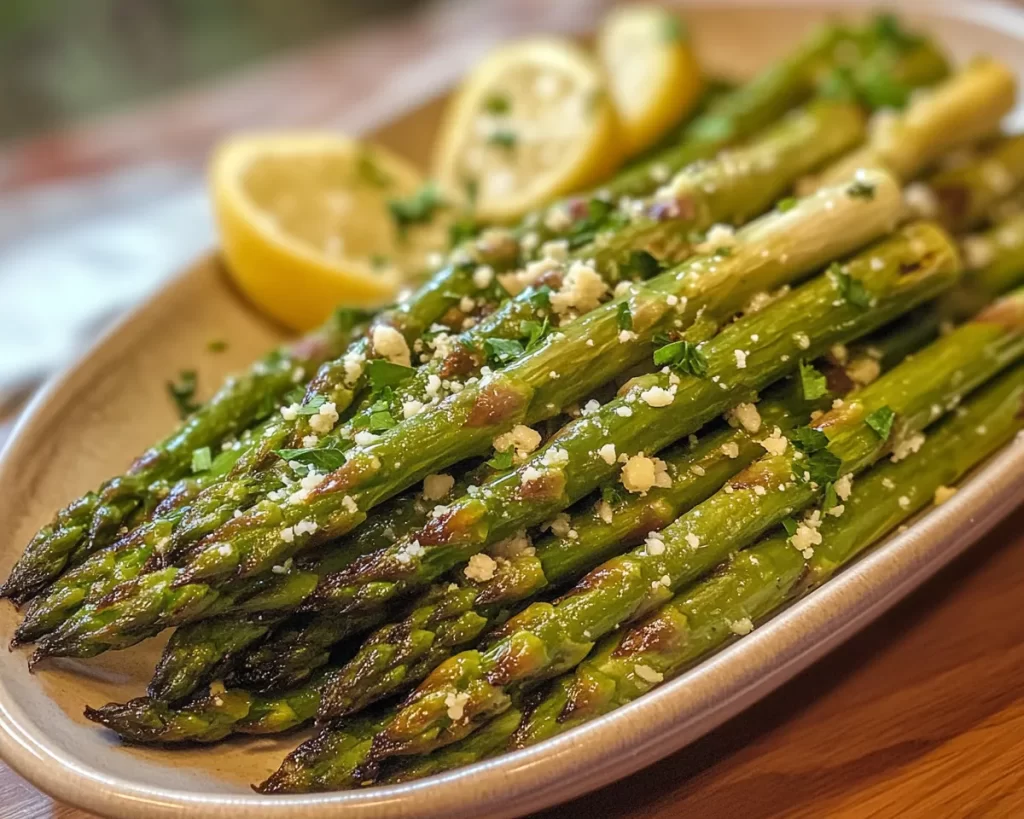
Prep time: 10 minutes
Cook time: 10 minutes
Total time: 20 minutes
Servings: 4 servings
Easter is a time for gathering with family and friends, and what better way to celebrate than with a vibrant and flavorful dish like Lemon Parmesan Roasted Asparagus? This recipe is not only quick and easy to prepare, but it also adds a touch of elegance to your Easter brunch table. The tender asparagus combined with the zesty lemon and rich parmesan creates a delightful side dish that complements any main course. Whether you are cooking for a crowd or just for your family, this dish is sure to impress.
What Is Easter Side Dishes: Lemon Parmesan Roasted Asparagus for Easter Brunch in 20 Minutes?
Lemon Parmesan Roasted Asparagus is a simple yet delicious side dish, expertly designed for Easter brunch. This recipe highlights tender asparagus spears roasted to perfection and seasoned with a vibrant combination of lemon juice and fresh parmesan cheese. The mild flavor of the asparagus pairs beautifully with the tangy lemon and savory parmesan, making it a delightful addition to your Easter feast. The best part? You can whip this up in just 20 minutes, allowing you more time to enjoy the company of loved ones during the holiday.
Why You’ll Love This
You will love this dish not only for its taste but also for the ease of preparation. The bright flavors of lemon and cheese elevate the modest asparagus to a star side dish. It’s an excellent option for busy parents or anyone looking for a quick but impressive recipe. The dish is also adaptable, making it great for varying tastes—whether you want it more cheesy or zesty, you can modify the ingredients accordingly. This recipe is also vegan-friendly; simply swap out the parmesan for nutritional yeast or vegan cheese.
Ingredients You’ll Need
- Asparagus (1 pound): Fresh asparagus is the star of this dish, offering a crisp texture and earthy flavor. Select bright green stalks that are firm and straight.
- Olive oil (2 tablespoons): A good quality extra virgin olive oil will add richness and help to roast the asparagus evenly.
- Fresh lemon juice (2 tablespoons): The bright acidity of lemon juice enhances the flavor profile and gives a refreshing zing to the dish.
- Grated Parmesan cheese (¼ cup): This adds a savory, rich flavor to the dish that complements the earthy taste of the asparagus.
- Salt (to taste): Enhances all the flavors and brings out the natural taste of the asparagus.
- Pepper (to taste): Adds a touch of warmth and complexity, which pairs nicely with the lemon and cheese.
How to Make
- Preheat your oven to 425°F (220°C). This high temperature ensures that the asparagus crisps up beautifully, allowing for a tender inside and a slightly caramelized exterior.
- Prepare the asparagus by rinsing it under cold water to remove any dirt. Trim the woody ends of the asparagus by snapping them off, which is usually where they naturally break.
- In a large bowl, combine the asparagus, olive oil, lemon juice, salt, and pepper. Toss to coat every spear evenly in the mixture, ensuring that the flavors permeate the asparagus.
- Spread the asparagus in a single layer on a baking sheet. Make sure they are spaced out to allow for proper roasting and to prevent steaming.
- Roast in the preheated oven for about 10 minutes. You’ll know it’s done when the asparagus is bright green and tender-crisp. The edges may have a slight browning.
- Remove from the oven and immediately sprinkle the grated parmesan cheese over the hot asparagus. Allow the cheese to melt slightly from the residual heat before serving.
Variations & Substitutions
Garlic-Lemon Asparagus: For an added punch of flavor, consider incorporating minced garlic into the olive oil and lemon juice mixture. The garlic will roast alongside the asparagus, infusing the dish with a delicious aroma and depth of flavor. You can either use fresh garlic cloves or garlic powder as per your convenience.
Vegan Option: If you’re looking to make this dish vegan, simply replace the parmesan cheese with nutritional yeast for a cheesy flavor without dairy. Nutritional yeast is a fantastic substitute that will maintain the dish’s umami richness without the use of animal products.
Asparagus with Balsamic Glaze: For a different flavor profile, you can drizzle the roasted asparagus with balsamic glaze after cooking. The sweet, tangy glaze complements the lemon and parmesan, making for a gourmet twist!
Mixed Vegetables: Try adding other veggies like bell peppers or cherry tomatoes into the mix. They will roast beautifully alongside the asparagus and can add color and extra nutrients to your dish.
Common Mistakes to Avoid
Using old or limp asparagus can lead to a lackluster dish. Always select fresh, firm asparagus spears to ensure the best flavor and texture. Tip: Leave the asparagus in water for a few hours before preparing it; this can rejuvenate wilting spears.
Overcrowding the baking sheet is a common mistake that can lead to soggy vegetables. Warning: Give each asparagus spear enough space; this promotes even roasting and prevents steaming, which can compromise the dish’s texture.
Seasoning too lightly or too heavily can alter the dish’s overall flavor profile. Tip: Start small with the salt and pepper; you can always add more to your taste later.
Finally, not enjoying the dish right after it’s made can be a mistake. The asparagus is best served fresh and hot. Leaving it too long may result in it getting soggy.
Storage, Freezing & Reheating Tips
To store leftover Lemon Parmesan Roasted Asparagus, place it in an airtight container in the refrigerator. It will last for 3 to 5 days. When reheating, use an oven or air fryer to retain the asparagus’s crispness, avoiding a microwave which can make them soggy.
If you need to freeze the cooked asparagus, spread it in a single layer on a baking sheet to freeze before transferring it to a freezer-safe bag. Consume it within 2 to 3 months for optimal flavor and texture.
To reheat frozen asparagus, simply place it in a preheated oven at 350°F (175°C) for about 10–15 minutes or until heated through, ensuring a nice texture remains.
Frequently Asked Questions
Can I use frozen asparagus instead of fresh?
Frozen asparagus can be used, but fresh is recommended for the best flavor and texture. If using frozen, the preparation time might vary, and you may want to consider reducing cooking time slightly to avoid mushiness.
What can I serve with Lemon Parmesan Roasted Asparagus?
This dish pairs well with a variety of main courses, including roasted meats, quiches, or even as a topping for pasta. It adds a fresh, vibrant touch to almost any meal.
Can I prepare this dish ahead of time?
While it is best served fresh, you can prepare the asparagus by washing and trimming it ahead of time. Just store it in the refrigerator until you are ready to roast.
Is this dish gluten-free?
Yes, Lemon Parmesan Roasted Asparagus is naturally gluten-free, making it a great option for those with gluten sensitivities.
What is the best way to season the asparagus?
Season with salt and pepper to taste. You can also add extra herbs like thyme or rosemary for additional flavors. Do not be afraid to experiment with your seasoning to find the flavor profile you love!
Conclusion: This Lemon Parmesan Roasted Asparagus recipe is a beautifully simple yet delicious addition to your Easter brunch table. Perfectly crisp with a delightful zing from lemons and the richness of parmesan, it’s a dish that will quickly become a family favorite. So get ready to impress your guests and savor the flavors of spring with this delightful, easy-to-make side dish. Enjoy!