Prep time: 20 minutes
Cook time: 15 minutes
Total time: 35 minutes
Servings: 4
Coconut shrimp is a delightful dish that brings a taste of the tropics to your kitchen. Imagine juicy, succulent shrimp coated in a crispy, golden-brown crust made of coconut and breadcrumbs. This recipe is perfect for any occasion—from a casual family dinner to a festive gathering. With its combination of sweet coconut and tender shrimp, it’s sure to impress everyone at your table. Not only is it delicious, but making coconut shrimp is also quite simple, making it ideal for busy parents or those who are new to cooking. Let’s dive into the world of coconut shrimp and explore how you can create this scrumptious dish at home.
What Is Coconut Shrimp?
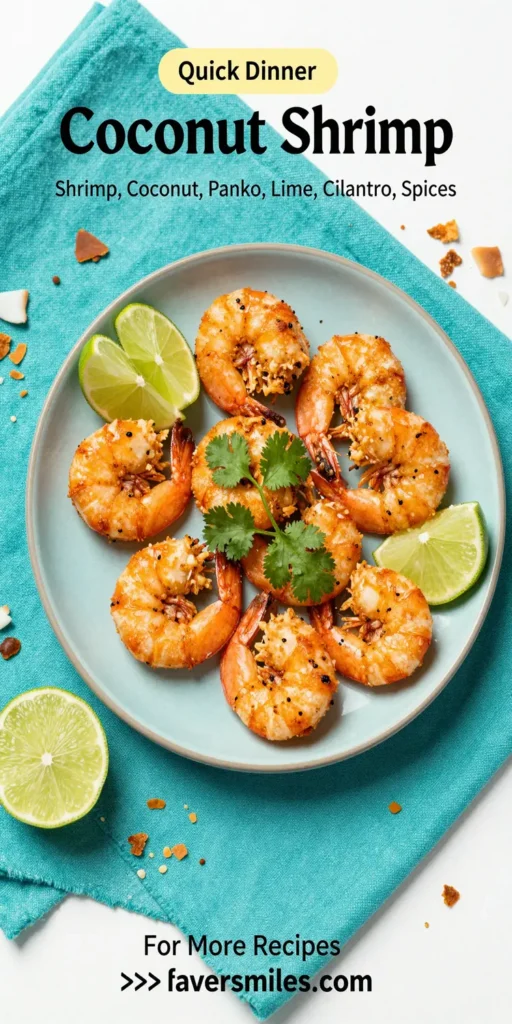
Coconut shrimp is a dish typically made by coating shrimp in a mixture of shredded coconut and breadcrumbs, then deep-frying or baking them until golden and crispy. The delicious blend of textures and flavors results in beautifully crunchy shrimp on the outside while remaining juicy and tender on the inside. It is often served with a sweet and tangy dipping sauce, enhancing the tropical vibe it brings to any meal. This dish is not only a crowd-pleaser but also satisfies various palates, making it a versatile option for both adults and children alike.
Why You’ll Love This
There are many reasons to fall in love with coconut shrimp. First, the captivating combination of flavors and textures is simply irresistible—the crunchy coating makes a perfect contrast to the soft shrimp. Second, this dish is adaptable, allowing for different cooking methods; whether you prefer frying, baking, or air-frying, you can achieve mouthwatering results. Additionally, it’s quick to prepare, making it an excellent choice for busy weeknights or last-minute entertaining. Finally, coconut shrimp pairs beautifully with a variety of sauces, enabling you to experiment with flavors and find your perfect match.
Ingredients You’ll Need
- Shrimp: Use large, peeled, and deveined shrimp for the best results. Their size helps create a meaty texture that holds up well during cooking.
- Coconut flakes: Unsweetened shredded coconut provides the ultimate crunch and flavor. It’s essential for that tropical essence.
- Breadcrumbs: Regular or panko breadcrumbs add an extra layer of crunch to the coating. Panko tends to be lighter and crispier, offering that satisfying crunch you desire.
- Eggs: Beaten eggs help the coconut and breadcrumbs adhere to the shrimp, ensuring every bite is packed with flavor.
- All-purpose flour: A light dusting of flour helps the egg stick to the shrimp, creating an even coating.
- Seasoning: Salt and pepper enhance the overall taste, while optional cayenne pepper or paprika adds a hint of heat for those who enjoy a bit of spice.
- Oil: For frying, use vegetable or coconut oil to achieve that perfectly crispy texture.

How to Make
- Prepare the shrimp: Start by rinsing the shrimp under cold water and patting them dry with paper towels. This ensures that the coating adheres properly. In a shallow dish, combine flour, salt, and pepper to create a seasoned flour mix.
- Dredge the shrimp: Take each shrimp and dip it first in the seasoned flour, coating it lightly. Shake off any excess flour to avoid clumping. Next, dip the shrimp into the beaten eggs, ensuring it’s well-coated, before finishing with a generous layer of the coconut-breadcrumb mixture.
- Heat the oil: In a large skillet, heat oil over medium-high heat. You’ll know it’s ready when a small drop of batter sizzles immediately upon contact with the oil. Aim for about 350°F (175°C) for optimal frying.
- Fry the shrimp: Carefully place the coated shrimp in the hot oil in a single layer, ensuring not to overcrowd the pan. Fry them for about 2-3 minutes on each side or until they turn golden brown and crispy. Keep an eye on them to prevent overcooking.
- Drain and serve: Once the shrimp are cooked, remove them from the oil and place on a plate lined with paper towels to absorb any excess oil. Serve immediately with a side of your favorite dipping sauce.
Variations & Substitutions
Baked Coconut Shrimp: To make a healthier version, you can bake the coconut shrimp instead of frying. Preheat your oven to 425°F (220°C) and line a baking sheet with parchment paper. Place the coated shrimp in a single layer and lightly spray or brush them with oil. Bake for about 15-20 minutes, flipping halfway through, until they are crispy and golden. This method significantly reduces the amount of oil used while still delivering delicious flavor.
Spiced Coconut Shrimp: If you prefer a bit more kick, you can combine spices with the coconut. Mix in some chili powder or Cajun seasoning with the coconut flakes and breadcrumbs. This will give your shrimp an enticing twist that packs in additional flavor. Make sure to adjust the spice level to suit your taste.
Gluten-Free Coconut Shrimp: For gluten-sensitive individuals, simply swap out regular breadcrumbs and flour for gluten-free alternatives. There are many store-bought gluten-free breadcrumb options available, or you can make your own by grinding gluten-free bread. Additionally, ensure that your coconut is also from a gluten-free source.
Pineapple Coconut Shrimp: Add a tropical flair to your dish by serving it with a pineapple salsa. Combine diced pineapple, red onion, cilantro, and lime juice for a refreshing side that perfectly complements the tropical flavors of the shrimp. This addition can elevate your dish and create a beautiful color contrast on the plate.
Common Mistakes to Avoid
One of the most frequent pitfalls when making coconut shrimp is overcooking the shrimp. Since shrimp cook quickly, be vigilant when frying. Overcooked shrimp can become rubbery and lose their delicate texture. It’s best to err on the side of caution, checking for that beautiful golden color.
Another common mistake is not drying the shrimp before coating. If shrimp are wet, the coating won’t stick as well, and your shrimp may end up soggy instead of crispy. Pat them dry thoroughly before proceeding with the dredging process.
Lastly, using the wrong oil can lead to unsatisfactory results. Choose oil with a high smoke point, such as vegetable or coconut oil, for frying. Olive oil, while delicious, has a lower smoke point and can burn easily during the frying process, affecting the flavor of your shrimp.
Storage, Freezing & Reheating Tips
For best results, store leftover coconut shrimp in an airtight container in the refrigerator for up to 2 days. Be aware that the coating may lose some crispiness upon refrigeration. To help retain crunch, use a wire rack when storing them instead of placing them directly in a container.
If you want to freeze the coconut shrimp, it’s best to do so before frying. Simply coat the shrimp and place them on a baking sheet in a single layer until frozen, then transfer them to a freezer-safe container or a zip-top bag. They can be frozen for up to 2 months. When ready to cook, there’s no need to thaw; you can fry them directly from the freezer.
To reheat leftover shrimp, avoid using the microwave as this can make them rubbery. Instead, preheat your oven to 375°F (190°C) and place the shrimp in a single layer on a baking sheet. Bake for about 8-10 minutes or until heated through and the coating is crisp once again.
Frequently Asked Questions
Can I prepare coconut shrimp ahead of time?
Yes, you can prepare the coconut shrimp ahead of time by coating them and refrigerating for a few hours before frying. This allows the flavors to meld and can even make the coating stick better. However, it is best to fry them just before serving to maintain that crispy texture.
What kind of dipping sauce goes well with coconut shrimp?
A variety of dipping sauces can enhance the tropical flavors of coconut shrimp. Consider using a sweet chili sauce for a perfect contrast of flavors. Alternatively, a creamy dipping sauce made with yogurt, lime juice, and honey can add a lovely tang, or a spicy mango salsa can offer delightful freshness with a hint of heat.
Can I use frozen shrimp for this recipe?
Absolutely! Frozen shrimp can be a convenient option. Just ensure you fully thaw them in the refrigerator or under cold water before proceeding with the recipe. Pat them dry thoroughly to help the coating adhere correctly.
Is coconut shrimp healthy?
Coconut shrimp can be enjoyed as part of a balanced diet, but moderation is key, especially if they are deep-fried. To make it healthier, consider baking or air-frying the shrimp instead of deep-frying, and serving them with a fresh salad or steamed veggies.
Can I make coconut shrimp in advance for a party?
While it’s better to fry them just before serving for the best texture, you can prep the shrimp ahead of time and keep them coated in the refrigerator. Fry them just before your guests arrive for maximum freshness and crunchiness. It’s bound to be a hit at your gathering!
Conclusion: Making coconut shrimp at home is not only straightforward but also incredibly rewarding. With the right ingredients and techniques, you can enjoy this tropical delight anytime. Whether you go for the classic version or a variation, coconut shrimp is versatile and sure to please. So gather those ingredients, unleash your inner chef, and savor the experience of creating this delicious dish!