Prep time: 20 minutes
Cook time: 2 hours
Total time: 2 hours 20 minutes
Servings: 8
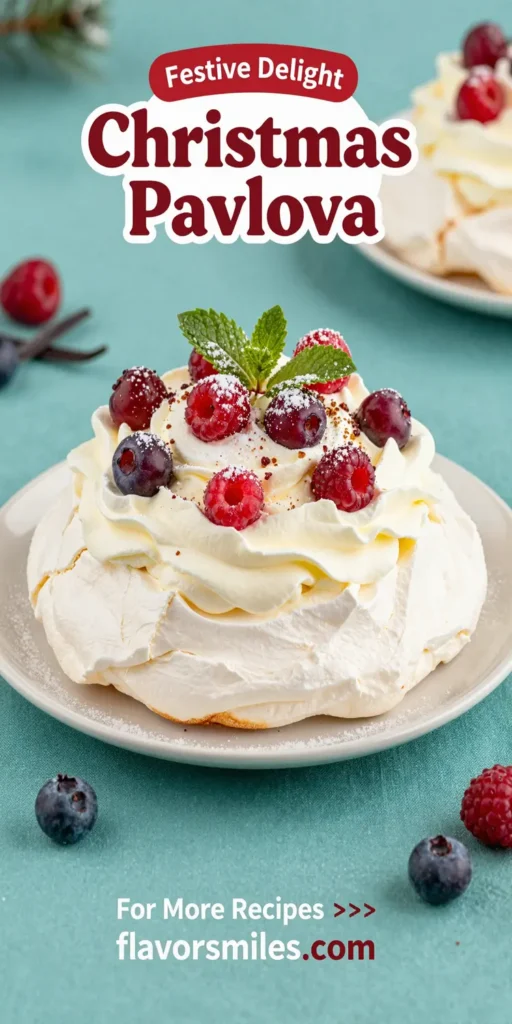
Pavlova, a dessert that embodies the spirit of celebration, is a beautiful blend of textures and flavors. It’s a wonderful addition to any festive gathering, especially Christmas. This iconic dessert features a crisp outer shell and a soft, marshmallow-like center, adorned with fresh fruits and whipped cream. Remember that mastering the art of creating the perfect pavlova takes a bit of practice, but the delight it brings to your table is well worth the effort.
What Is Christmas Pavlova?
Christmas Pavlova is a delightful meringue-based dessert that originated in Australia and New Zealand. Named after the famous Russian ballerina Anna Pavlova, this dessert has become synonymous with celebration. Traditionally topped with whipped cream and an assortment of fresh fruits, Pavlova has a unique texture that is both crunchy on the outside and soft on the inside. It is particularly popular during the holiday season for its lightness and adaptability.
Why You’ll Love This
There are several compelling reasons why Christmas Pavlova should be on your holiday table. Firstly, it is visually stunning, making it a showstopper for any gathering. The mix of crispy meringue, luscious cream, and vibrant fruits create an enticing presentation. Secondly, it is a versatile dessert; you can experiment with different toppings, making it easy to cater to various tastes. Finally, the combination of sweet and tart flavors makes it a refreshing end to a hearty Christmas meal, offering a contrast to heavier dishes.
Ingredients You’ll Need
- Egg Whites (4 large): The base of the meringue, providing structure and stability.
- Granulated Sugar (1 cup): Essential for sweetness and creating the meringue’s crispy exterior.
- White Vinegar (1 teaspoon): Helps stabilize the meringue and improves texture.
- Cornstarch (1 tablespoon): Enhances the meringue’s crispness effectively.
- Heavy Whipping Cream (1 cup): The smooth, rich topping that adds luxurious texture.
- Powdered Sugar (2 tablespoons): Sweetens the cream without affecting its texture.
- Vanilla Extract (1 teaspoon): Adds a delightful depth of flavor to the whipped cream.
- Assorted Fresh Fruits: Such as strawberries, kiwis, and passionfruit for vibrant color and tangy contrast.

How to Make
- Preheat your oven to 250°F (120°C). Line a baking tray with parchment paper and draw a 7-inch circle on it. This will help guide the shape of your pavlova.
- In a clean, dry bowl, beat the egg whites with an electric mixer until soft peaks form. This will take about 3-5 minutes. Ensure there is no yolk in your mixture, as even a small amount can prevent the whites from whipping up properly.
- Gradually add the granulated sugar, one tablespoon at a time, while continuing to beat the mixture. This helps to incorporate air, creating a stable meringue. Keep beating until the mixture is glossy and stiff peaks form. This stage is crucial; under-whipped egg whites will collapse.
- Gently fold in the white vinegar and cornstarch using a spatula. This delicate folding helps maintain the airy structure you’ve built while adding stability and texture to the meringue.
- Spoon the meringue onto the center of the drawn circle, smoothing the top and swirling the sides to create an elegant peak. A thicker base and a slightly raised center will ensure a lovely hollow for filling later.
- Bake the pavlova in the preheated oven for 1.5 to 2 hours until it is firm to the touch. It should be crisp on the outside and slightly soft in the center. After baking, turn off the oven and crack the door slightly, allowing the pavlova to cool completely inside. This gradual cooling process prevents cracking.
- Once cooled, whip the heavy cream and powdered sugar together with vanilla extract until soft peaks form. This creamy topping will complement your pavlova perfectly.
- Carefully transfer the pavlova to a serving plate, dollop the whipped cream onto the meringue, and top generously with fresh fruits. You can mix and match fruits for added color and flavor bursts.
Variations & Substitutions
Citrus Twist: For a refreshing change, use citrus fruits such as oranges and grapefruits. Their tartness balances the sweetness of the meringue beautifully. Add a splash of orange blossom water to the whipped cream for a delightful citrus essence.
Chocolate Pavlova: If you’re a chocolate lover, consider folding cocoa powder into your meringue for a chocolate version. Top it with dark chocolate ganache and berries for a rich and indulgent dessert experience.
Berry Medley: A mix of berries such as blueberries, raspberries, and strawberries provides a beautiful contrast in flavor and color. Adding a hint of lemon zest to the cream elevates the overall flavor profile.
Nut Topper: For added texture, sprinkle chopped nuts over the whipped cream. Pistachios or toasted almonds can add a lovely crunch that contrasts nicely with the soft meringue and cream.
Common Mistakes to Avoid
Using greasy equipment: Ensure all bowls and beaters are completely clean and dry before starting. Any residual fat can prevent egg whites from whipping properly.
Opening the oven too soon: Avoid the temptation to peek at the pavlova during baking. Opening the oven can cause sudden temperature changes, which may lead to cracks in your meringue.
Using cold egg whites: For best results, use room temperature egg whites. They whip better and incorporate more air, making for a light and fluffy pavlova.
Storage, Freezing & Reheating Tips
Pavlova is best enjoyed on the day it’s made. However, if you need to store it, keep it in an airtight container at room temperature to avoid moisture. Avoid refrigerating as this can lead to a soggy texture.
If you wish to make pavlova ahead of time, you can freeze it. Wrap the cooled pavlova carefully in plastic wrap and store it in an airtight container. When ready to serve, allow it to thaw completely at room temperature before adding toppings. Be cautious with the toppings; add fruits and cream just before serving.
For reheating, it’s generally not recommended to reheat meringue as it can lose its texture.
Frequently Asked Questions
Can I make pavlova in advance? Yes, pavlova can be made in advance. However, it’s best to add the toppings just before serving to keep the meringue crispy.
What should I do if my pavlova cracks? Cracking can occur if the meringue is baked at too high a temperature. If your pavlova does crack, don’t worry! You can cover it with whipped cream and fruits, which camouflages any imperfections.
What fruits are best for topping pavlova? Fresh fruits like berries, kiwi, and passionfruit work wonderfully. They add color and a refreshing tartness that contrasts beautifully with the sweet meringue.
Can I use alternatives for sugar? For a sugar-free version, consider using granulated erythritol or other sugar substitutes designed for baking. However, keep in mind that this may alter the texture slightly.
Is pavlova gluten-free? Yes, pavlova is naturally gluten-free! The main ingredients are egg whites and sugar, making it a perfect dessert option for those with gluten sensitivities.
Conclusion: The Christmas Pavlova is not just a treat; it’s an experience. With its enchanting flavors and stunning presentation, it’s sure to be a favorite during the festive season. Whether it’s your first time making meringue or you’re a seasoned pro, this dessert allows for creativity and personal flair. Enjoy the process, share with loved ones, and savor the delight that comes with each bite.