Prep time: 30 minutes
Cook time: 1 hour
Total time: 1 hour 30 minutes
Servings: 12
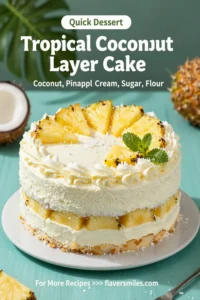
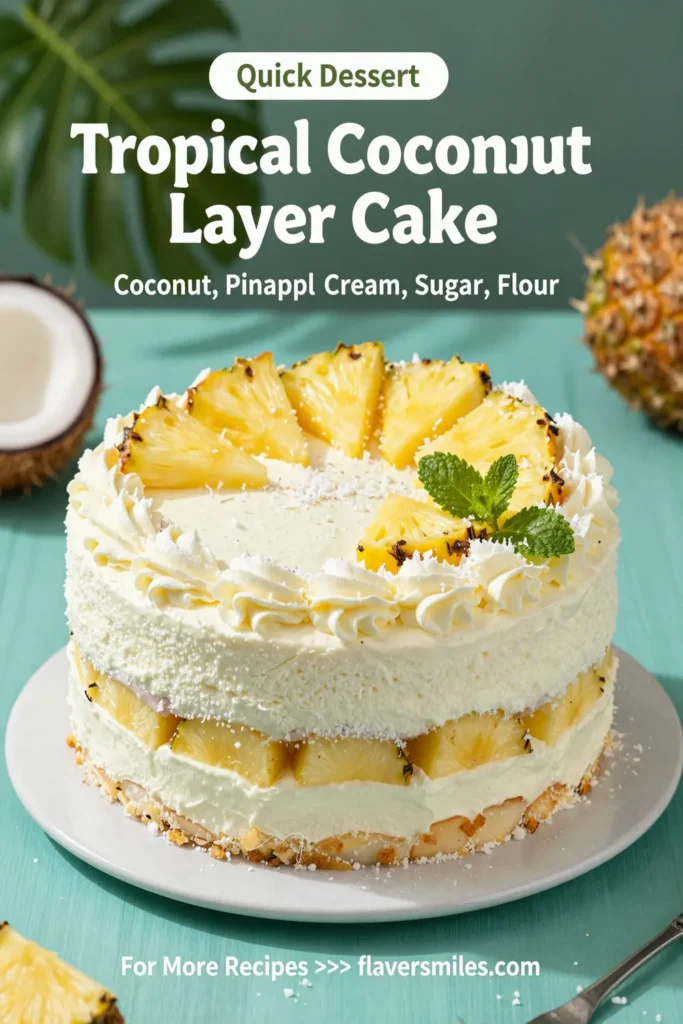
Tropical Coconut Layer Cake is a vibrant treat that’s perfect for celebrations or just a sweet escape from the everyday. Picture a moist, fluffy cake infused with coconut flavor, layered with rich coconut cream frosting, and garnished with toasted coconut flakes. This cake is more than just a dessert; it’s a tropical vacation on a plate. Whether you’re surprising a loved one or treating yourself, this cake will evoke sunny memories and sweet moments.
What Is Tropical Coconut Layer Cake?
Tropical Coconut Layer Cake is a multi-layered confection that typically consists of soft, moist sponge layers made with coconut milk and shredded coconut. The cake is often filled and frosted with a luscious coconut cream or buttercream, giving it a delightful creaminess that balances the cake’s lightness. The addition of fresh fruit in some recipes, such as pineapple or mango, can elevate this cake further, providing a refreshing counterpoint to the richness of the coconut. This cake can be made for birthdays, anniversaries, or any occasion where you want to add a taste of the tropics.
Why You’ll Love This
This Tropical Coconut Layer Cake is not just delicious but also a feast for the eyes. Each slice presents a beautiful display of white sponge and creamy frosting, often adorned with golden toasted coconut flakes. Here are a few reasons why you’ll adore this recipe:
- Flavor Explosion: The combination of coconut and cream delivers a flavor that is both tropical and indulgent.
- Makes a Statement: Its towering layers make it an impressive centerpiece for any dessert table.
- Versatile: You can easily adapt this recipe to suit dietary needs through substitutions.
- Great for Any Occasion: Whether it’s a birthday, wedding, or just a cozy treat at home, this cake fits right in.
Ingredients You’ll Need
- 2 ½ cups all-purpose flour: This forms the base of your cake, providing structure and stability.
- 2 ½ tsp baking powder: Essential for leavening and allowing the cake to rise.
- ½ tsp salt: Balances the sweetness in the cake.
- ¾ cup unsalted butter: Adds richness and moisture to the cake.
- 1 ¾ cups granulated sugar: Sweetens the cake and aids in achieving a light texture.
- 3 large eggs: Provides binding and helps the cake rise.
- 1 cup coconut milk: Infuses the cake with a tropical flavor.
- 1 tsp vanilla extract: Enhances the overall taste.
- 1 ½ cups shredded sweetened coconut: Gives texture and coconut flavor to the cake.
- 3 cups powdered sugar: Used to make the frosting sweet and fluffy.
- 1 cup heavy whipping cream: Creates a rich and creamy frosting.
- 1 cup toasted coconut flakes: For garnishing the cake, adds a crunchy texture.
How to Make
- Preheat your oven: Start by preheating your oven to 350°F (175°C). This ensures that the cake bakes evenly from the moment it goes in.
- Prepare your baking pans: Grease and flour three 9-inch round cake pans. This will help the cakes release easily after baking.
- Mix the dry ingredients: In a medium bowl, whisk together the flour, baking powder, and salt. This amalgamation ensures an even distribution of leavening and seasoning throughout the cake.
- Cream the butter and sugar: In a large mixing bowl, beat the butter and granulated sugar until light and fluffy, which should take about 3-4 minutes. This process incorporates air into the batter, making the cake light.
- Add the eggs: Beat in the eggs one at a time, ensuring they are well-combined. Each addition should create a smooth batter.
- Incorporate the coconut milk and vanilla: Stir in the coconut milk and vanilla extract until fully combined, adding that tropical note.
- Combine wet and dry mixtures: Gradually add the dry ingredients to the wet mixture, folding gently until just combined. Do not overmix; this will keep your cake tender.
- Add shredded coconut: Fold in the shredded coconut until evenly dispersed throughout the batter. This will add delightful bits of coconut in every bite.
- Pour the batter into prepared pans: Divide the batter evenly among the three pans, smoothing the tops with a spatula.
- Bake: Place the pans in the preheated oven and bake for 25-30 minutes, or until a toothpick inserted into the center comes out clean. The cakes will be lightly golden on top.
- Cool down: Once out of the oven, let the cakes cool in the pans for 10 minutes before transferring them to wire racks to cool completely.
- Prepare the frosting: In a medium bowl, whip the heavy cream until soft peaks form. Gradually add the powdered sugar, continuing to whip until the mixture is stiff and fluffy.
- Frost the cake: Once the cakes are completely cool, place one layer on a serving plate. Spread a layer of frosting on top, then repeat with the second layer. Place the final layer on top and frost the entire cake. Use the remaining frosting to create swirls or decorations as desired.
- Garnish: Sprinkle the top and sides with toasted coconut flakes for a beautiful finish.
Variations & Substitutions
For a Fruity Twist: Consider adding crushed pineapple to the cake batter for a burst of sweet and tangy flavor. Drain the pineapple thoroughly to prevent excess moisture from affecting the cake’s texture. You can also place some pineapple slices between the layers of frosting for an added surprise and a gorgeous presentation.
Coconut Cream Cheese Frosting: Swap half of the heavy cream in the frosting for cream cheese. This will give your frosting a slight tang and a richer flavor profile. This alternative pairs beautifully with the sweetness of the cake, providing a delightful contrast.
Gluten-Free Version: If you’re looking to make this cake gluten-free, replace all-purpose flour with a 1:1 gluten-free flour blend. Make sure your baking powder is also gluten-free. This will ensure that everyone can join in on the fun without compromising flavor or texture.
Chocolate Coconut Layer Cake: For chocolate lovers, add cocoa powder to part of the flour in the recipe. Create alternating layers of chocolate and coconut cake, using the original frosting between each layer. This enhances the flavor and presents beautifully when sliced.
Common Mistakes to Avoid
One common mistake is overmixing the batter. Overmixing can lead to a dense cake instead of a light, airy texture. Remember to mix just until the ingredients are combined. Additionally, not allowing the cakes to cool completely before frosting can lead to melted frosting and a messy appearance. Finally, make sure to correctly measure your ingredients, particularly the flour, which should be spooned into measuring cups, not packed down.
Storage, Freezing & Reheating Tips
To store your Tropical Coconut Layer Cake, keep it in an airtight container, either at room temperature for up to two days or in the refrigerator for a week. If freezing, wrap each layer individually in plastic wrap and then in foil. You can freeze the uneaten cake for up to three months. To thaw, place the wrapped cake in the refrigerator overnight.
Reheating is not generally recommended for frosted cakes, as this may affect the texture of the frosting. If the cake has been frozen and thawed, serve at room temperature for the best flavor and texture.
Frequently Asked Questions
Can I use unsweetened coconut instead of sweetened?
Yes, you can use unsweetened shredded coconut, but this may result in a less sweet cake. If you prefer a sweeter cake, consider adjusting the sugar to taste.
How can I make the cake dairy-free?
You can replace the butter with a plant-based butter and use a non-dairy milk instead of coconut milk. Make sure to use a dairy-free heavy cream for the frosting, or substitute with whipped coconut cream.
Is it possible to make this cake ahead of time?
Absolutely! You can bake the cake layers a day in advance. Just wrap them tightly in plastic wrap and keep them at room temperature until you’re ready to frost and serve.
How should I store leftovers?
Store any leftover cake in an airtight container in the refrigerator for up to one week. When properly stored, it can retain its freshness and flavor.
What’s the best way to serve this cake?
This cake is deliciously versatile. You can serve it plain or pair it with a dollop of whipped cream or a scoop of vanilla ice cream for an extra treat. Fresh tropical fruits can also make a lovely accompaniment.
Conclusion: Tropical Coconut Layer Cake brings a sunny vibe to any gathering. Not only is it visually stunning, but the flavors are a delightful contrast of rich and light. Whether you stick to the original recipe or try one of the suggested variations, you’ll end up with a cake that impresses everyone at the table. Enjoy the process of creating this beautiful cake, and don’t forget to savor every heavenly bite!