Prep time: 10 minutes
Cook time: 20 minutes
Total time: 30 minutes
Servings: 4 servings
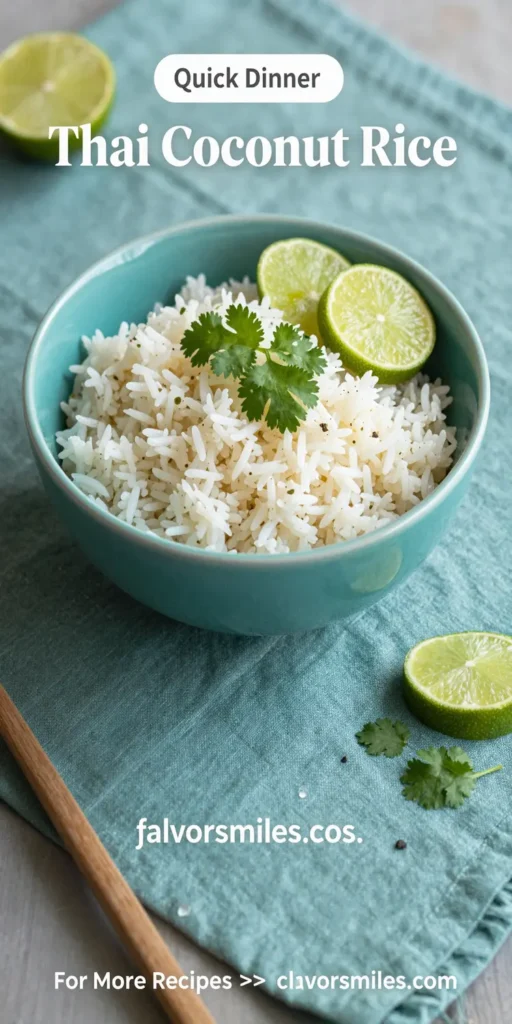
Thai Coconut Rice is a delightful dish that combines fragrant jasmine rice with creamy coconut milk, resulting in a subtly sweet and savory side dish. It’s a fantastic addition to any meal, particularly when served alongside spicy curries or grilled meats. The rice absorbs the richness of the coconut milk, creating a dish that is both comforting and satisfying.
What Is Thai Coconut Rice?
Thai Coconut Rice is a traditional dish from Thailand that features jasmine rice cooked in a mixture of coconut milk, water, and a pinch of salt. The result is tender grains that have taken on the rich, nutty flavors of coconut, making it a perfect partner to numerous dishes. Whether you’re a seasoned chef or a kitchen beginner, this recipe is straightforward and provides a delicious twist to the typical steamed rice.
Why You’ll Love This
This recipe is a great choice for busy parents looking to spice up weeknight dinners. The simplicity of the cooking method, combined with the unique flavor profile, makes this dish both practical and versatile. The creamy texture of the rice is comforting, making it an excellent side for family meals. Furthermore, it’s budget-friendly and can easily be customized with different variations to suit your family’s preferences. You will find yourself making this dish again and again!
Ingredients You’ll Need
- 2 cups jasmine rice: A fragrant rice variety that absorbs flavors well.
- 1 can (13.5 oz) coconut milk: Provides creaminess and enriches the flavor of the rice.
- 1 cup water: Necessary for cooking the rice properly.
- 1/2 teaspoon salt: Enhances the flavors of the ingredients.
- 2 tablespoons sugar (optional): Adds a hint of sweetness, balancing the savory flavors.

How to Make
- Begin by rinsing the jasmine rice under cold water. This step is crucial, as it removes excess starch, preventing the rice from becoming overly sticky. Rinse until the water runs clear, which should take about 1-2 minutes.
- After rinsing, drain the rice and transfer it to a medium-sized pot. Add the coconut milk, water, and salt to the pot. If you prefer a slightly sweeter flavor, add the sugar at this stage. Stir gently to combine the ingredients.
- Cover the pot with a lid and place it over medium heat. Once the mixture begins to boil, reduce the heat to low. Allow it to simmer gently for about 15-20 minutes. Refrain from lifting the lid during this time, as this will disrupt the cooking process.
- After 20 minutes, remove the pot from heat but keep the lid on. Allow the rice to sit for an additional 10 minutes. This resting period is vital for the rice to finish cooking and for the flavors to meld.
- Once the resting time is over, remove the lid and fluff the rice with a fork. This will separate the grains, ensuring a light and airy texture. Taste and adjust the seasoning if necessary.
- Serve warm alongside your favorite Thai dishes, and enjoy the rich, creamy flavors of your homemade Thai Coconut Rice!
Variations & Substitutions
Herbed Coconut Rice: For a fresh twist, add finely chopped herbs such as cilantro or green onions after cooking. This not only enhances the flavor but also adds a vibrant color. Simply stir them in gently as you fluff the rice for a burst of freshness.
Spicy Coconut Rice: If you enjoy a kick, consider incorporating a small amount of green curry paste while cooking the rice. The paste will infuse the rice with a delicious heat and depth of flavor that pairs wonderfully with Thai dishes. Just remember to start with a little and adjust to your preferred spice level.
Vegetable Coconut Rice: Incorporate diced vegetables such as bell peppers, peas, or carrots during the cooking stage. This not only enhances the nutritional value but also makes the dish more visually appealing. Cook the vegetables in the coconut milk mixture to absorb all the delicious flavors.
Low-Fat Coconut Rice: For a lighter version, replace full-fat coconut milk with light coconut milk or a blend of coconut milk and low-sodium broth. It will still retain the coconut flavor without the extra richness, making it suitable for lighter meals.
Common Mistakes to Avoid
Overcooking the rice: It might be tempting to leave the rice on the heat for longer, but this can lead to mushy, overcooked rice. Always stick to the recommended cooking time, and allow the rice to rest afterward for the best texture.
Not rinsing the rice: Skipping the rinsing step can result in overly sticky rice. This is important as rinsing removes the excess starch that contributes to stickiness, allowing the rice to remain fluffy.
Not allowing the rice to rest: Serving the rice immediately can lead to a gummy texture. Allowing it to sit with the lid on after cooking is crucial for achieving the perfect fluffiness.
Storage, Freezing & Reheating Tips
To store leftovers, place the rice in an airtight container and refrigerate for up to 3-4 days. When reheating, add a splash of water to the rice and cover it before microwaving to prevent dryness. Alternatively, you can reheat in a pot over low heat, adding a bit more coconut milk to keep it moist. If you want to freeze it, let the rice cool completely before transferring it to a freezer-safe bag. It can last for up to 2 months in the freezer. When you’re ready to enjoy it again, simply thaw in the fridge overnight and reheat.
Frequently Asked Questions
Can I use brown rice instead of jasmine rice? Yes, you can substitute brown rice, but keep in mind that it will require a longer cooking time and more liquid. Typically, brown rice needs about 45-50 minutes to cook. Adjust the amount of water and cooking time accordingly.
Is Thai Coconut Rice vegan? Absolutely! All the ingredients used in this recipe are plant-based, making it a great option for those following a vegan diet. The coconut milk adds a creamy texture without the need for dairy.
Can I make this recipe in a rice cooker? Yes, you can easily adapt this recipe for a rice cooker. Simply combine the rinsed rice, coconut milk, water, and salt in the rice cooker, and follow the manufacturer’s instructions for cooking rice.
What can I serve with Thai Coconut Rice? This rice pairs wonderfully with many dishes, particularly those that are spicy or flavorful. Consider serving it alongside Thai curries, grilled meats, or even a stir-fry for a complete meal.
How do I enhance the flavor of the rice further? For added flavor, consider toasting the rice lightly in a bit of oil before adding the liquids. This releases the nutty aroma and can elevate the overall taste of the dish.
Conclusion: Thai Coconut Rice is more than just a side dish; it’s a celebration of flavors, textures, and culinary traditions. With its simple ingredients and straightforward preparation, it’s an easy way to bring a taste of Thailand to your table. Perfect for busy nights or special occasions, you’ll find that this rice recipe quickly becomes a family favorite. Enjoy cooking and the delightful experience it brings!