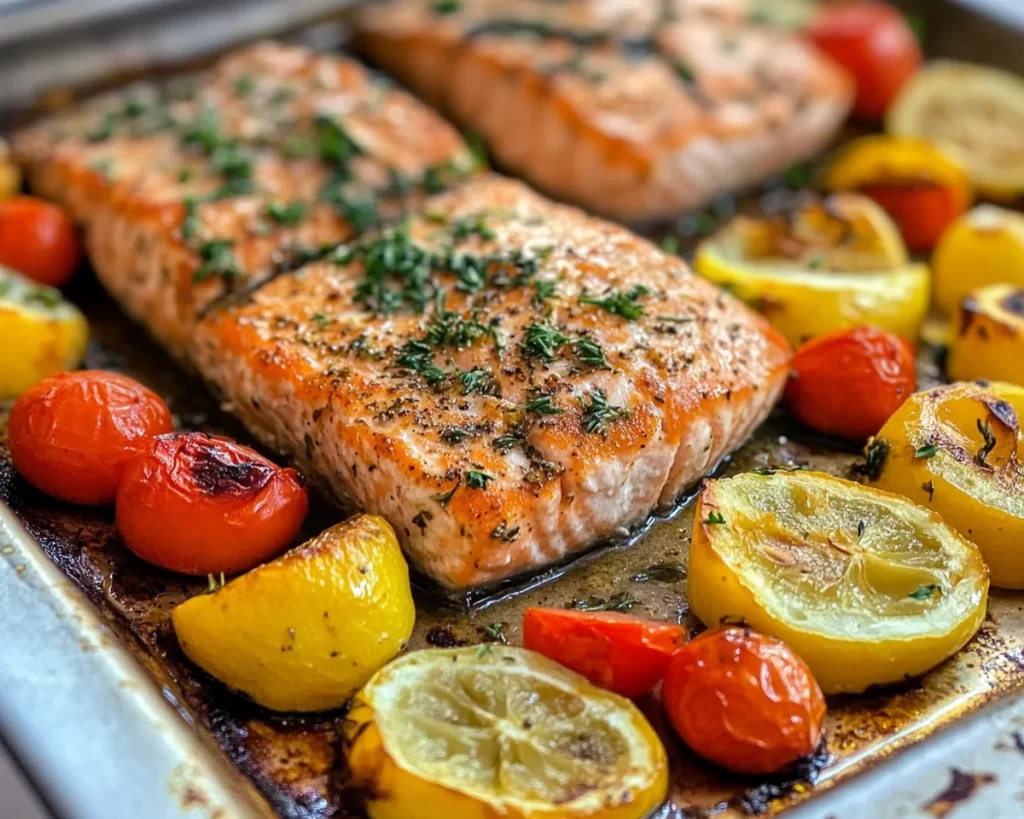
Prep time: 15 minutes
Cook time: 20 minutes
Total time: 35 minutes
Servings: 4
In the hustle and bustle of summer, finding a meal that is not only quick to prepare but also delicious and nutritious can often feel like a daunting task. Enter the Sheet Pan Salmon + Veggies — a dish that seems to understand the chaotic pace of life during those long, sun-kissed days. Imagine a vibrant meal filled with tender salmon fillets infused with zesty flavors, alongside crisp, colorful veggies, all cooked to perfection on a single pan. It’s an easy cleanup and a delightful array of flavors that will keep both your taste buds and your family happy.
Not only is this dish incredibly simple to make, it’s also packed with nutrients. Salmon is rich in omega-3 fatty acids, promoting heart health and reducing inflammation, while the fresh vegetables provide essential vitamins and minerals. Whether you’re trying to create a healthy weeknight meal, impress guests, or simply enjoy a delicious dinner with minimal effort, this recipe will not disappoint.
In this article, you’ll learn how to prepare this dish, valuable cooking tips, and variations to cater to dietary preferences. So grab your ingredients and let’s dive into this summer favorite that will have you savoring every delicious bite while embracing the simplicity of meal preparation.
What Is Summer Meals Dinner: Sheet Pan Salmon + Veggies?
Sheet Pan Salmon + Veggies is a delightful one-pan dinner that marries the richness of salmon with the crunch of seasonal vegetables. This dish draws inspiration from various cooking methods, providing a well-rounded meal that is visually striking and packed with flavor. Salmon, a celebrated ingredient in many cuisines worldwide, provides a tender, flaky texture accompanied by a subtly sweet yet slightly smoky flavor when baked.
The vegetables are usually a colorful medley — think vibrant bell peppers, green asparagus, or even root vegetables like carrots and potatoes. When arranged symmetrically on the same baking sheet, they roast beautifully alongside the fish, absorbing its savory juices. The dish is often seasoned with herbs and spices, which enhance the overall flavor and aroma during cooking.
The concept of sheet pan meals is deeply rooted in the idea of simplicity and convenience. Originating from various home cooking traditions, this method enables home cooks to prepare a hearty meal with minimal fuss while also promoting healthy eating. The combination of oven-roasted salmon and veggies is not only a significant time-saver but also a culinary experience that tantalizes the senses.
Why You’ll Love This
There are countless reasons why Sheet Pan Salmon + Veggies deserves a spot in your meal rotation. First and foremost, the taste is absolutely delightful. The juicy salmon pairs perfectly with the roasted vegetables, making each bite explode with flavor. You’ll find that your palate enjoys the contrasts of the flaky fish and crunchy veggies, which is a satisfying combination.
The ease of preparation cannot be overstated. With just a handful of simple steps, you can put together a complete meal. This is particularly appealing for busy parents or anyone juggling a tight schedule. The beauty of this dish lies in its one-pan nature; you can simply pop everything into the oven and focus on other tasks while your meal cooks itself.
Cost-effectiveness also plays a role. Purchasing salmon and seasonal vegetables is often affordable, especially when you consider the number of servings you can get out of this simple recipe. Plus, it supports healthy eating, as you control the ingredients used, making it easier to avoid preservatives and additives often found in takeout meals.
Lastly, versatility is a key element of this dish. You can customize it to fit various dietary needs, preferences, and even seasonal produce availability.
Ingredients You’ll Need
To prepare the Sheet Pan Salmon + Veggies, you will require the following ingredients:
- Salmon fillets: 4 pieces, about 6 ounces each. Salmon provides a fantastic source of protein and omega-3 fats. When selecting salmon, look for fresh, vibrant colors and avoid any with an odor.
- Olive oil: 2 tablespoons. This will help in seasoning the salmon and veggies while ensuring they roast perfectly. You can substitute it with avocado oil for a higher smoke point.
- Lemon juice: 1 tablespoon, freshly squeezed. This adds brightness to the dish and helps balance the flavors. If you do not have fresh lemons, bottled lemon juice is a suitable alternative.
- Garlic powder: 1 teaspoon. This spice enhances the savory flavor of your salmon. Fresh minced garlic can also be used for a more intense aroma.
- Salt: 1 teaspoon, to taste. Essential for bringing out the flavors, consider using sea salt for a bit of texture.
- Pepper: ½ teaspoon, to taste. Freshly cracked black pepper will provide a warm undertone and a bit of heat.
- Vegetables: 4 cups mixed, such as bell peppers, asparagus, and zucchini. Feel free to include your favorites or whatever is in season. Each vegetable contributes unique flavors and nutrients.
- Fresh herbs: such as parsley or dill for garnish. These will add a fresh pop of flavor and color once the dish is ready to serve.
Each ingredient plays a pivotal role in crafting a well-balanced meal. Fresh ingredients will ensure the best flavor and texture while giving your dish a healthful boost.
How to Make
Making the Sheet Pan Salmon + Veggies is a straightforward process that anyone can master. Follow these step-by-step instructions to create a delicious meal:
- Preheat your oven: Begin by preheating your oven to 400°F (200°C). This is crucial as it allows everything to cook evenly and develop a lovely roasted flavor. A hot oven will also help to sear the salmon and veggies, encouraging caramelization and enhancing flavors.
- Prepare the pan: While the oven is preheating, line a baking sheet with parchment paper or aluminum foil. This not only helps with easy cleanup but also prevents the salmon from sticking to the pan. Alternatively, you could use a non-stick baking sheet.
- Make the marinade: In a small bowl, combine the olive oil, lemon juice, garlic powder, salt, and pepper. Whisk thoroughly until everything is well incorporated. This mixture serves as both a marinade for the salmon and a seasoning for the vegetables. For a zestier option, add lemon zest to the mixture.
- Prepare the salmon: Place the salmon fillets on one side of the prepared baking sheet. Use a brush or spoon to apply half of the marinade on top of each fillet, ensuring they are evenly coated. Allow them to marinate for at least 10 minutes; this will enhance the flavor.
- Prepare the vegetables: On the opposite side of the baking sheet, add the chopped vegetables. Drizzle the remaining marinade over them and toss well until they are nicely coated. Ensure the vegetables are evenly spread out for optimal roasting.
- Bake: Once everything is arranged on the baking sheet, pop it into the preheated oven. Bake for 15 to 20 minutes, depending on the thickness of your salmon fillets and the type of vegetables used. The salmon should be opaque and flake easily with a fork, and the veggies should be tender yet slightly crisp.
- Serve: Carefully remove the baking sheet from the oven. Use a spatula to transfer the salmon and veggies to dinner plates. For an appealing presentation, drizzle a bit of the pan juices over the top and sprinkle with fresh herbs before serving. Pair with a side salad or some crusty bread for a complete meal!
This entire process encapsulates the essence of cooking: simplicity paired with delicious results. By following these steps, you’ll be able to present a nutritious meal on the dinner table that tastes fantastic and is visually stunning.
Variations & Substitutions
Vegetarian Alternative: If you’re seeking a vegetarian option, consider using tofu or tempeh instead of salmon. Firm tofu, when pressed and marinated in the same garlic and lemon mixture, can develop a lovely texture and flavor. Cut the tofu into bite-sized pieces for even cooking and serve with an array of colorful veggies like broccoli, bell peppers, and snap peas. This variation is great for those adhering to plant-based diets while still delivering a protein-packed dinner.
Low-Carb Option: To cater to a low-carb lifestyle, you can swap the starchy vegetables for non-starchy varieties. Instead of potatoes and carrots, go for zucchini, cauliflower, or bell peppers. You can also add broccoli or brussels sprouts, which are fantastic roasted. Keeping the flavor profile the same, you’ll have a light and satisfying meal without sacrificing taste or texture.
Citrus Twist: For those who crave a bit more zing, consider changing the citrus component from lemon to orange or lime. The sweetness of orange can complement the salmon beautifully, while lime adds a zesty kick that pairs well with the savory elements of the dish. Adding slices of citrus directly to the pan can infuse even more aroma during roasting.
Asian-Inspired Version: Want to mix it up with an Asian twist? Substitute soy sauce or teriyaki sauce for the marinade ingredients while adding shredded carrots and snap peas to your veggie mix. Garnish with sesame seeds and sliced green onions for an authentic taste. This variation brings an entirely different flavor profile while retaining the one-pan cooking convenience.
Each of these variations not only transforms the dish into something new but also makes it accessible to a broader audience, allowing for personal preferences and dietary requirements.
Common Mistakes to Avoid
Even a simple recipe like Sheet Pan Salmon + Veggies can present challenges if you’re not attentive to certain details. One common mistake is overcooking the salmon. Salmon should be cooked just until it is opaque and flakes easily. If left too long in the oven, it can become dry and unappetizing. It’s advisable to keep an eye on it and check for doneness a few minutes before the time is up.
Another frequent pitfall revolves around the distribution of vegetables on the pan. If they are packed too closely together, they will steam instead of roast, depriving them of that desirable caramelization. Ensure there is enough space between each piece to allow hot air to circulate effectively. Additionally, always be sure to keep vegetables of similar sizes together for more even cooking.
Lastly, seasoning is crucial in making this dish shine. Undersalting can cause your dish to taste bland. Taste your marinade before using it, and don’t hesitate to adjust the quantities. Remember, you can always add salt, but you cannot take it out once it’s mixed in!
Storage, Freezing & Reheating Tips
To best store leftovers, allow the dish to cool completely after cooking. Transfer any unused salmon and veggies into air-tight containers and refrigerate for up to three days. When reheating, it is best to use an oven to maintain the texture. Preheat your oven to 350°F (175°C) and spread the leftovers on a baking sheet. Heat for about 10 to 15 minutes, or until warmed through. This method will help preserve the moisture and prevent the salmon from becoming rubbery.
If you’d like to freeze your salmon and veggies, be cautious about the texture of the ingredients after thawing. It’s best to freeze the components separately. Wrap the salmon in plastic wrap and store in a freezer bag, removing as much air as possible. The veggies can be blanched before freezing to help preserve their color and texture. They can be stored for up to three months. When you are ready to enjoy your dish again, defrost in the refrigerator overnight and reheat as mentioned above.
When reheating leftovers, always check the internal temperature to ensure it reaches at least 145°F (63°C) for safety.
Frequently Asked Questions
Can I use frozen salmon for this recipe?
Yes, you can use frozen salmon. However, it’s essential to thaw it completely before cooking. You can do this overnight in the refrigerator or by placing it in a sealed bag and submerging it in cold water for a quicker method. Cooking frozen salmon directly may result in uneven cooking.
How do I know when the salmon is done cooking?
The best way to check for doneness is to use a food thermometer. Salmon is safely cooked when it reaches an internal temperature of 145°F (63°C). Additionally, it should have a translucent appearance and flake easily when tested with a fork.
What type of salmon should I use?
Any type of salmon will work, but sockeye, coho, and king salmon are popular options. Sockeye is known for its robust flavor, while king salmon has higher fat content, resulting in a rich, buttery texture. Farmed or wild-caught is a matter of personal preference; both can be delicious.
Can I add more vegetables?
Absolutely! Feel free to add more veggies or substitute using any available produce. Broccoli, carrots, or even sweet potatoes can all be great additions, just ensure that you cut them into even sizes for uniform cooking.
Is it possible to make this dish ahead of time?
Yes, you can prepare the components in advance. Marinate the salmon and chop the vegetables a few hours before cooking. When you’re ready to serve, simply bake them in the preheated oven. This approach can save time during busy evenings.
Conclusion:
In summary, the Sheet Pan Salmon + Veggies is a superb meal choice for anyone looking to prepare a quick, delicious, and nutritious dinner. The simplicity of the recipe combined with the ability to customize it to fit dietary needs makes it highly versatile. The flavors mingle beautifully, allowing you to savor each bite while the ease of preparation frees up your time. I encourage you to try this recipe in your home, adjust it to your tastes, and share the joy of a well-cooked meal with your loved ones. Happy cooking!