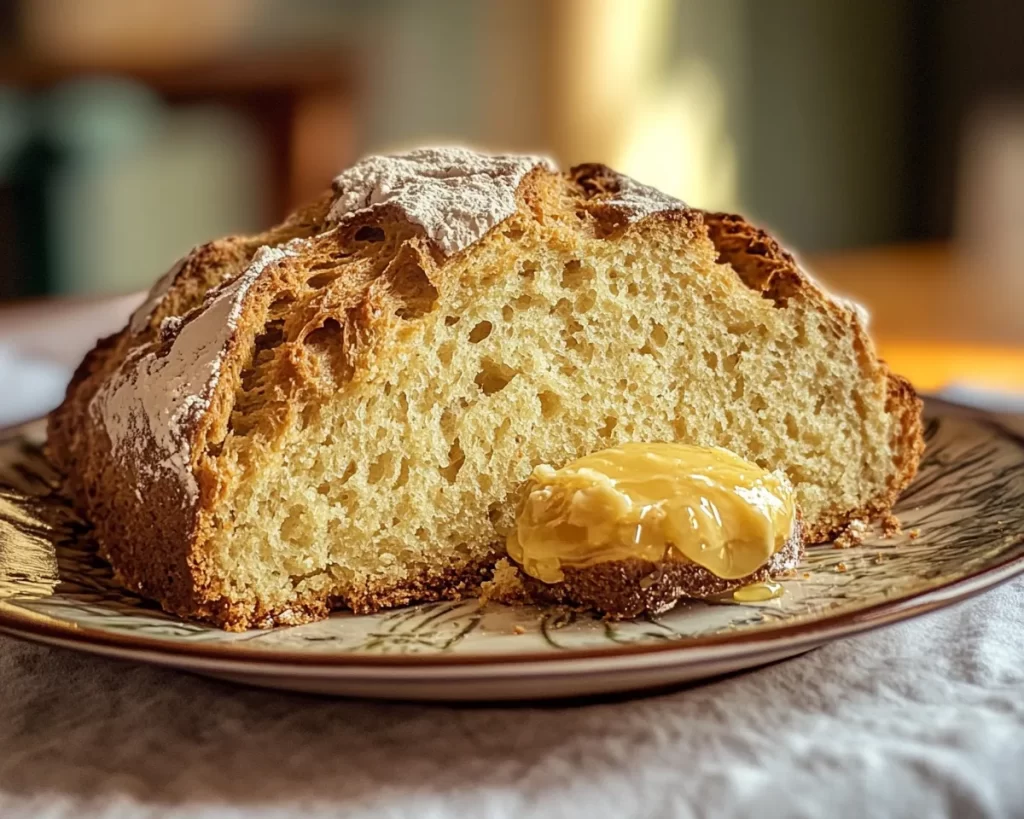
Prep time: 20 minutes
Cook time: 45 minutes
Total time: 1 hour 5 minutes
Servings: 8
When you think of St. Patrick’s Day, the first thing that typically comes to mind might just be those vibrant celebrations adorned with green, music, and dance. However, for many, the highlight of the day is the rich, hearty flavors brought forth by traditional recipes. Among these beloved dishes is the iconic Irish Soda Bread, which is both simple and utterly satisfying. With its crunchy crust, soft center, and a hint of sweetness from the honey butter, this recipe captures the spirit of the holiday beautifully. As you embark on this culinary journey, you will learn how to create a loaf that’s not only a staple for the celebration but also perfect alongside soups, stews, and more.
It’s the melding of baking soda and buttermilk that makes this bread rise and gives it a unique texture that sets it apart from yeasted breads. Each bite unveils a blend of flavors that pair flawlessly with the sweetness of honey butter, which is an essential accompaniment that you won’t want to skip. You will discover the magic of transforming simple ingredients into a delightful loaf that will become a family favorite. Whether you’re making it for St. Patrick’s Day or just to enjoy on a cozy afternoon, this recipe stands as a perfect introduction to traditional Irish cooking.
What Is St Patrick’s Day Irish Soda Bread with Honey Butter?
Irish Soda Bread has deep roots in Irish culinary history, often traced back to the 19th century when it first emerged as a solution for the scarcity of yeast. Instead, the bread relies on the simple combination of baking soda and buttermilk, creating a delightful combination that yields a light and airy texture, with a deliciously crusty outer layer. The result is a bread that is not only easy to make but is also rich in flavor and history. Unlike many other loaves that require kneading and rising time, soda bread allows for a more relaxed baking experience, making it an ideal choice for both novice and experienced bakers.
The beauty of this bread lies in its distinct, slightly tangy flavor profile that comes from the combination of baking soda with the acidity of the buttermilk. It adds a warm, comforting element to the bread, making every slice taste like home. Additionally, pairing it with homemade honey butter takes this experience to the next level. The rich, creamy texture of the honey butter complements the rustic notes of the bread perfectly, creating an irresistible combination that you’ll savor with every bite. As you prepare this loaf, you’ll feel a connection to centuries of tradition while enjoying this modernized twist.
Why You’ll Love This
There are countless reasons to fall in love with St. Patrick’s Day Irish Soda Bread with Honey Butter. For starters, the taste is nothing short of remarkable; the combination of crunchy crust and tender crumb makes each slice a culinary delight. The **honey butter** adds a decadent touch, enhancing the experience and creating a perfect balance of flavors that is both indulgent and comforting. Moreover, this recipe stands out for its unbeatable simplicity; it requires no special equipment or ingredients, making it accessible for busy parents, beginners in the kitchen, or anyone who might be working with a limited budget.
This bread is not only quick to put together, but it also boasts an affordability that few recipes can match. Made primarily from pantry staples like flour, baking soda, salt, and buttermilk, you can whip it up without any extra trips to the store. Plus, it’s versatile! Whether enjoyed fresh out of the oven, toasted for breakfast, or served alongside dinner, this bread adapts seamlessly to fit any meal.
Some may think that homemade bread is too complex or time-consuming. However, this recipe turns that misconception on its head. You’ll see just how easy it is to create something that rivals any bakery option. Just one bite of this warm bread slathered with whipped honey butter, and you will likely find yourself making it for any occasion, not just St. Patrick’s Day.
Ingredients You’ll Need
To create this mouthwatering St. Patrick’s Day Irish Soda Bread with Honey Butter, gather the following ingredients:
- 4 cups all-purpose flour: This acts as the base of the bread. Alternative flours, like whole wheat, can be used to add a different texture and flavor.
- 1 teaspoon baking soda: The key leavening agent that makes the bread rise and contributes to its unique texture.
- 1 teaspoon salt: Enhances flavor and balances the sweetness of the honey butter.
- 1¾ cups buttermilk: Provides the necessary acidity for the baking soda to react and gives the bread its tender crumb.
- ¼ cup honey: This sweetener enriches the flavor profile of the bread and also serves as the base for the honey butter.
- ½ cup unsalted butter: Adds richness to the bread and is essential for making the honey butter.
- Additional honey for honey butter: A key ingredient that creates a creamy, sweet topping that perfectly complements the savory bread.
Each ingredient serves a specific role, contributing to the overall structure, flavor, and texture of the bread. Be sure to have everything on hand before you begin; this way, you can focus on the joy of baking rather than scrambling for missing elements.
How to Make
Now that you’ve gathered the ingredients, it’s time to dive into the steps of creating this delicious St. Patrick’s Day Irish Soda Bread with Honey Butter.
- Preheat the Oven: Begin by preheating your oven to 425°F (220°C). This high temperature is crucial for obtaining that lovely crusty exterior that makes soda bread so special.
- Mix Dry Ingredients: In a large mixing bowl, whisk together the flour, baking soda, and salt. It’s important to mix these dry ingredients thoroughly before adding any wet ingredients. This ensures that the baking soda is evenly distributed, which will help the bread rise uniformly.
- Add Buttermilk: Create a well in the center of the dry ingredients and pour in the buttermilk. Using your hands or a wooden spoon, mix the ingredients gently until they come together. Be careful not to overmix; the goal is just to incorporate the flour into the dough until there are no dry spots left. The texture should be slightly shaggy and sticky.
- Shape the Dough: Turn the dough out onto a floured surface. Sprinkle a bit of flour on your hands and gently knead the dough about 5–6 times. This doesn’t require a lot of kneading; just enough to form it into a round loaf. Flatten it slightly, aiming for about 1.5 inches in height, as it will expand in the oven.
- Score the Top: Using a sharp knife, cut a deep cross into the top of the loaf. This not only provides an appealing presentation but also helps the bread cook more evenly. Some say it allows the spirit of the bread to escape; others simply see it as a traditional method for soda bread.
- Bake the Bread: Place the loaf on a baking sheet lined with parchment paper or a well-greased pan. Bake in the preheated oven for about 30–35 minutes, or until the top is golden brown and it sounds hollow when tapped on the bottom. At this point, your kitchen will be filled with an inviting aroma.
- Cool the Bread: Remove the loaf from the oven and allow it to cool on a wire rack for about 10 minutes. This step is crucial as it helps the bread set properly. Slice too soon and you might lose some of that delicious crumb.
- Make the Honey Butter: In a small bowl, mix the softened butter and honey until well combined. For an extra touch, you can whip it together until it’s light and fluffy. This will make spreading even easier. Taste it and adjust the sweetness to your liking.
- Serve Warm: Slice the warm soda bread and serve it with a generous dollop of honey butter. The balance of the warm bread with the creamy, sweet butter is truly a match made in heaven!
With these steps, you will have a beautiful loaf of Irish Soda Bread that is sure to impress friends and family alike.
Variations & Substitutions
Dried Fruit Variation: If you’re looking to add a unique twist to your soda bread, consider incorporating dried fruits like raisins, cranberries, or currants into the dough. Just toss in about one cup of your chosen fruit during the mixing step. This variation not only enhances the flavor profile with a hint of natural sweetness but also adds visual appeal with colorful flecks throughout the loaf. For those who may be following a specific diet, using unsweetened dried fruits is an excellent option to lower added sugars.
Herb & Cheese Soda Bread Variation: For a savory take on the traditional soda bread, add fresh herbs like rosemary or thyme, and shredded cheese like cheddar or parmesan. Combine about half a cup of herbs and cheese into the dry ingredients. This variation will appeal to those who enjoy bold flavors and is especially delightful served with soups or stews. The combination of the cheesy, herbed flavors adds complexity and decadence to the classic bread.
Whole Wheat Variation: If you prefer a heartier and more nutritious option, substitute half of the all-purpose flour with whole wheat flour. The result will be a denser bread with a nutty flavor that is also higher in fiber. This is an excellent option for anyone seeking to add more whole grains to their diet without sacrificing that beloved soda bread taste.
Vegan Version: For a vegan rendition of this recipe, swap out the buttermilk with a plant-based alternative, such as almond milk mixed with a tablespoon of vinegar or lemon juice. Replace the honey with maple syrup for a similar sweetness. Lastly, utilize coconut oil or vegan buttery spread in place of unsalted butter. This way, everyone can enjoy this classic bread without compromising their dietary preferences.
Common Mistakes to Avoid
While making St. Patrick’s Day Irish Soda Bread is quite straightforward, there are a few pitfalls to watch for to ensure your loaf turns out perfectly. One common mistake is overmixing the dough. Since **soda bread** relies on baking soda for leavening, you should treat the dough gently. Overmixing can lead to a dense loaf instead of the fluffy texture you want. Keep mixing to a minimum, just enough to bring the ingredients together.
Another critical error is neglecting the scoring of the loaf. This step is not merely a decorative touch but serves a practical purpose. If you skip scoring, your loaf might not rise properly and could crack in unexpected places. Always remember to cut a deep cross on top before baking for the best results.
Lastly, beware of not letting your bread cool properly before slicing. Cutting into hot bread can result in a gummy texture since the steam has not fully escaped. Give it a few moments to cool on a wire rack, which will also help maintain its best texture. Following these tips will lead you to a successful bake every time.
Storage, Freezing & Reheating Tips
After baking, it’s essential to store your St. Patrick’s Day Irish Soda Bread correctly to maintain its freshness. If you plan to enjoy it within a couple of days, simply wrap the loaf in parchment paper and then in plastic wrap. This method allows it to breathe while protecting it from drying out. It’s best stored at room temperature, away from direct sunlight.
If you’re anticipating leftovers that you want to keep for longer, freezing is an excellent option. Allow the bread to cool completely, then slice it for easier thawing later on. Wrap each slice tightly in plastic wrap and place them in a freezer-safe bag. Properly stored, this bread can last up to three months in the freezer without losing its quality.
When it’s time to enjoy your frozen soda bread, you can either let it thaw in the refrigerator overnight or use a toaster or oven to warm it quickly. Toasting slices will resurrect that crispy crust and delightful aroma, making it feel as fresh as when it was first baked. Just remember to check for any freezer burn when pulling it out; quality matters!
Frequently Asked Questions
Can I use baking powder instead of baking soda?
Using baking powder instead of baking soda is not advisable in this recipe. The reaction that occurs between the baking soda and the buttermilk is essential for the bread to rise appropriately. If you don’t have baking soda, consider finding a recipe specifically designed for baking powder.
How can I make my soda bread more flavorful?
To enhance the flavor of your soda bread, consider incorporating herbs, spices, or even seeds into the dough. Adding ingredients like garlic powder, dried herbs, or poppy seeds can elevate the bread without overpowering its traditional taste.
What kind of bread is best for making sandwiches?
While soda bread is delicious on its own or as a side, it is not the most suitable for traditional sandwiches due to its dense texture. Opt for lighter, airier breads like sourdough or whole wheat for a better sandwich base.
Can I make this recipe without buttermilk?
Yes! If you don’t have buttermilk on hand, a great substitute can be made by mixing one tablespoon of vinegar or lemon juice with a cup of regular milk. Let it sit for about five minutes before using it in the recipe. This will create a similar acidity needed for the reaction with baking soda.
How do I reheat the leftover soda bread?
Reheating leftover soda bread is quite easy. You can place it in an oven at 350°F (175°C) for about 10–15 minutes until warmed through. Alternatively, you can toast slices in a toaster oven to regain that delicious crust.
Conclusion:
Creating your very own St. Patrick’s Day Irish Soda Bread with Honey Butter will surely become a cherished tradition in your home. The strengths of this recipe lie in its simplicity and flexibility to adapt to your taste. You are encouraged to try your hand at baking this delightful bread, customizing it with your favorite ingredients, or even sharing it with friends and family at your next gathering. Each loaf you bake is an opportunity to create memories filled with laughter, warmth, and flavor. Don’t hesitate to make this bread a regular fixture on your table; your taste buds will thank you. Happy baking!