Prep time: 20 minutes
Cook time: 0 minutes
Total time: 20 minutes
Servings: 4 servings
Spring is an invigorating season filled with fresh possibilities, particularly in terms of produce. As the earth awakens, an array of vibrant fruits and vegetables become available, allowing for **delicious and nutritious** salad creations. This recipe will explore five flavorful salad ideas that embrace the essence of springtime ingredients, making them perfect for quick meals, picnics, or gatherings. Whether you are a busy parent searching for **easy recipes** or a kitchen beginner wishing to enjoy the bounty of the season, these salads offer something for everyone.
What Is Spring Produce in Season: 5 Flavorful Salad Ideas?
Spring produce introduces **crisp lettuce**, **sweet peas**, and **tender asparagus**—each bringing unique flavors and textures to your salad bowl. In this guide, you’ll learn how to compose spectacular salads using seasonally fresh ingredients. Not only do these salads taste incredible, but they also provide essential nutrients, making them a wholesome choice for meals.
Why You’ll Love This
These **flavorful salad ideas** are not only easy to make, but they’re also engaging for individuals and families alike. The vibrant colors and varying textures will excite your taste buds while delivering vitamins and minerals. Plus, these salads are customizable, allowing you to substitute ingredients based on dietary preferences or availability.
Here is a look at the five spring-inspired salad ideas:
1. **Asparagus and Strawberry Salad**
2. **Pea, Mint, and Feta Salad**
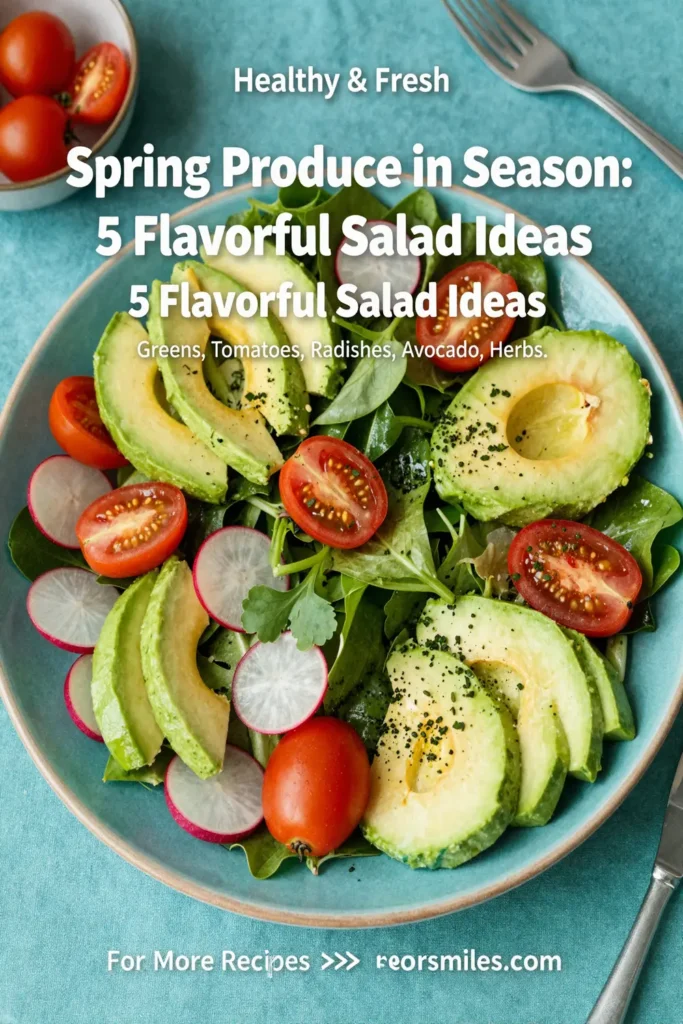
3. **Mixed Greens with Radishes and Avocado**
4. **Quinoa and Roasted Vegetable Salad**
5. **Citrus and Kale Salad**
Ingredients You’ll Need
– **Asparagus:** 1 bunch, trimmed and cut into 1-inch pieces. Asparagus provides a delightful crunch and a rich source of vitamins A, C, and K.
– **Strawberries:** 1 pint, hulled and sliced. Sweet and juicy strawberries complement the earthy flavor of asparagus for a lovely balance.
– **Mixed Greens:** 5 cups, such as baby spinach, arugula, and frisée. These offer a tender green base full of vitamins and antioxidants.
– **Fresh Peas:** 1 cup, shelled. Sweet peas add a **pop of sweetness** and a vibrant green color.
– **Feta Cheese:** ½ cup, crumbled. The tanginess of feta enhances flavors and provides a creamy texture.
– **Avocado:** 1 whole, sliced. Creamy avocado not only adds richness but also healthy fats.
– **Radishes:** 1 bunch, thinly sliced. Their peppery kick brightens the salad and adds crunch.
– **Quinoa:** 1 cup, cooked. A protein-packed grain that makes the salad more filling.
– **Citrus (Lemon or Orange):** 1 whole, juiced. Adds brightness and enhances flavors across the salads.
Image of fresh spring produce salad here.
How to Make
- Start by preparing your ingredients. Rinse and chop the asparagus into 1-inch pieces. For the **Asparagus and Strawberry Salad**, mix them with strawberry slices in a bowl.
- For the **Pea, Mint, and Feta Salad**, combine shelled peas with chopped fresh mint leaves and crumbled feta cheese in a separate bowl.
- For the **Mixed Greens with Radishes and Avocado**, wash your mixed greens and place them as a base in a larger salad bowl. Top with sliced radishes and avocado.
- Next, prepare the **Quinoa and Roasted Vegetable Salad** by cooking quinoa according to package instructions. Once cooked, let it cool before folding in roasted spring vegetables.
- For the **Citrus and Kale Salad**, massage chopped kale with olive oil until tender, then drizzle with citrus juice for added flavor.
- Finally, drizzle your favorite **salad dressing** over each salad just before serving to enhance flavors, tossing gently to combine.
Variations & Substitutions
Grain-Free Option: If you want to avoid grains, consider using **cauliflower rice** instead of quinoa in the quinoa salad. This low-carb alternative allows for a lighter dish while still offering a filling base.
Herb Variations: Fresh herbs can amplify flavor. Try adding **dill** or **parsley** to the **Asparagus and Strawberry Salad** for an extra layer of freshness.
Cheese Alternatives: For a dairy-free take, replace feta cheese with **tofu** or skip cheese altogether and add a handful of nuts like almonds or walnuts to maintain a satisfying crunch.
Dressings: Play with different **dressings**, such as balsamic vinaigrette, lemon-tahini dressing, or a simple olive oil and vinegar mix. Each will give your salad a new identity.
Common Mistakes to Avoid
A common mistake when preparing salads is over-dressing them. Too much dressing can make the salad soggy and mask the vibrant flavors of fresh produce. To taste better, start with a small amount of dressing and add more as necessary.
Another issue is **cutting vegetables too early**. Prepare ingredients shortly before serving to ensure freshness, especially for **leafy greens** that wilt quickly. Keep salads vibrant by mixing in ingredients just before serving for that fresh, crisp texture.
Storage, Freezing & Reheating Tips
To store leftover salads, keep components separate whenever possible. **Dressing can cause greens to wilt quickly,** ruining the texture. Place leftover greens in an airtight container in the refrigerator for up to 3 days.
When it comes to **freezing salads**, avoid freezing salads that contain fresh produce such as lettuce, tomatoes, or cucumber, as they do not freeze well. Instead, focus on ingredients like quinoa and roasted vegetables. If you have a grain-based salad, you can freeze it without dressing for later use.
To reheat quinoa or cooked veggies, use a stovetop or microwave until warmed throughout. Always ensure proper food safety by safely storing and reheating food.
Frequently Asked Questions
Can I use kale instead of mixed greens?
Absolutely! Kale can add a hearty texture to salads. Just be sure to massage it with a bit of oil or citrus juice to soften it before adding your toppings.
How can I make these salads more filling?
Add protein sources like grilled chicken, chickpeas, or hard-boiled eggs. Incorporating these options will transform your salad into a satisfying main dish.
What are the best dressings to pair with spring salads?
Light vinaigrettes work wonderfully for spring salads. **Citrus-based dressings or simple olive oil and vinegar balances well with fresh produce**, enhancing the overall flavor without overwhelming the ingredients.
Can I prepare these salads in advance?
While it’s best to keep the dressing separate until serving, you can prepare your salad ingredients in advance. Just keep them stored in the refrigerator, and mix right before serving.
What are some great herbs to pair with these salads?
Herbs like mint, basil, dill, and parsley all work exceptionally well with spring flavors. They can elevate the freshness and complexity of your salads.
Conclusion:
Enjoying spring produce through vibrant salads is a delightful way to celebrate the season. With each recipe offering unique flavors and textures, you are sure to add joy to your meals. Don’t hesitate to experiment with ingredients, and share the goodness with family and friends for memorable dining experiences! Each bite is not just a taste of freshness but a reflection of the blossoming season itself.