Prep time: 15 minutes
Cook time: 30 minutes
Total time: 45 minutes
Servings: 4
Spring dinners can transport you directly to a sun-kissed backyard filled with fresh blooms and the cheerful glow of longer days. This is exactly what you’ll experience when you dive into the vibrant and satisfying flavors of One-Pan Chicken and Spring Veggies. Imagine the delicious aroma of roasted chicken mingling with the sweet hints of seasonal vegetables, all coming together in a single dish that is as easy to prepare as it is appealing to the senses.
This recipe is special because it celebrates the natural flavors of spring, offering not just a meal, but a delightful culinary experience. You will learn how to balance flavors, utilize fresh produce, and cook everything to perfection in one pan, saving you time on cleanup while ensuring your dinner is both relaxing and rewarding. Whether you’re a busy parent aiming for a quick weeknight meal or simply someone looking to freshen up your dinner routine, this dish will quickly become a household favorite.
What Is Spring Dinners: One-Pan Chicken and Spring Veggies?
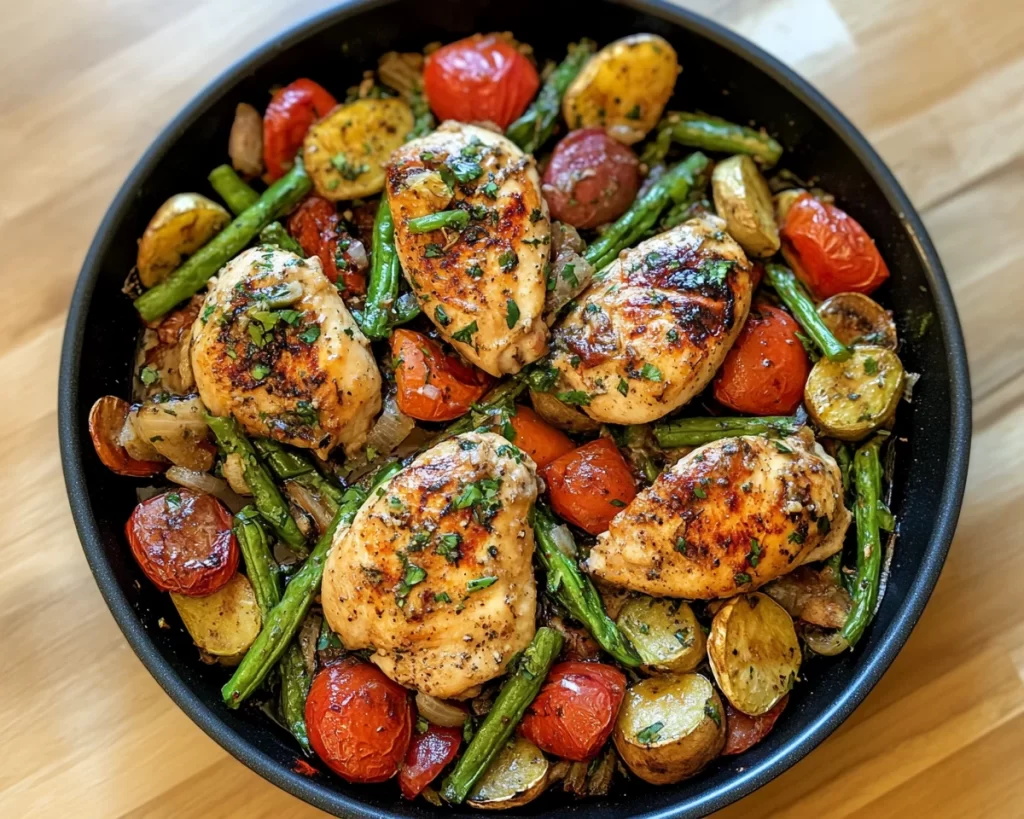
One-Pan Chicken and Spring Veggies is a harmonious blend of succulent chicken pieces and a vibrant array of spring vegetables. Originating from a desire to create meals that are as beautiful as they are nutritious, this dish showcases fresh produce like asparagus, peas, and carrots, enhancing both flavor and eye appeal. The beauty of a one-pan meal means that every ingredient cooks together, allowing their flavors to meld beautifully, resulting in a guilty pleasure that is entirely wholesome.
This dish is also versatile in texture, as the chicken turns golden-brown and crisp on the outside while remaining juicy on the inside. The vegetables maintain their crunch, providing a delightful contrast against the tender meat, and the various cooking methods used—roasting and sautéing—add depth and richness to the overall flavor profile. The outcome is a colorful feast that not only satisfies your hunger but also speaks to the brighter days of spring. Transforming simple ingredients into an extraordinary experience, this dish is bound to become a staple in your weeknight rotation.
Why You’ll Love This
This recipe is packed with benefits that make it not only delicious but also practical. First, the taste is simply **unbeatable**; the juicy chicken pairs marvelously with the seasonal vegetables, creating a balance of flavor that is fresh yet comforting. You’ll find yourself enchanted by the blend of savory and sweet notes, especially when you roast them all together, allowing the sweetness of the veggies to shine through.
In terms of ease, this one-pan method simplifies your cooking process. Instead of juggling multiple pots and pans, everything can be prepped and cooked at once, leaving more time for you to relax or spend with loved ones. The cost-effectiveness of this dish is another plus. Seasonally available vegetables are often less expensive, so you can create a stunning meal without breaking the bank.
One common misconception is that **healthier meals** lack flavor, but this dish is proof that you can indulge without compromising on taste or nutrition. With its variety of vegetables, you are not only feeding your cravings but also packing your plate with vitamins and minerals essential for a well-balanced diet. The versatility of this dish allows you to switch ingredients based on personal preference or dietary needs, lending further to its universal appeal.
Ingredients You’ll Need
- Bone-in chicken thighs: These are flavorful and remain juicy during cooking. Boneless cuts can also be used if you prefer. Ensure they are evenly sized for even cooking.
- Asparagus: Fresh asparagus adds a unique flavor and crunch. If unavailable, you can substitute it with broccoli or green beans.
- Carrots: Their natural sweetness complements the chicken beautifully. You can use baby carrots or slice regular ones into sticks.
- Snap peas: Offering a delicate sweetness and an appealing snap, these can be substituted with regular peas for a different texture.
- Garlic: Fresh garlic adds a robust layer of flavor. When roasting, it mellows out into a sweet, aromatic addition that elevates the overall taste.
- Olive oil: Used for roasting, olive oil enhances the flavors of the vegetables and helps in achieving a nice golden crust on the chicken. Alternatively, avocado oil can work too.
- Salt & pepper: These basic seasonings elevate the flavors without overpowering the dish. Feel free to experiment with other herbs and spices to suit your taste.
- Lemon juice: A splash of fresh lemon juice brightens the dish and enhances the flavors of the vegetables. Lime can be used as an alternative.
Each ingredient plays a crucial role in the profile of this dish. The chicken forms the hearty part of the meal while the vegetables provide freshness and crispness. By understanding each element’s contribution, you can make informed choices when it comes to substitutes or variations.
How to Make
- Begin by preheating your oven to 425°F (220°C). This high temperature ensures that the chicken will get that perfect golden-brown crust while the vegetables roast beautifully.
- While the oven warms up, prepare your ingredients. Start by trimming the asparagus, cutting the carrots into thin sticks, and slicing the snap peas diagonally. Mincing the garlic is also important at this stage, as fresh garlic will add robust flavor to the dish.
- In a large mixing bowl, toss the chicken thighs with olive oil, minced garlic, salt, pepper, and a generous squeeze of fresh lemon juice. Make sure every piece is well coated. This step is crucial for providing flavor throughout the chicken and helping it maintain its moisture while cooking.
- Next, arrange the chicken thighs on one side of a large, rimmed baking sheet. Spread the asparagus, carrots, and snap peas in a single layer on the opposite side. Toss the vegetables with a drizzle of olive oil, salt, and pepper to ensure they are evenly flavored as well.
- Place the baking sheet in the preheated oven and let everything roast for about 25 to 30 minutes. During this time, the chicken will cook through and caramelize while the vegetables will become tender yet retain a lovely crunch, giving you a delightful texture contrast.
- Halfway through the cooking time, open the oven and carefully stir the vegetables to ensure that they roast evenly. This step is important in helping them caramelize well and helps avoid any undercooked pieces.
- Once the chicken is cooked through—reaching an internal temperature of 165°F (75°C)—and the vegetables are tender yet crisp, remove the pan from the oven. Let it rest for a few minutes before serving. Resting allows the juices in the chicken to redistribute, ensuring that every bite is juicy and flavorful.
Now that you have the basic steps outlined, you are literally only moments away from creating this incredible dish. The aroma that fills your kitchen while it cooks will have everyone anticipating dinner, and the beautiful colors on your plate will make the meal all the more enticing.
Variations & Substitutions
Vegetarian Variation: If you’re aiming for a plant-based option, consider replacing the chicken with hearty vegetables like mushrooms and zucchini. Portobello or king oyster mushrooms can provide a meaty texture that satisfies, while zucchini adds a delightful freshness. You can also opt for firm tofu marinated in soy sauce and garlic for a complete protein alternative. This variation maintains the flavor profile while being suitable for vegetarians and vegans.
Herbed Variation: To add a burst of fresh flavor, consider using fresh herbs such as rosemary, thyme, or parsley. Simply chop a handful of these aromatic herbs and mix them into the olive oil before tossing the chicken. This variation not only infuses the dish with herbaceous notes but also provides a vibrant color that stands out against the vegetables. For those looking for a unique twist, a sprinkle of fresh dill can enhance the spring vegetable flavors beautifully.
Asian-Inspired Variation: For a different take, you might want to introduce Asian flavors. Swap out traditional seasonings for soy sauce, sesame oil, and ginger. Replace the lemon juice with rice vinegar for acidity, and consider adding thinly sliced bell peppers or bok choy. This variation brings an entirely different flavor palette to the table, making it not only a versatile dish but a globally inspired meal.
Meal Prep Variation: For those busy weeknights, consider preparing this dish in advance. You can cut and marinate the chicken up to 24 hours ahead, storing it in the refrigerator with the vegetables sealed in separate containers. This allows the flavors to mingle and develop. When you’re ready to cook, simply arrange everything on the baking sheet and follow the cooking instructions as usual. This preparation tip makes it quick and easy to whip up your dinner when time is of the essence.
Common Mistakes to Avoid
One of the most common mistakes when making this dish is overcrowding the pan. If you place too many ingredients close together, they will steam instead of roast. This can lead to soggy vegetables, which defeats the purpose of achieving that delightful roasted texture. Ensuring that the chicken and veggies are spread out allows for proper air circulation, resulting in better caramelization.
Another pitfall involves under-seasoning. While the fresh ingredients are delicious on their own, they can benefit from a well-rounded seasoning. Be generous with salt, pepper, and any additional herbs or spices you choose to use. Taste as you go to find that perfect balance. Additionally, don’t skip the resting step. Allow the chicken to rest for a few minutes after you take it out of the oven; this is vital for keeping it juicy.
Also, do not rush the cooking times. Every oven has its unique quirks and temperatures, so always check doneness with a meat thermometer. **Undercooked chicken** poses health risks, and while you want your vegetables to be crunchy, they shouldn’t be raw either. Taking a moment to ensure everything is cooked to perfection is key to mastering this dish.
Storage, Freezing & Reheating Tips
Storing any leftovers from this dish is straightforward. Allow the One-Pan Chicken and Spring Veggies to cool completely before transferring them to airtight containers. Properly sealed, leftovers can last in the refrigerator for up to three days. When reheating, make sure to do so gently in the oven or the microwave, usually in short intervals, to avoid drying out the chicken.
For longer storage, you can freeze the fully cooked dish. Place it in freezer-safe containers or bags, and it can be kept for up to three months. When you’re ready to enjoy your meal again, thaw it in the refrigerator overnight before reheating. This slow thaw method helps maintain the texture and flavor of both the chicken and the vegetables.
Always prioritize food safety practices. If in doubt about the freshness or how long a dish can be stored, it’s better to check than to risk foodborne illness. Properly reheated leftovers can be just as delicious as the initial meal, making this dish easy to enjoy multiple times in various ways.
Frequently Asked Questions
Can I use boneless chicken instead of bone-in?
Absolutely! While bone-in chicken thighs offer a juicy flavor due to the marrow, boneless chicken can be used for convenience. Just remember to adjust the cooking time accordingly, as boneless chicken typically cooks faster.
What other vegetables can I use?
You can easily substitute a variety of vegetables based on what you have on hand or prefer. Think eggplant, bell peppers, or even seasonal favorites like zucchini. Just be aware that different vegetables may require slight adjustments in cooking times for optimal texture.
Can I prepare this dish the night before?
Yes, preparing the chicken marinade and chopping the vegetables in advance can enhance the flavors. Store everything in the refrigerator and simply assemble and roast when ready to cook.
Is this dish gluten-free?
Yes, One-Pan Chicken and Spring Veggies is naturally gluten-free! All the ingredients used, such as chicken and vegetables, do not contain gluten. Make sure to check the labels if you use any packaged products to ensure they meet your dietary needs.
How do I know when the chicken is cooked through?
Using a meat thermometer is the best practice. Chicken should reach an internal temperature of 165°F (75°C) to be considered safe to eat. Make sure to check the thickest part of the chicken to ensure even cooking.
Conclusion:
One-Pan Chicken and Spring Veggies is not just a meal; it’s a wonderful way to enjoy the flavors of spring while simplifying your cooking experience. With its vibrant ingredients, rich aromas, and effortless preparation, this dish is sure to bring joy to your dinner table. I encourage you to try it out, make it your own, and share it with friends and family. Taking the time to savor the moments in the kitchen can turn an ordinary dinner into a cherished memory. Enjoy cooking!