Prep time: 15 minutes
Cook time: 20 minutes
Total time: 35 minutes
Servings: 4
Spring is a season that breathes new life into our culinary landscape, beckoning us to embrace fresh ingredients and vibrant flavors. One of my favorite ways to celebrate this is with a delightful meal that combines salmon and a crisp spring salad, all topped with a zesty lemon dressing. There’s something magical about the contrasting textures of flaky salmon and crunchy greens that tantalizes the taste buds and brings a vibrant energy to the table. Not only is this dish quick and easy to prepare, but it also highlights the essence of springtime eating: fresh, light, and nourishing. In this recipe, you’ll discover the secrets to preparing a delicious dinner the entire family will love, along with tips, variations, and answers to common questions.
What Is Spring Dinner: Salmon + Spring Salad with Lemon Dressing?
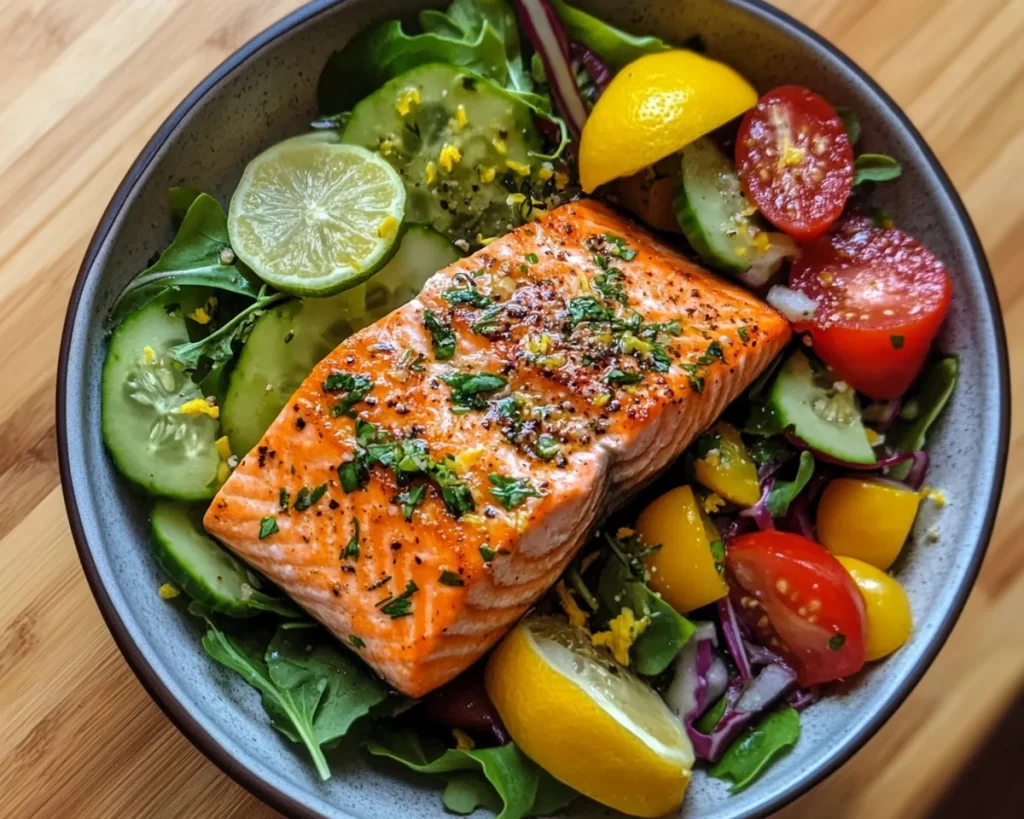
At its core, this dish is an exquisite blend of flavor, color, and nutrition. **Salmon**, a fish celebrated for its rich taste and buttery texture, is pan-seared until golden brown, creating a mouthwatering crust while keeping the inside succulent and moist. This provides a delightful contrast to the refreshing *spring salad*, which typically includes a variety of *seasonal vegetables* such as snap peas, radishes, and mixed greens. Each bite contributes to a symphony of flavors in your mouth.
The lemon dressing elevates this dish to a whole new level. Using fresh lemon juice gives the dressing a vibrant tang that perfectly complements the rich flavor of the salmon, while olive oil ensures a silky uniformity. The combination of the salad ingredients and the lemon dressing not only enhances the meal’s flavors but also adds a splash of color to your plate. This dish brings the lightness of spring into your kitchen and is a fantastic option for busy weeknights or casual gatherings. As you prepare this meal, you will feel the warmth of the season and the joy of bringing fresh food to your table.
Why You’ll Love This
There are countless reasons to adore this spring dinner of salmon and fresh salad. One of the standout benefits is its extraordinary **taste**; the combination of the flaky fish and vibrant veggies will delight your palate and leave you feeling satisfied yet light.
Furthermore, this dish is incredibly **easy** to make. With just a handful of ingredients and a few steps, you can whip up a restaurant-quality meal in less than 40 minutes. This is perfect for busy parents trying to navigate weeknight dinners or for beginners eager to make a healthy transition to cooking at home. You can even get your kids involved by letting them help with salad prep!
Another intriguing aspect is its **cost-effectiveness**. Salmon can often be found at reasonable prices, especially when purchased frozen, making it accessible for those on a budgeting journey. Pair it with seasonal vegetables, and you’ll create a filling meal without breaking the bank.
Lastly, the health benefits of this meal are undeniable. Salmon is loaded with omega-3 fatty acids, which are essential for heart health, while the fresh vegetables provide vital nutrients and vitamins. This meal is an excellent choice for anyone looking to eat healthy without compromising flavor.
Ingredients You’ll Need
To create your Spring Dinner: Salmon + Spring Salad with Lemon Dressing, gather the following ingredients:
- 4 salmon fillets (approximately 6 oz each)
- 2 tablespoons olive oil
- 1 teaspoon salt
- 1/2 teaspoon black pepper
- 1 teaspoon garlic powder
- 4 cups mixed salad greens
- 1 cup snap peas, trimmed
- 1 cup radishes, thinly sliced
- 1 cucumber, sliced
- 1/4 cup fresh parsley or dill, chopped
- 1 lemon, juiced
- 1 teaspoon honey or maple syrup (optional)
Each ingredient in this recipe plays a significant role. The **salmon fillets** serve as the protein-rich base of the dish. Opt for wild-caught salmon whenever possible, as it is often fresher and has a richer flavor than farmed varieties.
**Olive oil** is crucial for cooking the salmon and dressing the salad. It not only adds healthy fats but also contributes to the overall flavor of the meal. The **seasoning**—salt, pepper, and garlic powder—enhances the natural taste of the salmon while remaining simple and approachable.
Fresh vegetables are the stars of the salad, contributing both nutrients and crunch. **Mixed greens** offer a base, while **snap peas** add sweetness, and **radishes** bring a peppery bite. The **cucumber** provides a refreshing crunch, balancing the richness of the fish. Finally, the **lemon** juice delivers a tangy brightness that connects all the elements together beautifully.
If you’re looking for substitutes, feel free to replace **snap peas** with *green beans* or *broccoli*, and the **radishes** could be swapped for some *grated carrots* for a different flavor profile. Use your creativity to make this recipe your own!
How to Make
Follow these step-by-step instructions to create a memorable spring dinner.
- Begin by patting the salmon fillets dry with a piece of paper towel. This step is essential because it helps the fillets sear properly. Once dry, season both sides of the salmon with salt, pepper, and garlic powder—the seasoning is crucial to enhance the fish’s natural flavors.
- Heat a large skillet over medium-high heat and pour in olive oil. Once the oil is hot and shimmering, carefully place the salmon fillets skin-side down into the pan. You should hear a satisfying sizzle when the fish makes contact with the hot oil, which indicates that you’re on the right track.
- Allow the salmon to cook undisturbed for about 4-5 minutes. You want to develop a beautifully golden crust during this time. Resist the urge to flip the fish too early, as this will prevent the crust from forming. You can check if it’s ready by gently lifting one corner with a spatula; it should release easily from the pan when adequately cooked.
- Once the crust has formed, carefully flip the fillets and cook for an additional 3-4 minutes on the other side. Aim for a slightly pink center, which means the salmon is perfectly cooked and juicy.
- While the salmon is cooking, you can prepare the salad. In a large bowl, combine the mixed greens, snap peas, radishes, and cucumber. Toss these ingredients lightly to mix them together.
- Now, make the lemon dressing. In a small bowl, whisk together the lemon juice, remaining olive oil, and if you prefer a touch of sweetness, add honey or maple syrup. You can adjust the dressing to your taste; feel free to add more lemon or oil as needed.
- Drizzle the freshly made dressing over the salad and give it a light toss to ensure everything is well-coated. This step is essential, as the dressing ties all the flavors together and adds that wonderful zing.
- Once the salmon is cooked, remove it from the skillet and serve it warm over the dressed salad. Finish with a sprinkle of chopped parsley or dill to elevate the dish visually and for added flavor.
Now that you’ve prepared this splendid meal, take a moment to appreciate the colors and aromas that fill your kitchen. Serve immediately for the best experience—each bite will transport you to a spring garden.
Variations & Substitutions
Grilled Salmon Variation: For those who prefer a smoky flavor, grilling is a fantastic alternative. Preheat your grill to medium-high heat, and place the salmon on a grill rack or a piece of aluminum foil to prevent sticking. Grill for approximately 5-7 minutes on each side, depending on the thickness. This method gives the salmon a charred exterior, enhancing the overall flavor profile. If you’re having a family gathering or barbecue, this variation adds not only taste but also a communal dining atmosphere.
Vegetarian Option: If you or someone in your family is vegetarian, try replacing the salmon with **tofu** or **grilled portobello mushrooms**. The tofu should be drained and pressed to remove excess moisture before marinating it in soy sauce and garlic. Grill the tofu for a few minutes on each side until it’s golden and slightly crisp. The portobellos, with their meaty texture, offer a savory alternative. This option retains the same wonderful salad paired with a lemon dressing, ensuring everyone at the table feels included.
Whole Grain Addition: Looking to add some whole grains to the mix? Incorporate **quinoa** or **farro** into your salad for extra fiber and a heartier feel. Cook the grains according to package instructions and add them in after tossing the salad in dressing. This not only elevates nutritional content but also adds a delightful texture. Fantastic for meal prepping, this variation ensures your salad remains filling and offers amazing leftovers for dinner the following day.
Common Mistakes to Avoid
One common mistake when cooking salmon is **overcooking** it. Be vigilant and use a timer! Salmon cooks relatively quickly, and overcooking can lead to a dry and unappetizing piece of fish. Aim for an internal temperature of around 125-130°F for optimal moistness.
Another mistake is skipping the seasoning. Salmon has a natural flavor that shines through, but if not seasoned properly, it can taste bland. Ensure you season it generously with salt and pepper along with any other spices you prefer.
Lastly, don’t skip the resting time after cooking. Allowing the salmon to rest for a minute or two off the heat can significantly improve the overall taste and texture. This step lets the juices redistribute, acting as a safeguard against dryness.
Storage, Freezing & Reheating Tips
If you end up with leftovers, you’re in for a treat! Store the cooked salmon and salad separately in airtight containers. The **salmon** can be kept in the refrigerator for up to three days, and the salad will retain its fresh crunch for about two days. Be sure not to add the dressing until you’re ready to serve the salad to keep the greens from wilting.
For longer storage, you can freeze the cooked salmon in an airtight container or freezer bag. It will remain good for up to three months. For best results, thaw in the refrigerator overnight before reheating. To reheat, place the salmon in a preheated oven at 350°F for about 10 minutes until warmed through.
Always practice food safety by ensuring that leftovers are stored promptly, ideally within two hours of cooking. This will help prevent bacterial growth and ensure your meal remains safe and delicious.
Frequently Asked Questions
Can I use frozen salmon for this recipe? Yes! Frozen salmon is an excellent alternative, and many people find it has a similar flavor and texture as fresh when prepared correctly. Be sure to thaw it completely in the refrigerator before cooking, and pat it dry to ensure a flavorful sear.
Can I make the lemon dressing ahead of time? Absolutely! The lemon dressing can be made in advance and stored in the refrigerator for up to one week. This makes it a great option for meal prepping, as you can prepare multiple servings of salad and simply dress them when you’re ready to eat.
What type of salad greens work best? You can use a mix of leafy greens such as arugula, spinach, or romaine. Each brings its unique flavor profile and texture. If you want a little more crunch, you can also add cabbage or kale.
What sides pair well with this dish? If you wish to elevate your spring dinner further, consider serving it with a side of **herbed couscous** or **roasted asparagus**. Both options complement the salmon and salad beautifully while keeping in line with the fresh spring theme.
Can I use another type of fish instead of salmon? Of course! Feel free to substitute salmon with other firm fish such as **trout** or **tilapia**. Adjust cooking times accordingly, as different types may require varying amounts of time to cook through.
Conclusion:
This Spring Dinner: Salmon + Spring Salad with Lemon Dressing is an experience you won’t forget—it’s delicious, healthy, and beautifully easy to whip up. With a few straightforward steps, you can bring the freshness of spring into your dining experience. The combination of flavors, textures, and the vibrancy of colors not only makes for an appealing plate but also symbolizes the joy of seasonal eating. I encourage you to try this dish, customize it to suit your preferences, and share it with those you love. Happy cooking!