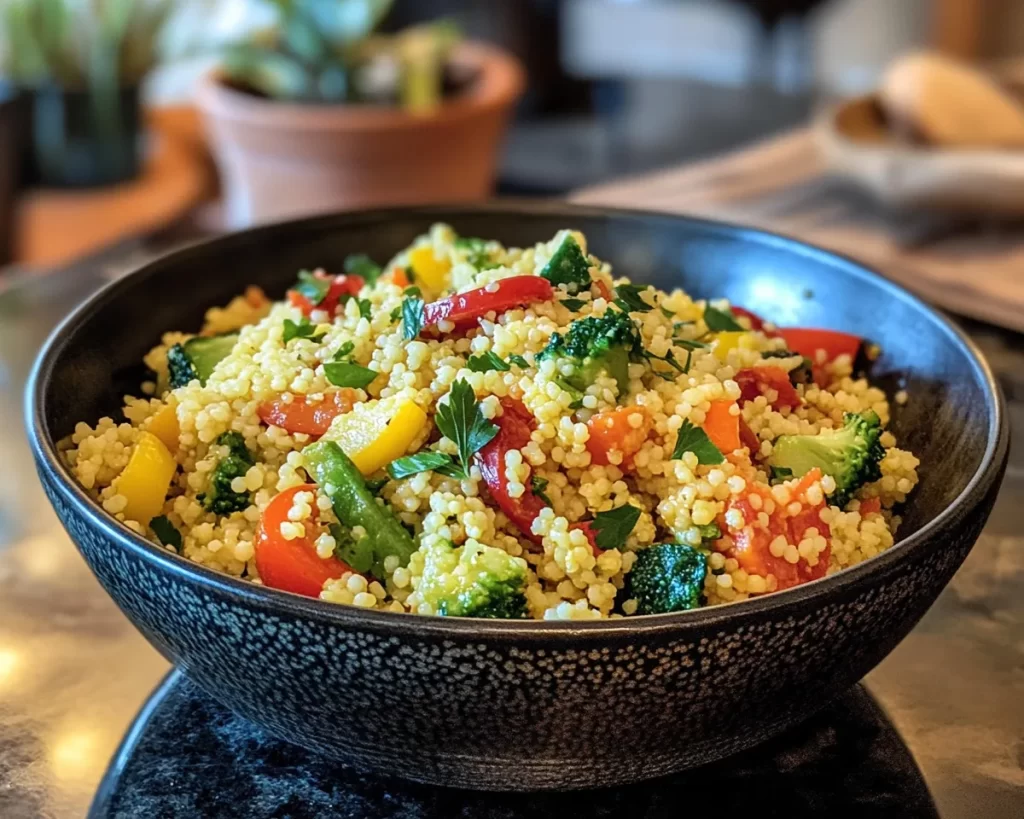
Prep time: 5 minutes
Cook time: 10 minutes
Total time: 15 minutes
Servings: 4
Spring has arrived, and with it comes the chance to enjoy *vibrant, fresh ingredients* that nurture our bodies and lift our spirits. If you’re looking for a quick and delicious dinner option that embraces the season’s bounty, you’ve come to the right place. This **Spring Veggie Couscous** comes together effortlessly in just 15 minutes. It’s perfect for busy weeknights or laid-back weekends, making use of crisp vegetables and fluffy couscous that is not just nutritious but also satisfying.
What Is Spring Dinner Recipes: Spring Veggie Couscous in 15 Minutes?
This dish is a delightful way to capture the essence of spring and feature seasonal ingredients. Couscous, a tiny pasta made from semolina, absorbs flavors beautifully and pairs perfectly with the crunch and freshness of spring veggies. Whether you’re new in the kitchen or a seasoned chef, this recipe will surely become a staple in your household.
Why You’ll Love This
There are many reasons to adore this Spring Veggie Couscous. First, it is incredibly quick to prepare, making it an excellent option for those hectic days when you still want a homemade meal. Second, it’s versatile; you can use whatever vegetables you have on hand, ensuring nothing goes to waste. Moreover, it offers a nourishing profile—filled with vitamins and minerals, it supports healthy eating while also satisfying your cravings. Finally, its light, fluffy texture, combined with a medley of colors, makes this dish a feast for both the eyes and the palate.
Ingredients You’ll Need
- Couscous: 1 cup – This will serve as the base for the dish, providing a light and airy texture.
- Vegetable broth: 1 cup – Using broth instead of water infuses additional flavor.
- Zucchini: 1 medium, diced – Adds a soft texture and a mild flavor.
- Bell pepper: 1 medium, diced – Contributes a sweet crunch and vibrant color.
- Cherry tomatoes: 1 cup, halved – Offers a juicy burst of flavor.
- Peas: 1 cup – Adds natural sweetness and bright green color.
- Garlic: 2 cloves, minced – Enhances the dish with a robust aroma and flavor.
- Olive oil: 2 tablespoons – Perfect for sautéing the vegetables.
- Fresh herbs: 2 tablespoons of chopped parsley or basil – Adds freshness and a hint of the garden.
- Salt and pepper: to taste – Essential for seasoning.
INSERT IMAGE HERE
How to Make
- Begin by heating 1 tablespoon of olive oil in a medium saucepan over medium heat. Once hot, add the minced garlic and sauté for about 30 seconds, or until fragrant. Be careful not to burn it, as burnt garlic can be bitter.
- Add the diced zucchini and bell pepper to the saucepan. Sauté for about 3 minutes until the vegetables start to soften. This step allows the veggies to maintain a slight crunch while absorbing the flavors from the garlic.
- Next, introduce the halved cherry tomatoes and peas into the saucepan. Stir them into the mixture and continue to sauté for 2 more minutes. The tomatoes should begin to soften, releasing their juices, which will enhance the overall flavor of the dish.
- In a separate pot, bring the vegetable broth to a boil. Once boiling, remove it from heat and add the couscous. Cover and let sit for 5 minutes. The couscous will absorb the broth, expanding and softening in the process.
- Fluff the couscous with a fork, then combine it with the sautéed vegetable mixture. Drizzle with the remaining tablespoon of olive oil, and add the freshly chopped herbs, along with salt and pepper to taste. Stir until evenly combined.
- Serve warm, and feel free to garnish with additional fresh herbs or a squeeze of lemon juice for a zesty kick!
Variations & Substitutions
Roasted Vegetable Couscous: For a different flavor profile, try roasting your vegetables instead of sautéing them. Toss the zucchini, bell peppers, and tomatoes with olive oil, salt, and pepper, and roast in a preheated oven at 400°F for about 20 minutes. This method will caramelize the veggies, adding a delightful sweetness and depth of flavor to your dish.
Protein-Packed Couscous: If you want to increase the protein content, consider adding cooked chickpeas or grilled chicken to the mix. This is not only filling but also nutritious. Just toss the chickpeas into the sautéed vegetables in the last minute of cooking, or top your couscous with sliced grilled chicken before serving.
Herbed Couscous: To enhance the flavor further, you can mix in **other fresh herbs like dill or mint**. This adds a refreshing touch to the dish, perfect for spring and summer meals. Simply chop the herbs finely and stir them in along with the parsley or basil.
Common Mistakes to Avoid
Overcooking the vegetables: One common misstep is overcooking the vegetables, which can lead to a mushy texture. It’s essential to sauté them just until they’re tender yet still maintain some crunch. This way, they will add a satisfying bite to your couscous.
Not enough seasoning: Another mistake is neglecting to season adequately. Make sure to taste your dish before serving. Salt and pepper can make a big difference in enhancing the overall flavor of your couscous. Don’t hesitate to experiment with other spices like paprika or cumin for added depth.
Using water instead of broth: While water can be a substitute for vegetable broth, it won’t provide the same level of flavor. Always opt for broth when cooking couscous to enrich its taste. If you don’t have broth on hand, consider adding a dash of soy sauce or lemon juice for extra flavor.
Storage, Freezing & Reheating Tips
If you find yourself with leftovers, store the Spring Veggie Couscous in an airtight container in the refrigerator. It will remain fresh for up to three days. When you’re ready to enjoy it again, gently reheat in the microwave or on the stovetop. If it’s too dry, add a splash of vegetable broth or olive oil to bring back its fluffy texture.
For long-term storage, you can freeze the couscous. Place it in a freezer-safe container and it will keep for up to two months. When thawing, leave it in the fridge overnight and reheat as described above. Be cautious about food safety practices, especially if storing vegetables with varied shelf lives.
Frequently Asked Questions
Can I make this dish ahead of time?
Absolutely! This couscous can be made ahead of time, making it ideal for meal prep. Just store it in an airtight container in the refrigerator. When ready to eat, simply reheat, and it’ll taste delicious!
What can I serve with Spring Veggie Couscous?
This versatile dish pairs well with grilled meats, fish, or can be enjoyed on its own as a light meal during the spring. Adding a simple side salad or some crusty bread can make it a complete meal.
Can I use other vegetables?
Yes! Feel free to substitute in your favorite spring vegetables. Asparagus, carrots, or snap peas would work wonderfully. The idea is to take advantage of what is in season and adjust according to your personal preferences.
Is couscous gluten-free?
Traditional couscous is made from wheat and is not gluten-free. However, you can find gluten-free couscous alternatives made from rice or quinoa. Just ensure to check the packaging while shopping.
How can I enhance the flavor further?
Adding spices like turmeric, cumin, or even a pinch of red pepper flakes can add an exciting flavor kick to the couscous. You can also incorporate cheese like feta or goat cheese for a creamy texture that complements the freshness of the vegetables.
Conclusion:
In just 15 minutes, you have a light, healthy, and colorful meal that embodies the spirit of spring. With its flexibility and vibrant ingredients, the Spring Veggie Couscous is more than just a quick dish; it’s a celebration of seasonal bounty that everyone can enjoy. Whether you’re a busy parent, kitchen beginner, or a health-conscious eater, this recipe is perfect for you. Feel free to experiment with ingredients and make it your own!