Prep time: 30 minutes
Cook time: 30 minutes
Total time: 1 hour
Servings: 12
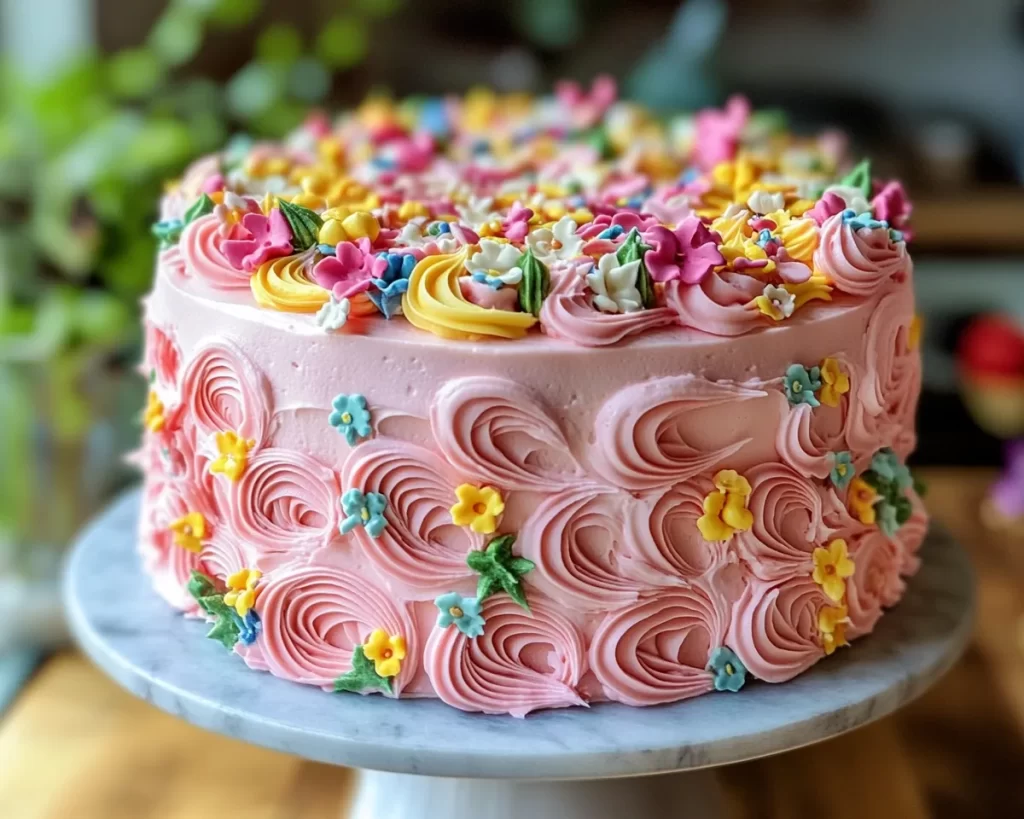
In the world of baking, few things are as delightful as a beautifully crafted cake that not only pleases the palate but also captivates the eyes. The Simple Spring Cake with Buttercream Swirls stands as a wonderful embodiment of spring’s vibrant spirit. Imagine a moist vanilla cake layered generously with fluffy, creamy buttercream that bursts with colors reminiscent of blooming flowers and sunny skies. This cake is not just a dessert; it’s a centerpiece, a memory-maker, and a symbol of the joy that comes with warmer days.
The great news is that making this cake is accessible, even for those who might feel intimidated by the thought of baking. The blend of straightforward ingredients and easy techniques ensures that anyone can bring this cake to life, whether you’re an experienced baker or a beginner just stepping into the kitchen. This article will guide you through every step of the process, sharing tips, tricks, and variations that will help you tailor this cake to your taste and occasion.
What Is Spring Cake Designs: Simple Spring Cake with Buttercream Swirls?
The Simple Spring Cake with Buttercream Swirls is essentially a classic vanilla cake made festive and delightful through the addition of colorful buttercream frosting. Traditionally, vanilla cakes are celebrated for their light, fluffy texture and subtle sweetness. When paired with buttercream, which can be flavored and tinted in myriad ways, the cake transforms into a canvas for creativity.
These buttercream swirls not only add aesthetic appeal but also a rich, creamy texture that complements the light sponge beautifully. The origins of this cake style date back to various European baking traditions, with layers of cake and frosting evidencing a long-standing love affair with cakes in celebrations and gatherings. The flavors can evoke reminiscence of family gatherings, birthday parties, and seasonal festivities, enriching the cake with a delightful nostalgia.
As spring brings a sense of renewal, this cake mirrors the season’s essence—fresh, vibrant, and delightful. Simple enough for everyday enjoyment yet stunning enough for special occasions, it is a perfect representation of the joy that spring brings.
Why You’ll Love This
There are countless reasons to fall in love with the Simple Spring Cake with Buttercream Swirls. First and foremost, the taste—this cake offers a balance of sweet and creamy with a delightful vanilla flavor that resonates with many. The lightness of the cake paired with the richness of the buttercream creates a mouthfeel that’s nothing short of heavenly.
Ease of preparation sets this cake apart. You don’t need advanced baking skills—just a few basic techniques and quality ingredients to whip up a creation that will impress. Additionally, the cost of making this cake is quite reasonable. Simple ingredients such as flour, sugar, eggs, and butter come together in a way that elevates the dish without stretching your budget.
This cake is versatile too. You can customize the flavors of the buttercream to match specific themes or personal preferences, making it suitable for a variety of occasions. For instance, adding lemon zest to the frosting can introduce a refreshing tang, while incorporating chocolate can satisfy the cocoa cravings of any chocolate lover.
It’s important to note common misconceptions regarding cake baking. Many believe that baking is solely for the expert and that mistakes are unforgivable. In reality, even seasoned bakers have their off days. However, understanding the common pitfalls can transform your baking experience.
Ingredients You’ll Need
To create the Simple Spring Cake with Buttercream Swirls, gather the following ingredients:
- 2 cups all-purpose flour: This will serve as the foundation of your cake, providing structure and texture.
- 1 ½ cups granulated sugar: Sweetness is essential for your cake’s flavor profile. You can substitute with cane sugar or even a sugar alternative for a healthier option.
- ½ cup unsalted butter: Butter lends a rich flavor. If needed, margarine or a plant-based butter can work as substitutes.
- 1 cup milk: Milk adds moisture. You may opt for almond milk, oat milk, or coconut milk for non-dairy options.
- 3 large eggs: Eggs help bind ingredients and add richness. For a vegan alternative, consider using flax eggs.
- 1 tablespoon baking powder: This is crucial for your cake to rise. Ensure it’s fresh to guarantee a well-risen cake.
- 1 teaspoon vanilla extract: The essence adds depth to your cake’s flavor. For variation, almond extract can be used.
- Pinch of salt: Salt enhances sweetness and balances flavors.
In terms of the buttercream, here’s what you’ll need:
- 1 cup unsalted butter (room temperature): This will ensure a smooth, creamy texture.
- 4 cups powdered sugar: The primary sweetener that will create that fluffy buttercream texture.
- 2 tablespoons heavy cream: This adds richness and helps achieve that luscious consistency.
- 1 teaspoon vanilla extract: For added flavor, you can also incorporate other flavors if desired.
- Food coloring (optional): This will allow you to create vibrant swirls.
These ingredients come together to create an engaging sensory experience, where each bite offers a burst of sweetness accompanied by the creaminess of the buttercream.
How to Make
Creating the Simple Spring Cake with Buttercream Swirls involves a series of well-defined steps, each contributing to that perfect final product.
- Preheat your oven: Start by preheating your oven to 350°F (175°C). This step is critical as it allows your cake to bake evenly. Prepare your cake pans by greasing them thoroughly with butter and a light dusting of flour to prevent sticking.
- Combine dry ingredients: In a mixing bowl, sift together the flour, baking powder, and salt. This process aerates the flour and helps mix the baking powder evenly throughout, essential for a fluffy texture. Set this mixture aside as you prepare the wet ingredients.
- Cream butter and sugar: In a large mixing bowl, combine the unsalted butter and granulated sugar. Using an electric mixer, beat them together on medium speed until the mixture is light and fluffy—about 3–5 minutes. This step is crucial as it incorporates air into the batter, leading to a lighter cake.
- Add eggs and vanilla: Next, add the eggs one at a time, ensuring each one is well incorporated before adding the next. Follow this with the vanilla extract. Continue to mix until combined. At this point, the batter should have a smooth consistency.
- Alternate dry and wet ingredients: Begin adding the flour mixture gradually, alternating with the milk. Start with the flour, then add milk, mix until just combined, and repeat this process until all ingredients are used. Avoid overmixing as this can lead to a dense cake.
- Pour batter into prepared pans: Divide the batter equally between the two prepared cake pans. Use a spatula to smooth the tops so they bake evenly. Smoothly and confidently pour to reduce air pockets, ensuring that the cakes will have a uniformly flat top.
- Bake the cakes: Place the pans in the oven and bake for approximately 25–30 minutes or until a toothpick inserted comes out clean. As you approach the end of the baking time, it’s essential to keep an eye on the cakes to avoid overbaking, which can dry them out.
- Cool the cakes: Once baked, remove them from the oven and allow them to cool in the pans for about 10 minutes. Then transfer the cakes to wire racks to cool completely. Cooling prevents sogginess and allows for easy frosting.
- Make the buttercream: While the cakes are cooling, you can prepare the buttercream. In a mixing bowl, beat the room-temperature butter until creamy. Gradually add the powdered sugar, mixing on low to avoid a sugar cloud. Once incorporated, add the heavy cream and vanilla, whipping until the buttercream is fluffy and smooth.
- Frost the cake: Ensure the cakes are completely cool. Place one layer on your serving plate, then apply a generous layer of buttercream on top before adding the second layer. Frost the top and sides as desired, and create fun swirls using a spatula or piping bag for an inviting presentation.
- Decorate: If you’re feeling inspired, top the cake with fresh fruits, flowers, or edible decorations to enhance its spring-like appeal. This personalization not only makes your cake look stunning but also adds extra flavor elements.
Following these steps carefully will help generate a soft, moist, and vibrant cake that truly embodies the essence of spring.
Variations & Substitutions
Citrus Zest Variation: For those looking to brighten up their cake, consider adding 1–2 tablespoons of lemon or orange zest to the batter. This adds a delightful citrus flavor that pairs perfectly with the sweetness of the buttercream. It’ll appeal to anyone who loves zesty desserts and can provide an invigorating twist that’s especially refreshing in spring and summer.
Chocolate Buttercream Variation: If you want to satisfy the chocolate lovers in your life, switch up your buttercream by incorporating cocoa powder. Start with ½ cup of unsweetened cocoa powder into your frosting to create a rich chocolate flavor. This variation gives a delightful contrast to the vanilla cake, making it appealing for any chocolate craving.
Gluten-Free Alternative: For those avoiding gluten, replacing traditional all-purpose flour with a gluten-free flour blend can work wonders. Ensure the blend contains xanthan gum to help maintain texture and stability. The flavor will remain as delightful, allowing everyone to enjoy this spring cake without dietary concerns.
Fruit Lava Cake Variation: To introduce a fruity surprise, bake a layer of mixed berries (like strawberries, raspberries, or blueberries) into the cake by folding them into the batter before pouring it into the pans. The result will be a celebration of flavors as the sweetness of the cake pairs with the tartness of the berries, providing a beautiful and delicious contrast alongside the buttercream.
Common Mistakes to Avoid
One of the most common mistakes in baking is mismeasuring ingredients. Even a small deviation can lead to undesired results. For example, adding too much flour can lead to a dry cake. Always use precise measurements. It’s best to weigh ingredients where possible for accuracy.
Another frequent error is baking at incorrect temperatures. An oven that’s too hot can cause the cake to brown on the outside while remaining raw inside. Invest in an oven thermometer to ensure the accuracy of your oven temperature.
Not fully cooling the cakes before frosting can also lead to disaster. A warm cake will melt the buttercream, leading to a gooey mess. Take the necessary time to let your cake cool completely on a rack before applying any frosting.
Finally, overmixing the batter can result in a dense texture. Mix just until the ingredients are combined; don’t go overboard. This is particularly important with cakes, as the goal is to maintain that light, fluffy structure.
Storage, Freezing & Reheating Tips
When it comes to storing your Simple Spring Cake with Buttercream Swirls, the key is fresh retention. If you plan to enjoy it within a couple of days, store it at room temperature in an airtight container. This will keep the texture and flavor intact. If you live in a humid climate, refrigeration is recommended to prevent spoilage.
For longer storage, you can freeze the unfrosted cake layers. Wrap each layer in plastic wrap followed by aluminum foil to ward off freezer burn. To eat, simply remove from the freezer, let it thaw in the refrigerator overnight, and frost as desired.
If you have leftover frosted cake, it’s best kept in the refrigerator, but try to consume it within a week for optimal quality. Remember that the icing may become a bit less stable after a couple of days, but this won’t significantly alter the flavor.
Reheating pieces of cake in the microwave may make them soft and warm but be cautious as overheating can dry them out. A few seconds is often all it takes to regain that fresh bakery feel.
Frequently Asked Questions
Can I make this cake ahead of time? Absolutely! The Simple Spring Cake can be made a day in advance. Store the unfrosted cakes in an airtight container or wrapped to keep them fresh. Frosting can also be prepared ahead of time; just make sure to store it in the refrigerator and bring it to room temperature before using.
What type of butter should I use for the buttercream? Unsalted butter is typically recommended for buttercream frosting as it allows you to control the saltiness of the final product. If you only have salted butter on hand, you can use it, but decrease any additional salt in your recipe.
Can I use a different type of frosting instead of buttercream? Yes! Feel free to explore alternative frostings, such as cream cheese frosting or whipped cream. Each offers a different flavor and texture, ensuring variety in your desserts.
Is this cake suitable for special dietary needs? The Simple Spring Cake can be adapted to fit various dietary preferences, including gluten-free and dairy-free options. Refer to the “Variations & Substitutions” section for easy swaps.
How can I ensure my cake is fluffy and not dense? Focus on measuring your ingredients accurately, especially flour, and avoid overmixing the batter. Incorporating air into the batter during the creaming process will help create that light texture.
Conclusion:
The Simple Spring Cake with Buttercream Swirls is a fantastic addition to any celebration, from birthday parties to family gatherings. Its blend of flavors, textures, and vibrant presentation makes it not just a dessert, but a joyful experience in every bite. Your kitchen will transform into a scene of creativity and happiness as you bake this cake, and you’ll be encouraged to customize it further with your unique twist.
I invite you to roll up your sleeves, experiment, and enjoy this delightful concoction. Whether you decorate it with a simple swirl or go all out with designs that mirror spring blooms, this cake is sure to impress. Share your results and your personalized versions with others, for good food is best enjoyed with friends and family. Happy baking!