## Prep Time
30 minutes
## Cook Time
2 hours
## Total Time
2 hours 30 minutes
## Servings
6 servings
—
In the heart of culinary traditions lies the classic comfort dish of Soup Beans with Roast Pork. This recipe draws from a rich history, merging flavors that evoke warmth and satisfaction. The aroma of simmering beans mingling with savory roast pork is enough to bring anyone into the kitchen, eager to taste a bowlful of deliciousness.
What makes this recipe truly special isn’t just the delightful combination of ingredients; it’s the stories shared over a steaming bowl, the laughter of family gathered together, and the simple pleasure of a home-cooked meal. In this article, you will discover the enticing history behind soup beans with roast pork, essential ingredients, a step-by-step guide to crafting it, variations to suit your preferences, tips to avoid common mishaps, and even FAQs to make your cooking experience a breeze.
—
What Are Soup Beans with Roast Pork?
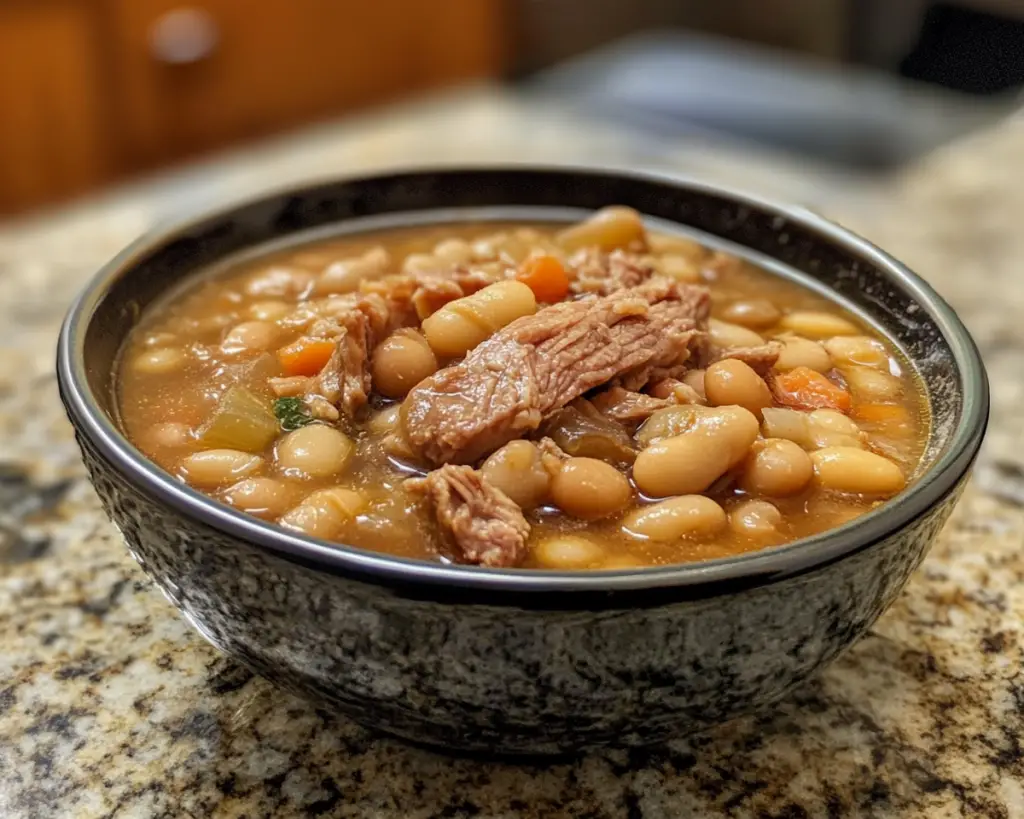
Soup beans, often known locally as “seasoned beans” or “southern-style beans,” are a staple in many households, particularly in the Appalachian region of the United States. This dish typically features dried beans that are cooked down into a thick, savory, and deeply flavored broth. The use of **roast pork** lends a rich depth of flavor to the dish, elevating it from humble ingredients to an unforgettable meal.
The texture of soup beans cooked correctly is creamy and soft, thanks to the long cooking time that allows them to break down and thicken the broth slightly. The roast pork, seasoned and seared to perfection, adds a delicious smokiness and heartiness that can transform this dish into a satisfying main course. Each spoonful is a blend of the tender beans, succulent pork, and savory spices that create a full-bodied flavor profile.
Traditionally, soup beans have been a way to use inexpensive ingredients to create a nourishing meal, making this dish not only tasty but also budget-friendly. Whether served alone or accompanied by cornbread, the dish embodies the essence of comfort food.
—
Why You’ll Love This Soup Beans with Roast Pork
There are many reasons to love this recipe for soup beans with roast pork. First and foremost is the **taste**; the combination of seasoned beans and pork creates a warm, hearty flavor that resonates deeply. You can adjust the spiciness and seasoning based on your preferences, allowing for versatility in each pot you make.
Moreover, it’s straightforward and **easy** to prepare, making it an excellent choice for busy parents or beginner cooks. You can throw the ingredients into a pot and let them simmer while you take care of other tasks, making it perfect for meal prep or a weekend family dinner.
Additionally, this dish is **cost-effective**. Dried beans and a cut of pork shoulder or belly are relatively inexpensive, and you’ll likely have many of the spices and pantry staples on hand. This makes it an attractive option for those looking to feed a large family on a budget.
Not to mention, soup beans with roast pork are fairly **health-conscious**. Beans are a great source of protein and fiber, while the pork adds another layer of protein, making for a well-rounded dish that can keep you satisfied for hours.
Lastly, this meal is highly **versatile**; you can serve it with cornbread, over rice, or even incorporate different vegetables based on the season, ensuring you can savor this dish year-round.
—
Ingredients You’ll Need
To create the exquisite soup beans with roast pork, gather the following ingredients:
– **1 pound dried beans** (such as pinto, navy, or great northern)
– Dried beans will provide a rich texture when cooked. They can be substituted with canned beans if you’re short on time but must be added later in the cooking process.
– **1 pound pork shoulder or pork belly**
– This cut is ideal for slow cooking, yielding tender meat that breaks apart easily. You can substitute with ham hocks or smoked sausage for a different flavor.
– **1 medium onion, diced**
– Onions add a foundational flavor to the broth. You may use shallots or leeks for a sweeter taste.
– **3 cloves garlic, minced**
– Garlic enhances the aroma and depth of flavor in the dish. Consider using garlic powder if fresh is unavailable.
– **4 cups water or chicken broth**
– Broth will elevate the flavors of your soup, while water can be used in a pinch. Ensure that if using water, you adjust seasoning.
– **1 teaspoon smoked paprika**
– This lends a smoky flavor that echoes the roast pork. Regular paprika works but won’t have the same depth.
– **1 teaspoon black pepper**
– Freshly cracked black pepper will provide a subtle kick. Adjust based on personal preference.
– **1 teaspoon salt** (or to taste)
– Essential for balancing flavors. Be cautious, especially if your broth is already salted.
– **1 bay leaf**
– For added herbal notes. Remove it before serving as it’s not edible.
– **Optional: 1-2 cups chopped vegetables** (like carrots, celery, or bell peppers)
– Adding vegetables can improve texture and nutrition. You can go with whatever is fresh or seasonal.
—
How to Make Soup Beans with Roast Pork
1. **Soak the Beans:**
Begin by rinsing the dried beans under cold water to remove any debris or dirt. Next, place them in a large bowl and cover with water. Let them soak for at least 8 hours or overnight if possible. This step will reduce cooking time and ensure even cooking. If you’re pressed for time, you can use the quick-soak method by bringing the beans to a boil for a few minutes and then letting them sit for about an hour before draining.
2. **Prepare the Pork:**
While the beans are soaking, the pork needs your attention. Cut the pork shoulder into large chunks, about 2 inches thick, and season generously with salt, pepper, and smoked paprika. In a large pot or Dutch oven, heat a tablespoon of oil over medium-high heat. When the oil is shimmering, add the pork in batches, browning on all sides for about 3-4 minutes. This step adds depth through caramelization.
3. **Sauté Aromatics:**
Once the pork is beautifully browned, remove the pieces, and set them aside on a plate. In the same pot, add the diced onion, cooking until translucent, approximately 5 minutes. Toss in the minced garlic and cook for an additional minute until fragrant. Be sure to scrape up any flavorful brown bits from the bottom of the pot.
4. **Add the Beans and Broth:**
Drain the soaked beans and add them to the pot, along with the browned pork. Pour in the water or chicken broth and stir in the bay leaf. Bring everything to a gentle simmer. If you’re using vegetables, now is the time to add them into the mix. Their addition will enhance the overall flavor, providing subtle sweetness.
5. **Simmer to Perfection:**
Cover the pot, reduce the heat to low, and let it simmer for at least 1 ½ to 2 hours. Stir occasionally and check the beans for doneness. They should be tender but not mushy. If you find the mixture getting too thick, feel free to add more broth or water. The longer you simmer, the more the flavors will meld.
6. **Final Touches:**
Once the beans are tender, remove the pork pieces. Using two forks, shred the meat and return it to the pot. Season with salt and pepper to taste, allowing the soup to simmer for another 10 minutes to let the seasoning seep in. Taste and adjust any flavors as needed.
7. **Serve:**
Ladle the soup beans with roast pork into bowls. Garnish with fresh herbs like parsley or cilantro for a pop of color. Serve with cornbread or over rice for a complete meal.
—
5 Variations & Substitutions
### 1. Vegetarian Option
For a meatless dish, substitute the pork with **smoked tempeh** or **mushrooms**. However, you can use the same spices to replicate the smoky flavor. Replace the broth with a rich vegetable stock for a fuller flavor.
### 2. Spicy Style
If you enjoy a kick, add **chopped jalapeños** or **red pepper flakes** to the sautéed onions. Consider using **andouille sausage** instead of pork to inject a spicy twist into the dish.
### 3. Cuban Influence
Incorporate **cumin** and **oregano** for a Cuban flavor profile. You might also want to add a can of **diced tomatoes** to the pot for depth, along with some sliced olives for that signature taste.
### 4. Southern Style
Include **collard greens** or **kale** into the soup during the last 30 minutes of cooking. This will give you added nutrition and a Southern flair. You may also make cornbread or biscuits a traditional side for this variation.
### 5. Gluten-Free
Ensure your broth is gluten-free, as some commercial brands may contain gluten in their flavorings. This dish is inherently gluten-free due to the nature of beans, making it a fitting option for those with dietary restrictions.
—
Common Mistakes to Avoid
One major mistake is rushing the soaking process of the beans. Skipping this step may lead to hard beans that never cook down properly. Ensure that the cooking time is also adequately observed. If beans are undercooked, they can retain a hard texture, while overcooked beans may turn mushy, disrupting the desired texture. Always opt for medium heat when simmering the soup; too high, and the beans can break apart.
Don’t forget to taste your dish regularly throughout the cooking process. Under-seasoning is a common pitfall; bland soup beans can be sad. Aim to finish with a final seasoning adjustment once the beans are tender, allowing all the flavors to marry properly.
Lastly, be wary of the bay leaf. While it adds exemplary flavor, it is inedible and should never be served in the bowl. Remember to fish it out before serving!
—
Storage, Freezing & Reheating Tips
To properly store leftover soup beans with roast pork, let the dish cool completely, then transfer it into an airtight container. Refrigerate for up to 4 days. To maintain the best texture, seal it properly to guard against drying out.
For longer storage, you can freeze the soup in portions, allowing you to enjoy it later. It should be kept in a freezer-safe container and can be stored for up to 6 months, but for optimal taste, aim to use it within 2-3 months.
When you’re ready to reheat, simply thaw in the refrigerator overnight. Reheat gently on the stovetop over low heat, adding a splash of broth or water to loosen it if needed. Stir occasionally until warmed through. Alternatively, you can microwave it in a microwave-safe bowl, stirring at intervals to ensure even heating.
When reheating, always ensure that the soup is heated thoroughly to an internal temperature of 165°F, ensuring food safety practices are met.
—
Frequently Asked Questions
**1. Can I use canned beans instead of dried?**
Yes, canned beans can be more convenient. If you opt for them, skip the soaking process and reduce the cooking time significantly. Add them during the last 20-30 minutes to warm them through and infuse their flavors.
**2. What types of beans are best for soup?**
Dried pinto beans, navy beans, and great northern beans are ideal for this dish due to their creamy texture. Feel free to mix different types for a varied flavor.
**3. Is this soup suitable for meal prep?**
Absolutely! Soup beans with roast pork store well, making them perfect for meal prepping. Store in individual containers for a quick grab-and-go meal throughout the week.
**4. Can I substitute the pork with another meat?**
Yes! The pork can be replaced with any type of meat you prefer, such as turkey or chicken. You can also use smoked meat for added flavor.
**5. How can I make this dish healthier?**
To make it healthier, add more vegetables such as carrots, zucchini, or bell peppers. You can also use leaner cuts of pork or reduce the amount of meat used in favor of increasing the beans and vegetables.
—
In conclusion, soup beans with roast pork captures the essence of comfort food with its rich flavors, hearty texture, and budget-friendly appeal. It’s a dish that not only satiates cravings but also brings people together. So, gather your ingredients, embrace the process, and prepare to create a meal that will satisfy both your hunger and your soul. Don’t be afraid to make it your own; whether through variations or new twists, this dish has room for personal expression. Enjoy the aromas filling your kitchen and share your experience with others—after all, good food is meant to be shared. So roll up your sleeves and let’s cook!
[Read also: Easy Dessert Recipes for Beginners]