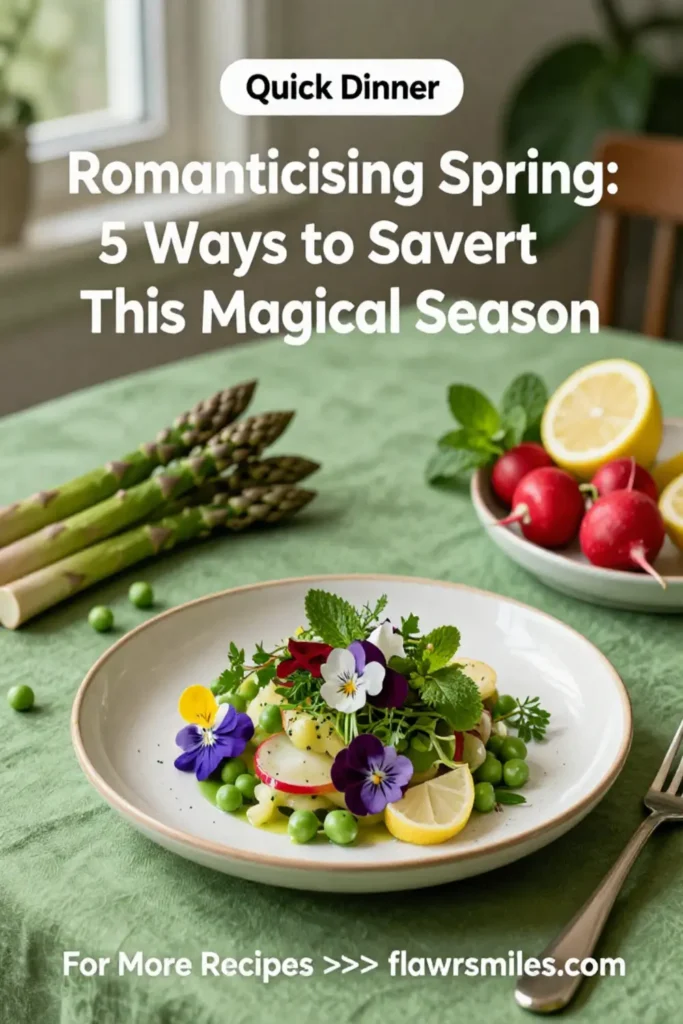
Prep time: 20 minutes
Cook time: 30 minutes
Total time: 50 minutes
Servings: 4
Spring is a season that invites renewal and fresh starts, and what better way to celebrate this vibrant time of year than by having a romantic meal? Whether you’re looking to impress your partner or simply want to relish the beauty of the season, “Romanticising Spring: 5 Ways to Savor This Magical Season” brings warmth and light to your dining table. With the right ingredients, techniques, and a sprinkle of creativity, you can create a delightful experience that embodies the very essence of spring.
What Is Romanticising Spring: 5 Ways to Savor This Magical Season?
The idea behind romanticizing spring involves embracing the flavors and ingredients that the season has to offer. This is the time when fresh herbs, vibrant vegetables, and stunning fruits take center stage, allowing you to explore diverse culinary options. Romanticizing spring is not merely about cooking; it’s about creating an atmosphere filled with love, joy, and the fresh air of the season. Think outdoor picnics, candlelit dinners on the patio, or simple lunches in the garden—all infused with the lush, earthy aromas typical of this season.
Why You’ll Love This
You’ll love this experience for many reasons:
1. **Fresh Ingredients:** Spring offers a unique array of ingredients that can elevate your dishes, such as asparagus, peas, and various herbs.
2. **Sensory Delight:** The colors, smells, and tastes of fresh produce are inviting and add a romantic touch to your meals.
3. **Healthy Options:** Using seasonal ingredients means the food is not only fresher but also packed with nutrients.
4. **Ease of Preparation:** Many spring recipes can be simple yet elegant, perfect for busy parents or kitchen beginners.
5. **Creating Memories:** Cooking together or sharing a meal outdoors creates cherished moments that you’ll remember long after the season passes.
Ingredients You’ll Need
- Asparagus (1 pound): Look for vibrant green stalks that are firm to the touch. They are a perfect spring vegetable packed with nutrients and flavor.
- Fresh Peas (1 cup): Sweet and tender, fresh peas bring a delightful crunch and color to your dish.
- Cherry Tomatoes (1 pint): These juicy little gems create bursts of flavor, brightening up any meal.
- Fresh Basil (1 cup): The aromatic fragrance of basil is quintessential to spring dishes and complements other flavors beautifully.
- Olive Oil (2 tablespoons): Use a high-quality extra virgin olive oil to enhance the taste of your fresh ingredients.
- Salt and Pepper: Essential seasonings that help bring out the natural flavors of your ingredients.
- Parmesan Cheese (1/2 cup, grated): A savory addition, parmesan adds depth to your meal, making it feel more indulgent.
How to Make
- Start by preparing all the ingredients. Rinse your asparagus, peas, and cherry tomatoes under cold water. Trim the woody ends of the asparagus and cut it into bite-sized pieces. For the cherry tomatoes, simply halve them.
- Heat a large skillet over medium heat and add the olive oil. Once the oil is shimmering, add the asparagus and sauté for about 3-4 minutes, or until they start to turn tender but still retain their crispness.
- Next, toss in the fresh peas and cherry tomatoes, stirring well to combine. Cook for an additional 4-5 minutes. You’ll notice the tomatoes start to soften and release their juices, creating a lovely sauce.
- As the vegetables cook, season with salt and pepper to taste. You’ll want to adjust the seasoning, especially since the sweetness of the peas and tomatoes can vary. Experiment until the flavors balance out perfectly.
- When the vegetables are nearly done, stir in the fresh basil and take the skillet off the heat. The residual heat will wilt the basil just enough to release its aromatic oils.
- Finally, sprinkle a generous amount of grated Parmesan cheese over the warm mix before serving. The cheese will melt slightly, adding creaminess to your dish.
Variations & Substitutions
Variation 1: Lemon Garlic Spring Vegetables
If you’re craving something zesty, try adding the zest and juice of a lemon to your skillet right before serving. The bright acidity enhances the flavor of the vegetables. Additionally, toss in a couple of minced garlic cloves when you add the asparagus. Garlic complements the freshness of spring and adds an aromatic twist.
Variation 2: Quinoa Salad with Spring Veggies
For a heartier option, consider serving your sautéed spring vegetables over a bed of cooked quinoa. Quinoa is not only nutritious but also provides a lovely nutty flavor that pairs well with the freshness of the spring ingredients. Drizzle olive oil and a splash of lemon juice over the dish for added moisture and taste.
Variation 3: Herb-Infused Risotto
Transform your spring vegetables into a delightful risotto. Cook Arborio rice slowly, adding broth gradually. When the rice is almost done, fold in your sautéed spring vegetables right along with extra fresh herbs like parsley or dill for a flavor boost.
Variation 4: Spring Vegetable Pasta
For pasta lovers, consider tossing your sautéed vegetables with al dente pasta of your choice. Add a splash of pasta water to create a light sauce. Serve with a drizzle of olive oil and more grated parmesan cheese on top.
Variation 5: Vegan Option
For a completely vegan dish, you can substitute Parmesan cheese with nutritional yeast. It has a similar cheesy flavor without any dairy. Simply skip the cheese, and you’ll still enjoy a delicious and wholesome spring meal.
Common Mistakes to Avoid
One common mistake people make is overcooking the vegetables. Overcooked asparagus can become mushy and lose its vibrant green color, making the dish less appealing. Make sure to cook in short bursts and maintain that crisp texture.
Another mistake is skipping seasoning. Always remember to add salt and pepper to enhance the flavors of your dish. While fresh ingredients are often flavorful, a touch of seasoning can elevate your dish dramatically.
Finally, not experimenting with herbs can lead to a lack of depth in flavor. Fresh herbs like basil, cilantro, and parsley not only beautify your plate but also pack a flavor punch. Don’t shy away from using them; add these ingredients generously for an aromatic experience.
Storage, Freezing & Reheating Tips
When it comes to storing your romantic spring dish, make sure it cools completely before placing it in an airtight container. Proper storage will keep the flavors intact and prevent spoilage. This dish can typically last for up to 3 days in the refrigerator. When reheating, consider using the stovetop to best retain the texture of the vegetables. A quick sauté with a bit of olive oil can refresh the dish and enhance the flavors again.
As for freezing, it is not recommended to freeze sautéed vegetables as they may become soggy upon thawing. If you’re meal-prepping, you can cook the quinoa or pasta separately and store them for longer shelf-life. Just don’t forget to store sauces or dressings separately to avoid sogginess.
Frequently Asked Questions
What can I serve with these spring vegetables?
You can pair spring vegetables with a variety of proteins, such as grilled chicken, fish, or tofu, making it a versatile dish. You can also serve it alongside a light salad for a fresh touch or on top of grains like quinoa or rice for a complete meal.
Can I use frozen vegetables instead of fresh ones?
You can use frozen vegetables, but for this recipe, fresh spring vegetables provide an unmatched flavor and texture. If you use frozen veggies, be mindful that they may require a shorter cooking time and can release more water as they thaw.
What makes spring vegetables special?
Spring vegetables are celebrated for their freshness and tenderness. They tend to have a sweeter flavor and are packed with nutrients that help re-energize our bodies after the winter months.
Are these recipes suitable for meal prep?
Yes, absolutely! The components of this dish can be made in advance. Make the sautéed vegetables ahead and store them separately. Prepare grains like quinoa or pasta ahead of time and store in the fridge. This way, you can heat them up quickly when ready to serve.
How do I prevent the dish from becoming too watery?
To prevent any excess moisture, be sure to drain any liquid from your vegetables immediately after cooking. This will enhance the concentration of flavors and improve the overall texture of the dish.
Conclusion: The beauty of spring lies not only in its vibrant colors but also in the joy of sharing good food. By embracing this season’s fresh ingredients, you can create memorable meals that resonate with warmth and love. Whether this dish is for a romantic evening or a gathering with friends, savoring spring is always a delightful journey. Enjoy the culinary adventure and the enchanting flavors this season brings!