Prep time: 30 minutes
Cook time: 15 minutes
Total time: 45 minutes
Servings: 4
Rice paper spring rolls are a delightful addition to any meal, offering a fresh, customizable option that is both delicious and visually appealing. These rolls are not just a dish; they’re an experience, combining vibrant vegetables, herbs, and proteins wrapped in thin rice paper. They are particularly great for busy parents and kitchen beginners who want to prepare something light and healthy without spending hours in the kitchen. In fact, they present the perfect opportunity for meal prep, allowing you to create multiple variations with a few base ingredients.
With this guide, you’ll learn not only how to prepare classic rice paper spring rolls but also explore five exciting variations to elevate your spring roll game! Let’s dive into what makes rice paper spring rolls so special.
What Is Rice Paper Spring Rolls: 5 Fresh Variations to Try?
Rice paper spring rolls, originating from Vietnam, are also known as “Gỏi cuốn.” They are made with delicate rice paper wrappers that hold fresh ingredients like vegetables, seafood, or meats. These rolls can be served with a variety of flavorful dipping sauces, making them an ideal dish for sharing at gatherings or enjoying as a light lunch or dinner.
Why You’ll Love This
Rice paper spring rolls are wonderfully versatile; they can accommodate a wide range of tastes and dietary preferences. Not only are they lower in calories compared to fried alternatives, but they also offer a crunchy, fresh texture with each bite. They can be easily adapted for vegetarian or vegan diets without sacrificing flavor. Plus, making these rolls can be a fun activity for families or friends, turning meal prep into quality time.
Ingredients You’ll Need
- Rice paper wrappers: These thin sheets are essential for wrapping your ingredients. They are sold in most Asian markets or online.
- Fresh vegetables: Options include lettuce, cucumbers, carrots, and bell peppers. These not only add crunch but also color to your rolls.
- Proteins: Choose from shrimp, chicken, or tofu for added substance and flavor.
- Fresh herbs: Mint and cilantro are traditional choices that provide aromatic freshness.
- Dipping sauce: Commonly, a peanut sauce or hoisin sauce pairs well with these rolls.
How to Make
- Start by preparing all your ingredients. Wash and slice your vegetables into thin matchsticks. If using protein like chicken, cook it and slice into small pieces.
- Fill a shallow dish with warm water. Dip one rice paper wrapper into the water for about 10-20 seconds until it becomes pliable but not overly soft.
- Lay the softened rice paper on a clean, flat surface. Start layering your ingredients in the center, placing your protein first, followed by vegetables and fresh herbs.
- Fold the sides of the rice paper over the filling, then carefully roll it up tightly from the bottom to the top. Make sure to keep everything secured inside.
- Repeat the process with the remaining rice paper wrappers and fillings. Arrange your finished spring rolls on a serving platter.
- Prepare your dipping sauce by whisking together peanut butter, soy sauce, and a bit of sugar for a balance of flavors. Serve alongside your spring rolls.
Variations & Substitutions
Variation 1: Shrimp and Avocado Spring Rolls
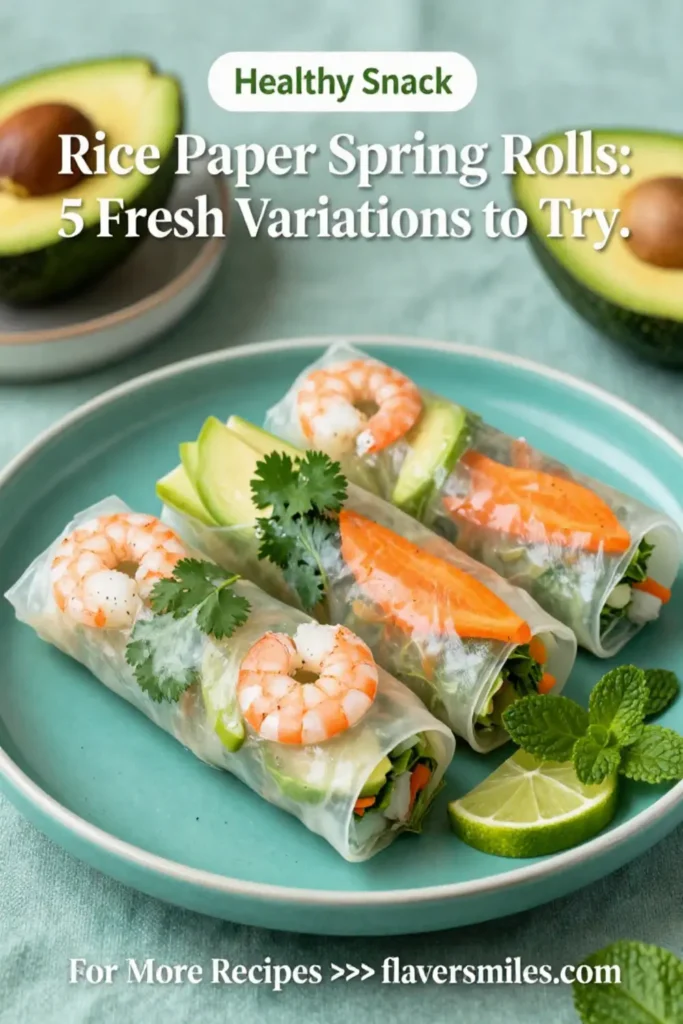
These rolls bring a creamy richness to the table. Combine cooked shrimp with slices of ripe avocado for a texture contrast. The freshness of lime juice enhances the flavor profile of the rolls, keeping them vibrant and light. Pair these with a zesty cilantro-lime dipping sauce for a refreshing twist.
Variation 2: Vegetarian Tofu Spring Rolls
Packed with a medley of colorful vegetables and marinated tofu, these spring rolls are perfect for vegans. To make the tofu flavorful, marinate it in soy sauce and sesame oil before grilling or pan-frying. Feel free to add in other veggies like bell peppers or purple cabbage for extra nutrition and crunch.
Variation 3: Spicy Chicken Spring Rolls
For those who enjoy a kick, these spicy chicken rolls are ideal. Toss cooked chicken in a bit of sriracha or chili paste before assembling. Adding cucumber and lettuce provides a cooling effect that perfectly balances the heat. Serve with a creamy avocado-dill dressing for a decadent experience.
Variation 4: Fruit and Mint Spring Rolls
For a refreshing dessert option, consider using fruit like mango, strawberries, and kiwi with fresh mint. Omit traditional protein and instead focus on the sweetness of the fruit. These rolls can be served with a drizzle of honey or a light coconut cream for dipping.
Variation 5: Asian Noodle Spring Rolls
Using thin rice noodles as a base adds an interesting texture. Combine cooked noodles with fresh vegetables and herbs for a filling roll. Serve with a soy or sesame-based dipping sauce for an extra flavorful experience. These are perfect for a light lunch or as an appetizer for a party.
Common Mistakes to Avoid
One common mistake is not hydrating the rice paper wrappers correctly. If they’re still too firm when rolling, they may crack or not hold together properly. Always ensure you soak them until just pliable. Another issue is overstuffing the rolls, which can lead to tearing when you attempt to roll them. It’s crucial to only use a small amount of filling to maintain the integrity of the roll. Lastly, avoid letting them sit too long before serving. Rice paper can dry out quickly, so keep them covered with a damp cloth if not serving immediately.
Storage, Freezing & Reheating Tips
For the best storage, place any leftover spring rolls in an airtight container lined with damp paper towels to maintain moisture. They can last in the fridge for up to two days. However, be aware that the rice paper may become sticky over time. It is not recommended to freeze assembled spring rolls because the texture will change, making them less enjoyable when thawed. Instead, you can prepare the individual components and freeze them separately; simply rehydrate the rice paper and assemble as needed.
Frequently Asked Questions
Can I use regular flour tortillas instead of rice paper?
While traditional spring rolls use rice paper for a specific texture and flavor, you can experiment with flour tortillas; however, they won’t provide the same experience. They may be too thick and could result in a very different dish. If you’re looking for an alternative, consider using thin lettuce leaves for a low-carb option.
How do I keep my spring rolls from sticking together?
To prevent your spring rolls from sticking, ensure that you place them on parchment paper or an oiled plate as you assemble them. Keeping a damp paper towel over the rolls until it’s time to serve can also help maintain moisture.
What dipping sauces work best with spring rolls?
Peanut sauce is one of the most popular choices, providing a rich flavor that complements the freshness of the rolls. Alternatively, hoisin sauce mixed with sriracha adds a nice sweet and spicy edge. You can also create a soy sauce-based dip with ginger and garlic for a zingy flavor.
How long do spring rolls last in the refrigerator?
Spring rolls can typically be stored in the fridge for up to two days. After that, the rice paper might become sticky and chewy. It’s best to consume them fresh for the best texture and taste.
Can I make spring rolls ahead of time?
You can prepare the filling ahead of time, as well as the dipping sauce. Assemble the spring rolls right before serving for the best taste and texture. If you do need to make them in advance, keep them covered with a damp cloth in the refrigerator.
Conclusion: Now that you have a comprehensive guide to rice paper spring rolls, it’s time to dive into your own kitchen experiment! Enjoy creating these versatile rolls and don’t hesitate to get creative with your ingredients. Whether you stick to the classics or try the fresh variations, these rolls are sure to please anyone at the table. Happy cooking!