Prep time: 15 minutes
Cook time: 20 minutes
Total time: 35 minutes
Servings: 4
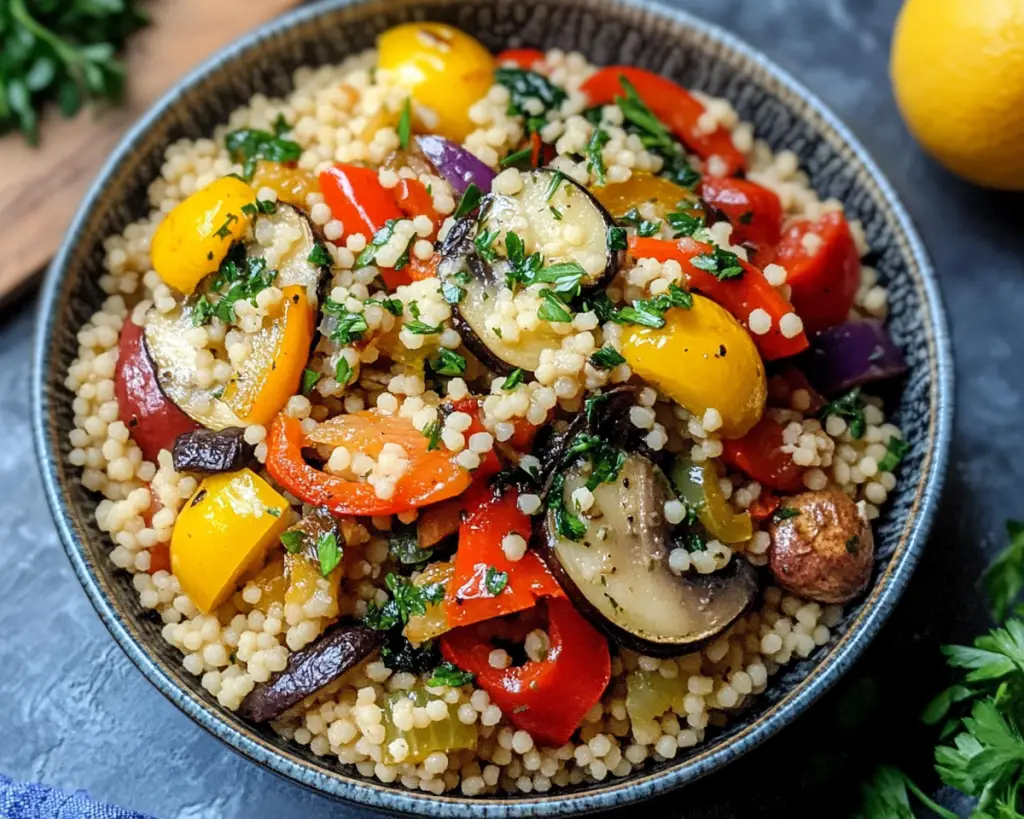
Mediterranean Vegetable Couscous is more than just a meal; it’s a versatile, vibrant dish that transports you to sun-kissed shores with every bite. Picture yourself enjoying a sunny picnic or a quiet meal prep moment in your kitchen—this dish captures the essence of the Mediterranean. The combination of fluffy couscous and fresh, colorful vegetables creates a harmonious blend, perfect for both busy parents looking for quick meals and those exploring new culinary territories.
Not only is Mediterranean Vegetable Couscous easy to prepare, but it is also loaded with nutrients. In this article, you will learn how to make this delightful dish, explore its variations, and discover handy tips to elevate your cooking game. Whether you are a novice in the kitchen or an experienced chef, you will find this recipe simple, customizable, and deeply satisfying.
What Is Mediterranean Vegetable Couscous?
Mediterranean Vegetable Couscous is a delightful dish hailing from North Africa, where couscous is a staple food. Its texture is fluffy and light, classic in Mediterranean cuisine, and it serves as a versatile base for a variety of toppings. The couscous itself is made from semolina wheat, providing a rich source of carbohydrates that are both nutritious and filling. The beauty of this dish lies not just in its texture but also in its ability to absorb flavors—enhancing whatever ingredients you mix in.
The flavor profile of Mediterranean Vegetable Couscous is a wonderful blend of the earthy tastes of vegetables combined with the distinct aromatic herbs commonly associated with this region. Ingredients like fresh tomatoes, zucchini, bell peppers, olives, and a medley of herbs contribute to a dish that is both vibrant and colorful—it’s a feast for the eyes and the palate! Additionally, the incorporation of spices such as cumin and paprika can add an intriguing depth that elevates the dish, making each bite a delightful experience.
As you explore this recipe, you’ll find it allows for creativity and flexibility. You can easily modify it based on seasonal vegetables available, dietary restrictions, or personal preferences. This makes Mediterranean Vegetable Couscous not only a delicious meal option but an incredibly adaptable one as well.
Why You’ll Love This
One of the standout reasons to love Mediterranean Vegetable Couscous is its rich flavor and nutritional benefits. Packed with fresh vegetables, this dish is a fantastic source of vitamins and antioxidants. The vibrant colors and flavors invite you to enjoy a meal that is not just satisfying but also healthy. On busy weeknights, this dish comes together swiftly, making it an excellent choice for those who find themselves short on time but still wish to nourish their family with wholesome food.
By preparing this meal, you can tackle misconceptions about cooking healthy food. Often, individuals believe that healthy meals require extensive preparation. However, Mediterranean Vegetable Couscous defies this notion. With its quick-cooking couscous and easy-to-sauté vegetables, you can have a delicious meal on the table in less than 40 minutes. Additionally, couscous is typically less expensive than many other grains or pastas, making it budget-friendly.
Let’s not forget the versatility aspect! You can serve it warm as a main dish or let it cool for a refreshing salad. It pairs wonderfully with grilled fish, chicken, or can stand alone as a satisfying vegetarian meal, catering to everyone at the table.
Ingredients You’ll Need
- Couscous: 1 cup, the star of this dish, it absorbs flavors well and cooks quickly.
- Olive oil: 2 tablespoons, for richness and flavor; you can substitute with vegetable oil if necessary.
- Onion: 1 medium, finely chopped, to add sweetness and depth to the dish.
- Garlic: 2 cloves, minced, to bring in pungency and zest; can be omitted for lower allium intake.
- Bell pepper: 1 medium, diced; offers sweetness and color; feel free to use any color you like.
- Zucchini: 1 medium, diced; provides moisture and tenderness, a fantastic summer vegetable.
- Cherry tomatoes: 1 cup, halved; they add freshness and slight acidity—great to balance the dish.
- Vegetable broth: 1.5 cups, imparts flavor to the couscous; can use water if you’re in a pinch.
- Fresh parsley: ¼ cup, chopped for garnish; offers a burst of freshness; can be replaced with basil or cilantro.
- Cumin: 1 teaspoon; this warm spice elevates the dish with its earthy notes.
- Salt and pepper: to taste.
- Feta cheese: Optional topping for creaminess and added tang, perfect for non-vegan versions.
Each ingredient has a specific role—couscous acts as the canvas, while vegetables add color and nutritional value. The spices and herbs are not merely seasonings; they elevate the entire dish, ensuring each spoonful bursts with flavor. If you prefer specific types of vegetables or have leftovers, feel free to customize this dish to suit your tastes!
How to Make
- Prepare the couscous: Begin by measuring out 1 cup of couscous into a medium bowl. Bring 1.5 cups of vegetable broth to a boil in a saucepan. Once boiling, pour the broth over the couscous, cover the bowl with a clean kitchen towel or plastic wrap, and set it aside for about 5 minutes. This will allow the couscous to absorb the broth and soften beautifully.
- Sauté vegetables: While the couscous is absorbing the liquid, heat 2 tablespoons of olive oil in a large skillet over medium heat. Once the oil is hot, add the chopped onion and sauté for about 3-4 minutes until they become translucent. Stirring occasionally ensures even cooking, and this step also develops a wonderful aroma in your kitchen.
- Add garlic and spices: Next, incorporate the minced garlic into the skillet with the onions. Sauté for about 1 minute until fragrant, being careful not to burn it. Then, add the cumin, a sprinkle of salt, and pepper to taste. Mix these together, allowing the spices to toast slightly and release their natural oils, creating a base that enhances the dish’s overall flavor.
- Incorporate remaining vegetables: Add the diced bell pepper and zucchini to the skillet, stirring well. Cook these for about 5-6 minutes until they start to soften, but still have some crunch. Finally, stir in the halved cherry tomatoes, cooking for an additional 3 minutes until they warm through and release their juices. The vibrant colors at this stage will make your mouth water.
- Fluff the couscous: After the vegetables have sautéed to perfection, return to your bowl of couscous. Using a fork, fluff the couscous to separate the grains. This will create a light and airy texture that is essential for a delicious final product.
- Combine everything: Now, it’s time to mix everything together! Add the fluffed couscous into the skillet with the sautéed vegetables and gently fold them together. Be careful not to mash the veggies; you want to maintain their texture while ensuring that the couscous and vegetables are well incorporated.
- Garnish and serve: Off the heat, sprinkle the chopped fresh parsley over the top. If desired, crumble feta cheese over the dish for added creaminess and a layer of flavor. Serve warm as a main dish or let it cool to room temperature to enjoy as a salad for later.
With just these simple steps, you will have a symphony of flavors and textures ready to be enjoyed! The warm aroma of sautéed vegetables and spices will fill your kitchen, making it even more inviting.
Variations & Substitutions
Asian-Inspired Couscous: You can switch up the flavor profile by incorporating soy sauce, sesame oil, and vegetables like snow peas, carrots, and bok choy. This variation offers an exciting twist on the original and aligns perfectly with those looking to explore different global cuisines.
One-Pot Meal: To make it even easier, consider adding protein directly into the mix. Chicken or chickpeas can be added during the sautéing phase. If you opt for chicken, ensure it is sliced thin and cook it until browned before adding the onions. For chickpeas, drain and rinse canned ones to add after the garlic for a protein-packed meal.
Spiced Couscous with Nuts and Dried Fruit: For a sweeter, more aromatic dish, consider throwing in some dried fruits like apricots and nuts such as almonds or walnuts. These additions will not only provide a delightful contrast of flavors but also add a nutty texture that enhances every bite.
Vegan Version: Simply skip the feta cheese or replace it with a plant-based alternative to make this dish entirely vegan. The great thing about Mediterranean Vegetable Couscous is that it is inherently vegan-friendly. By ensuring your broth is vegetable-based, you’ll have a completely satisfying vegan meal.
Each variation offers a different experience while keeping the essence of Mediterranean Vegetable Couscous alive. Explore your palate, and have fun customizing this delicious dish!
Common Mistakes to Avoid
One of the most common issues with making couscous is overcooking it, leading to a gummy texture. Ensure you follow the instructions carefully. Remember to let the couscous steam properly and resist the urge to stir it too much before it’s fluffed.
Another mistake is neglecting to season your vegetables adequately during sautéing. Yes, the couscous will absorb flavors from the broth, but the vegetables need their moment to shine. Use enough salt and spices during preparation to avoid blandness.
Lastly, do not forget to let your couscous sit for a few minutes after pouring the broth. This steaming process is crucial for fluffy couscous; skipping it might leave you with grainy clumps rather than the light texture you desire.
Storage, Freezing & Reheating Tips
Once prepared, Mediterranean Vegetable Couscous can be stored in an airtight container in the refrigerator for up to 4 days. For freezing, allow the dish to cool completely before transferring it to a freezer-safe container. Labelling it with the date will help you keep track of its freshness.
When reheating, a microwave is a convenient option. Add a splash of water to prevent dryness, cover the container, and heat in short intervals until warmed through. Stir occasionally for even heating. If you prefer the stovetop method, reheat on low heat, adding a little vegetable broth to maintain its moisture.
Always adhere to proper food safety practices. Ensure your leftovers are cooled quickly after cooking and stored adequately to minimize the risk of foodborne illnesses.
Frequently Asked Questions
Can I use quinoa instead of couscous?
Absolutely! Quinoa is a great gluten-free alternative that not only changes the texture but also adds additional nutrients. Cook the quinoa according to package instructions, then follow the same steps for sautéing vegetables, mixing everything together at the end.
What vegetables work best in this dish?
The beauty of Mediterranean Vegetable Couscous is its versatility. Consider using any seasonal or favorite vegetables—carrots, spinach, or even eggplant work beautifully as substitutes or additions to the standard recipe.
Can I make this dish ahead of time?
Yes, making Mediterranean Vegetable Couscous ahead of time is convenient for meal prep! It retains its flavors nicely and can be refrigerated for later use. You can serve it cold as a salad, making it perfect for lunches or picnics.
Is Mediterranean Vegetable Couscous healthy?
Yes! This dish is packed with various vegetables, healthy fats from olive oil, and complex carbohydrates from couscous. It’s a well-rounded meal ideal for anyone looking for a nutritious yet satisfying option.
Can I add protein to this dish?
Certainly! Adding grilled chicken, shrimp, or chickpeas can provide a protein boost to the meal. You can mix in your protein choice during the sautéing stage for a one-pot meal experience or serve it on the side as a complete dish.
Conclusion:
Mediterranean Vegetable Couscous is a wonderful dish that brings joy and nutrition to your table with minimal effort. Whether enjoyed warm or as a chilled salad, its versatility allows you to customize it to any occasion. Try this recipe today, experiment with its variations, and let it become a favorite in your household. Share it with others, or savor it alone—this dish is sure to impress and nourish. Happy cooking!