Prep time: 20 minutes
Cook time: 30 minutes
Total time: 50 minutes
Servings: 4
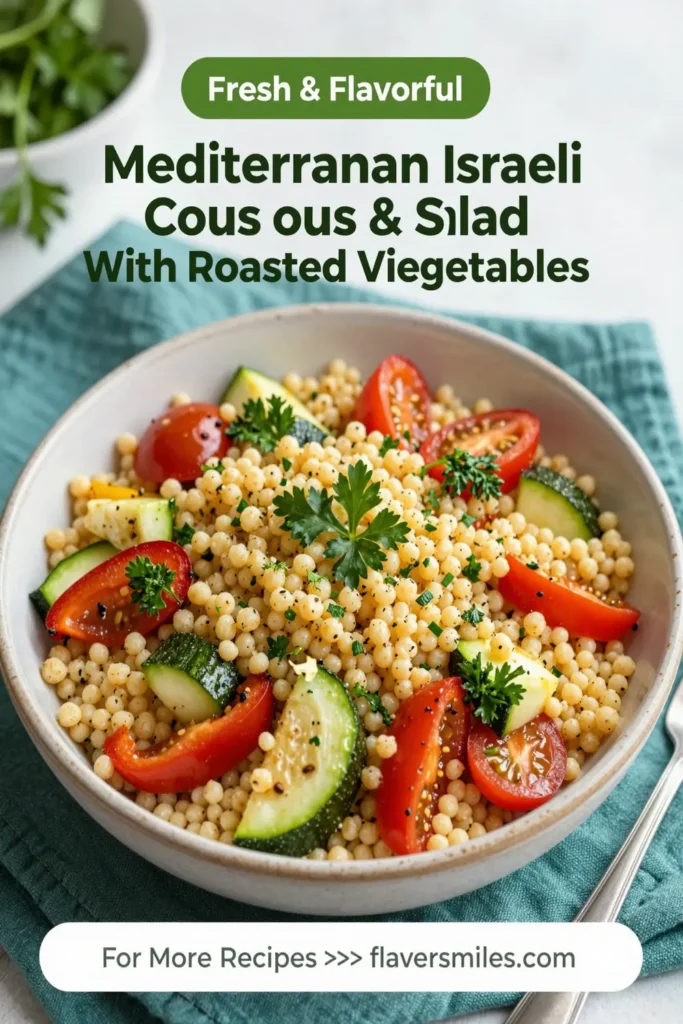
Mediterranean Israeli Couscous Salad with Roasted Vegetables is a vibrant dish that brings the flavors of the Mediterranean right to your table. This salad showcases the unique texture of Israeli couscous, which is slightly larger than traditional couscous, creating a delightful base that pairs beautifully with roasted vegetables. It’s not just about taste; it’s about the colorful presentation and the nutritional benefits it offers. Packed with fresh ingredients, this recipe is perfect for lunch, a side dish, or even as a light dinner. With a few easy steps, you’ll create a dish that impresses anyone who takes a bite.
What Is Mediterranean Israeli Couscous Salad With Roasted Vegetables?
Mediterranean Israeli Couscous Salad with Roasted Vegetables is a fusion of flavors and textures that reflects the essence of Mediterranean cuisine. Israeli couscous is larger, chewy, and toasted, providing a unique mouthfeel compared to its smaller counterpart. When combined with an assortment of roasted vegetables like bell peppers, zucchini, and eggplant, it becomes a hearty, nutritious dish. The addition of fresh herbs, such as parsley and mint, along with a zesty lemon vinaigrette, elevates the flavors to create a refreshing salad that’s ideal for any occasion.
Why You’ll Love This
There are so many reasons to fall in love with this Mediterranean Israeli Couscous Salad with Roasted Vegetables. First, it’s extremely versatile; you can serve it warm or cold, making it ideal for any season or occasion. Second, the rich combination of roasted vegetables not only adds bold flavors but also a variety of nutrients, making it a healthy choice for busy parents and health-conscious individuals alike. Moreover, the ease of preparation makes it perfect for beginners in the kitchen who want to whip up something that feels gourmet without spending hours cooking. Lastly, it’s a budget-friendly meal that offers great value for the ingredients used, making it a go-to recipe for meal prepping.
Ingredients You’ll Need
- Israeli couscous (1 cup): This form of couscous has a slightly nutty flavor and chewy texture that makes it a perfect base for salads.
- Red bell pepper (1 large, diced): Sweet and crunchy, it adds color and a hint of natural sweetness.
- Zucchini (1 medium, diced): Softens when roasted, providing a juicy contrast to the couscous.
- Eggplant (1 small, diced): Adds a meaty texture and absorbs flavors well.
- Red onion (1 medium, thinly sliced): This brings a bit of sharpness to balance the sweetness of the roasted veggies.
- Olive oil (3 tablespoons): Essential for roasting, giving the vegetables a lovely golden color and flavor.
- Garlic (2 cloves, minced): Adds aromatic depth and enhances flavor.
- Fresh parsley (¼ cup, chopped): Brightens the dish and introduces freshness.
- Fresh mint (¼ cup, chopped): Provides a refreshing contrast to the earthiness of the roasted vegetables.
- Lemon juice (2 tablespoons): A zesty addition that elevates the flavors.
- Salt and pepper to taste: Essential for seasoning and enhancing all the flavors.
How to Make
- Preheat your oven: Start by preheating your oven to 400°F (200°C). This step is crucial for achieving perfectly roasted vegetables. A hot oven ensures that the veggies cook evenly and caramelize beautifully, enhancing their natural sweetness.
- Prepare the vegetables: In a large bowl, combine the diced red bell pepper, zucchini, eggplant, and red onion. Drizzle with 2 tablespoons of olive oil and sprinkle with salt and pepper. Toss everything together until the vegetables are well-coated. Spreading them out on a baking sheet in a single layer ensures even roasting.
- Roast the vegetables: Place the baking sheet in the oven and roast the vegetables for about 20 to 25 minutes. Keep an eye on them; you want the edges to get that wonderful caramelization. The vegetables should be tender but not mushy, retaining some texture.
- Cook the couscous: While the vegetables are roasting, bring 1 ¼ cups of water to a boil in a medium saucepan. Add the Israeli couscous, a pinch of salt, and reduce to a simmer. Cover the pot and cook for about 10 minutes, until the couscous is tender but has a slight bite. Once done, fluff it with a fork and set it aside to cool.
- Combine everything: In a large mixing bowl, combine the roasted vegetables, cooked couscous, minced garlic, chopped parsley, and mint. Drizzle with lemon juice and the remaining tablespoon of olive oil. Mix gently to incorporate all ingredients without smashing the vegetables.
- Adjust seasoning: Taste your salad and adjust salt and pepper as needed. This is also a great time to add extra lemon juice if you prefer a tangier flavor. Give it one last gentle toss.
Variations & Substitutions
Grains Swap: If you’re looking to switch things up, consider using quinoa instead of Israeli couscous. Quinoa is also gluten-free and offers additional protein. It cooks in roughly the same time, making it a seamless swap in this salad.
Roasted Veggie Mix: Experiment with different vegetables like cherry tomatoes, asparagus, or carrots. Seasonal vegetables can bring unique twists in flavor and texture. Just make sure to adjust cooking times for those that roast more quickly.
Protein Boost: For a heartier salad, include grilled chicken, chickpeas, or feta cheese. Chickpeas add protein while being plant-based, while feta brings a creamy tang that pairs well with the salad’s flavors.
Dressings: Swap the lemon vinaigrette with a balsamic glaze for a sweeter flavor profile. You could also try tahini sauce for a creamier texture and a nutty taste. Just be mindful of how much dressing you use as it could alter the overall flavor balance.
Common Mistakes to Avoid
One common mistake is overcooking the couscous. Watch the cooking time closely to maintain that al dente texture. If you let it boil for too long, it will become mushy and lose its bite, which is essential in this salad.
Another pitfall is not seasoning properly. Be generous with the salt and pepper during the cooking process. Proper seasoning elevates the vegetables’ flavors and the entire salad, so don’t skip this step.
Additionally, skipping the cooling step is a mistake. If you mix the roasted vegetables with the couscous while everything is hot, you may cook the herbs and make the salad less fresh and vibrant.
Storage, Freezing & Reheating Tips
To keep your Mediterranean Israeli Couscous Salad fresh, store any leftovers in an airtight container in the refrigerator. It can last for up to 3 days. The flavors often develop even further after a day, making it even tastier!
If you wish to freeze it, consider freezing the roasted vegetables and couscous separately. When freezing, make sure to cool them completely before packing them into containers. To reheat, simply microwave or sauté the vegetables until warmed through, as the couscous does not freeze well when combined with dressing and fresh herbs.
When reheating, add a splash of fresh lemon juice to brighten up the flavors once again. This easy adjustment can make a great difference, ensuring your salad tastes great even after storage.
Frequently Asked Questions
Can I make this salad ahead of time?
Yes, you can certainly prepare this salad ahead of time! Just keep in mind that if you’re adding fresh herbs, it’s best to add them right before serving for maximum flavor. Store in an airtight container in the fridge for up to three days to maintain freshness.
What other vegetables can I use?
You can use a wide array of vegetables—try vegetables like carrots, broccoli, or even roasted sweet potatoes. Just be cautious of the cooking times and ensure they soften without falling apart.
How can I make this salad gluten-free?
To adapt this recipe for a gluten-free diet, substitute Israeli couscous with quinoa or any gluten-free grain option. Both alternatives will provide a similar texture that complements the roasted vegetables beautifully.
Can I use dried herbs instead of fresh ones?
Yes, you can use dried herbs, but be mindful that the flavor will be more concentrated. A general rule is to use one-third the amount of dried herbs as fresh. Adding them during the cooking process will allow their flavors to bloom.
How do I serve this salad?
This salad can be enjoyed warm, room temperature, or cold. It works wonderfully as a side dish for grilled meats or as a light lunch on its own. Serve it in a large bowl, garnishing with extra chopped herbs on top for presentation.
Conclusion: This Mediterranean Israeli Couscous Salad with Roasted Vegetables is a celebration of flavors, textures, and colors. From the chewy couscous to the tender roasted vegetables, it’s not only a feast for the eyes but also a wholesome meal option packed with nutrients. Whether you’re a kitchen novice or a seasoned cook, this recipe is approachable and highly customizable. Serve it at your next gathering, alongside your favorite grilled proteins, or simply enjoy it as a delightful lunch during your busy week. You’ll fall in love with its refreshing taste and ease of preparation!