Prep time: 30 minutes
Cook time: 35 minutes
Total time: 1 hour 5 minutes
Servings: 12
There’s an undeniable magic that occurs during the spring season. With Easter just around the corner, it’s a wonderful opportunity to bring family and friends together around the table. Imagine cutting into a beautifully frosted cake that exudes the tropical scent of coconut, with layers that promise a burst of flavor in every bite. This is more than just a cake; it’s an experience that evokes memories of holiday gatherings filled with laughter, love, and the joy of sharing delicious food. Each slice of this Easter Coconut Cake is a reminder of warmth and festive spirit.
This recipe not only highlights the delightful essence of coconut but also offers a surprisingly easy way to elevate your baking skills, whether you’re a novice or a seasoned baker. In this post, you will discover not only how to bake this exquisite cake but also tips for perfecting the process, variations you can experiment with, and ways to store and serve your creation. Get ready to impress your guests with a dessert that’s as beautiful as it is delectable!
What Is Easter Coconut Cake?
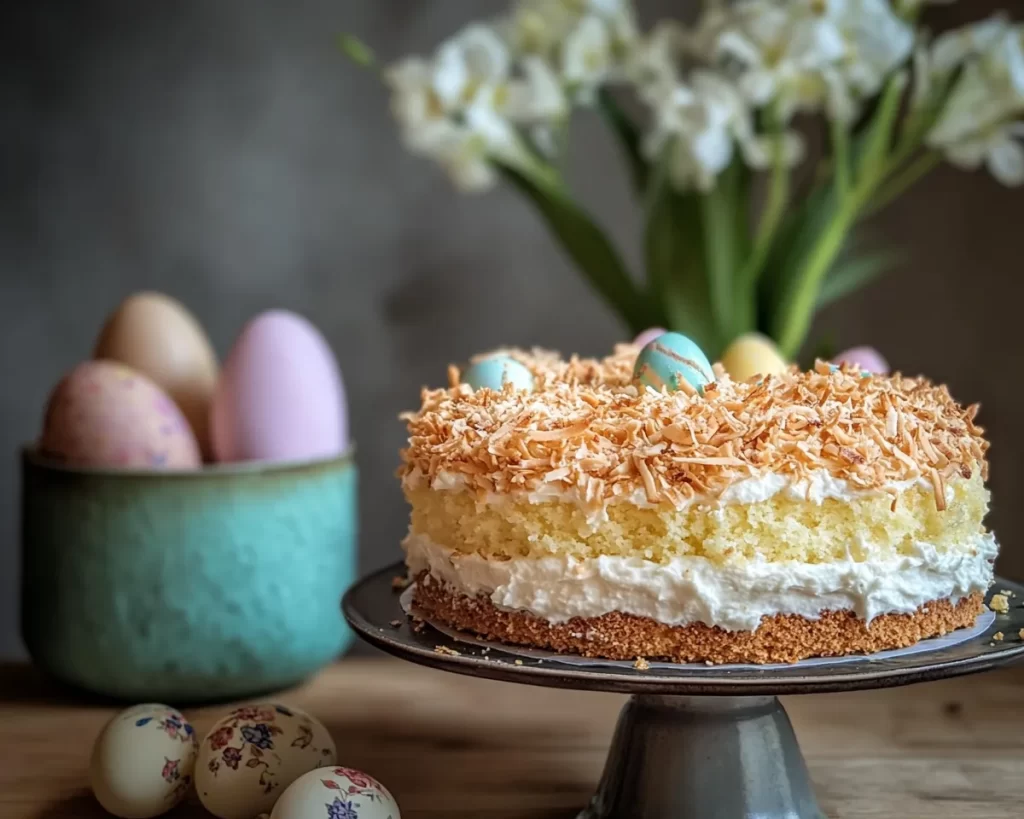
Easter Coconut Cake is a classic dessert that brings together the delightful flavors of a moist vanilla or butter cake with a generous coating of coconut frosting. Traditionally enjoyed in many households, this cake showcases the lusciousness of shredded coconut, adding both flavor and texture. The origins can be traced back to Southern United States cuisines, where coconut as a key ingredient gained immense popularity. The cake has a light, airy texture, complemented by the rich, creamy frosting and the crunch of toasted coconut flakes.
When you take a bite of Easter Coconut Cake, you’re enveloped in a delightful combination of sweetness and subtle nuttiness from the coconut. The cake’s moistness melts almost instantly in your mouth, leaving behind sweet, tropical notes that remind you of sunny days. Each layer adds to the creamy experience, with frosting that carries a hint of vanilla. This dessert not only captures the essence of Easter celebrations but is also suitable for any occasion, bringing joy and delight to those lucky enough to indulge.
Why You’ll Love This
There are countless reasons to fall in love with Easter Coconut Cake. First and foremost, the taste is unparalleled; the balance of sweetness and coconut creates a symphony of flavors that make you crave more. The ease of preparation means you don’t have to be a culinary expert to whip up an impressive dessert. Moreover, the cost-effectiveness of the ingredients ensures you can create a beautiful cake without breaking the bank. This cake can also easily cater to various dietary needs with minimal adjustments.
A common misconception is that coconut desserts can be overly sweet or heavy; however, this cake counters that belief by being light yet satisfying. You can also make it ahead of time, which is perfect for busy parents or anyone with a packed schedule. In comparison to other elaborate cakes, the Easter Coconut Cake stands out for its simplicity and versatility, making it a beloved addition to any table.
Ingredients You’ll Need
- All-purpose flour: This provides the structure for the cake, giving it a fluffy texture. You can substitute it with a gluten-free mix if needed.
- Baking powder: This helps the cake rise and achieve that perfect fluffy texture. Be sure to check the expiration date for best results.
- Salt: Just a pinch enhances flavors and balances the sweetness.
- Unsalted butter: Using unsalted butter allows you to control the salt content. Ensure it’s at room temperature for easy blending.
- Sugar: Granulated sugar adds sweetness and aids in moisture retention.
- Eggs: Eggs serve as the binding agent, contributing to the cake’s richness and firmness.
- Vanilla extract: A key flavor enhancer that also adds warmth to the cake. Opt for pure vanilla extract for the best taste.
- Milk: Whole milk is preferable as it adds moisture; however, almond or coconut milk can provide a nice twist.
- Shredded coconut: This gives the cake its defining coconut flavor. Opt for sweetened if you enjoy a sweeter cake, or unsweetened for a less sugary result.
- Powdered sugar: This is used in the frosting and provides a smooth texture without granules.
- Cream cheese: For the frosting, this adds a creamy texture and cuts some of the sweetness from the powdered sugar.
- Toasted coconut flakes: These create a beautiful garnish and add crunch to every bite.
How to Make
- Preheat your oven to 350°F (175°C). This is crucial for getting that perfect rise on your cake. Prepare two 9-inch round cake pans by greasing them well and adding a dusting of flour to prevent sticking.
- In a mixing bowl, whisk together the all-purpose flour, baking powder, and salt. This step ensures that all dry ingredients are evenly distributed, which is essential for consistent baking.
- In a separate bowl, cream the unsalted butter and granulated sugar together until the mixture is light and fluffy. This is a key step, as it incorporates air into the batter, making the cake texture light. Use an electric mixer on medium speed for about 3-5 minutes.
- Add the eggs one at a time to the butter and sugar mixture, beating well after each addition. Then mix in the vanilla extract. This is where your batter starts to come together, and the scent of vanilla will fill your kitchen.
- Gradually add the dry ingredient mixture to the wet ingredients, alternating with milk. Begin and end with the flour mixture. This technique ensures that the batter remains smooth and lumps are avoided. Mix until just combined; over-mixing can lead to a tough cake.
- Fold in the shredded coconut gently, ensuring it’s evenly distributed in the batter. You’ll notice the mixture has a slight texture due to the coconut, which will translate beautifully into the cake.
- Divide the batter evenly between the prepared cake pans. Tap them gently on the counter to release any air bubbles and ensure even baking.
- Bake in the preheated oven for 25 to 35 minutes or until a toothpick inserted in the center comes out clean. Keep an eye on the cakes; every oven varies slightly, and you don’t want to risk overbaking.
- Once baked, remove them from the oven and let them cool in the pans for about 10 minutes. Then turn them out onto wire racks to cool completely. This step is crucial as it prevents the cakes from becoming soggy.
- While the cakes cool, prepare the frosting. In a mixing bowl, blend the cream cheese and powdered sugar until smooth and creamy. This will be the frosting base that pairs perfectly with the cake.
- Frost the cake layers once they have cooled completely. Place one layer on your serving plate and spread a generous layer of frosting on top before adding the next layer. This adds depth to the flavor and texture.
- After stacking, frost the top and sides of the cake, smoothing it out for a beautiful finish. Decorate with toasted coconut flakes for an added crunch and visual allure.
Variations & Substitutions
Coconut Lime Variation: If you’re looking to add a tropical twist to your Easter Coconut Cake, consider incorporating lime zest and juice into the batter. The zingy flavor of lime beautifully contrasts the sweetness of the coconut, providing a refreshing vibe. This variation is perfect for those who enjoy a blend of sweet and tart in their desserts. Use about two tablespoons of lime juice and the zest from one lime mixed into your batter. Accompany this with a lime-flavored frosting made by adding lime zest to your cream cheese frosting for that extra zing.
Boston Cream Coconut Cake Variation: For fans of Boston cream pie, this variation offers a fun twist. Start by filling each layer with a rich custard made from egg yolks, sugar, milk, and vanilla instead of just coconut frosting. After stacking the layers, top the cake with chocolate ganache instead of frosting. This dessert captures the best of two worlds and serves as a crowd-pleaser. You’ll still enjoy that moist coconut base, complemented by a luscious custard and the decadence of chocolate.
Vegan Coconut Cake Variation: If you have dietary restrictions, this vegan version is both delicious and satisfying. Replace eggs with flaxseed meal, using one tablespoon of flaxseed with two tablespoons of water for each egg, and opt for plant-based milk alternatives like almond or coconut milk. Additionally, utilize coconut oil instead of butter for that rich flavor. The outcome will be equally delightful without compromising on taste or texture. Vegan desserts can still be indulgent, and this cake proves it!
Gluten-Free Coconut Cake Variation: Transforming this recipe into a gluten-free option is straightforward. Simply substitute all-purpose flour with a gluten-free flour blend designed for baking. Look for one that contains xanthan gum to help with texture. Many brands have excellent results, ensuring your cake remains fluffy and moist without the gluten. You can enjoy Easter Coconut Cake while accommodating dietary preferences without sacrificing flavor or enjoyment.
Common Mistakes to Avoid
Baking can sometimes feel intimidating, but avoiding common mistakes can help improve your outcome. One common issue is overmixing the batter. This can lead to a dense cake instead of a light, airy texture. Mix until the ingredients are just combined to avoid this problem. Additionally, ensure that your oven is at the correct temperature; using an oven thermometer can help verify this and prevent undercooked or overcooked cakes.
Another mistake to avoid is not allowing the cake layers to cool completely before frosting. Frosting warm layers can cause the frosting to melt and slide off. It’s best to be patient in this stage, allowing the layers to cool on a wire rack for at least 30 minutes. Lastly, if you’re using shredded coconut, be cautious about the type you choose. Sweetened coconut can make your cake overly sweet if you’re unsure of your guests’ preferences. Opt for unsweetened shredded coconut or adjust the sugar levels in your batter for a better-balanced flavor.
Storage, Freezing & Reheating Tips
Knowing how to store your Easter Coconut Cake properly is vital for maintaining its freshness. After baking, wrap each cooled cake layer in plastic wrap and store them in an airtight container if you’re not frosting them immediately. If you’ve already frosted the cake, keep it in an airtight container in the refrigerator, which will help prolong its freshness. It can generally last in the fridge for about 4-5 days, but be sure to check for any signs of spoilage.
For longer storage, consider freezing the cake. To freeze the unfrosted cake layers, wrap them tightly in plastic wrap, followed by aluminum foil to prevent freezer burn. They can be kept in the freezer for up to 3 months. When you’re ready to enjoy, simply let them thaw overnight in the refrigerator before frosting or serving. The flavor remains intact, retaining the delightful coconut notes that make this cake so special.
When it comes to reheating, if you want a warm slice, place a piece in the microwave for about 10-15 seconds. You can also enjoy it at room temperature, as the flavors develop more as it sits. With these tips, you’ll ensure that every slice remains as fresh, moist, and delectable as the first!
Frequently Asked Questions
Can I use coconut milk instead of regular milk for this recipe? Yes, you can use coconut milk as an excellent substitute. It will enhance the coconut flavor and maintain the moisture of the cake. Whether using canned or carton coconut milk, ensure it’s well-mixed before incorporating into your batter.
How can I make the cake more festive for Easter? You can decorate your Easter Coconut Cake with colorful edible flowers, pastel-colored sprinkles, or fresh fruit like berries. Additionally, consider adding a hint of food coloring to your frosting for a vibrant twist. Another fun idea is to top the cake with small chocolate eggs to enhance the Easter theme!
What is the best type of coconut to use for this cake? For the best flavor and texture, opt for sweetened or unsweetened shredded coconut, depending on your sweetness preference. In addition, toasted coconut can be used for a deep flavor. Choose high-quality, moisture-rich coconut for the best results.
Can I make the cake ahead of time? Absolutely! You can bake the cake layers a few days in advance. Allow them to cool completely, wrap them tightly, and store them in the refrigerator. Frost them the day you plan to serve for optimal freshness.
Is Easter Coconut Cake suitable for children or those with allergies? While this cake can be enjoyed by most, always consider any allergies, especially to eggs, dairy, or gluten. You can create allergy-friendly alternatives, such as vegan and gluten-free variations, to accommodate diverse dietary needs.
Conclusion:
Easter Coconut Cake is more than just a dessert; it’s a celebration of flavors that promise to delight your palate and evoke cherished memories. With its light texture and tropical essence, this cake is not just easy to make but is an inviting centerpiece for your holiday table. Whether you choose to stick with the traditional recipe or explore various exciting variations, the results are bound to impress. So gather your loved ones, indulge in some baking, and share this delightful cake that captures the spirit of Easter. Don’t hesitate to customize it to make it perfect for your family’s tastes. Try it, share it, and watch as it becomes a staple in your dessert repertoire!