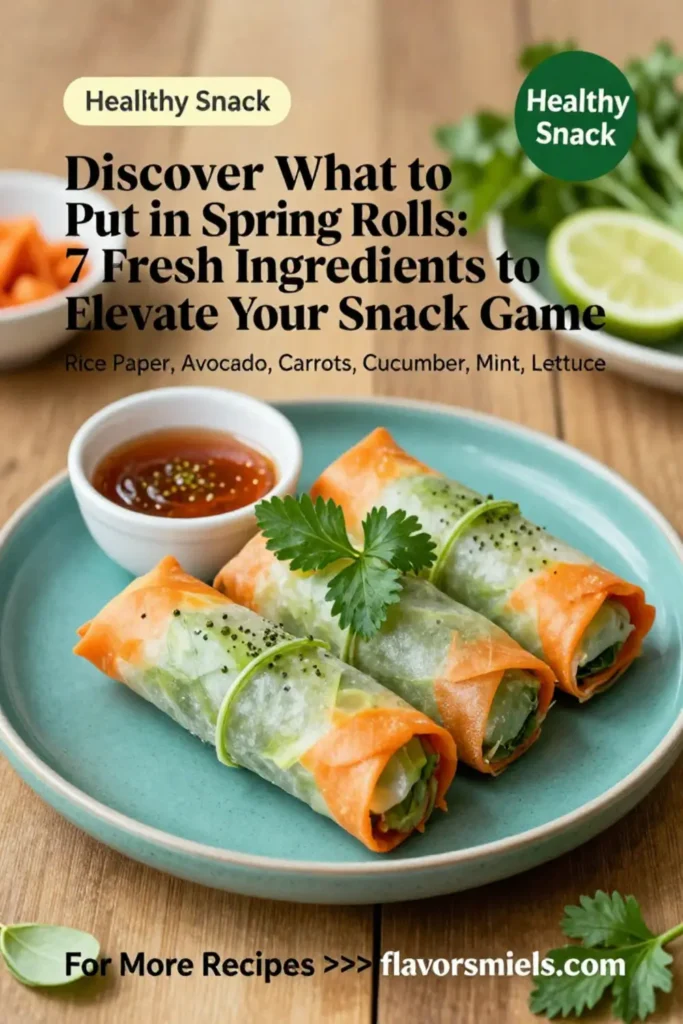
Prep time: 20 minutes
Cook time: 10 minutes
Total time: 30 minutes
Servings: 4
Discovering what to put in spring rolls can transform your snacking experience and elevate your culinary skills. Spring rolls are not just about wrapping rice paper around a filling; they are a window into creative possibilities filled with flavor and texture. The beauty of spring rolls lies in their versatility, allowing you to mix and match fresh ingredients.
Spring rolls make for a delightful appetizer or a light meal that’s both satisfying and healthy. Packed with vibrant colors and fresh flavors, these rolls can cater to everyone—busy parents looking for quick meals, beginners wanting to impress, or health enthusiasts seeking nutritious snacks. Let’s dive into the world of spring rolls and discover the fresh ingredients that will elevate your snack game.
What Is Discover What to Put in Spring Rolls: 7 Fresh Ingredients to Elevate Your Snack Game?
Spring rolls are filled with various fresh ingredients, typically wrapped in rice paper for a light and healthy snack. The basic concept involves combining proteins, vegetables, herbs, and sauces to create a harmonious blend. Popular fillings might include shrimp, chicken, tofu, and a variety of crunchy vegetables like carrots and cucumbers. The exciting part of spring rolls is their adaptability, allowing you to incorporate your favorite ingredients or leftovers.
One of the keys to a perfect spring roll is the balance of flavors and textures. Crunchy vegetables paired with protein and aromatic herbs create an explosion of taste that delights the palate. Plus, the wrap itself is almost transparent, showcasing the colorful ingredients inside, making every bite as pleasing to the eyes as it is to the taste buds.
Why You’ll Love This
There are countless reasons to love spring rolls, starting with their **freshness**. Each bite bursts with flavor, making them a nutrition-packed snack. You can customize your rolls according to dietary preferences, creating vegetarian, vegan, or gluten-free options. They are also an excellent way to use up any leftover vegetables or proteins in your fridge, minimizing food waste and saving you money.
Versatility is another advantage; these rolls can be served as appetizers for parties, quick snacks for kids, or even elegant entremets for a romantic dinner. The dipping sauce, usually tangy and sweet, adds another layer of flavor that complements the fillings wonderfully. Lastly, preparing spring rolls can become a fun family activity, encouraging everyone, including kids, to get involved in making their snacks.
Ingredients You’ll Need
To create delicious spring rolls, here’s a list of fresh ingredients you’ll typically need:
- Rice paper wrappers: Essential for wrapping your fillings, these translucent circles provide a light, chewy exterior.
- Protein (shrimp, chicken, tofu): Depending on dietary preferences, use cooked shrimp for a classic taste, grilled chicken for heartiness, or tofu for a plant-based option.
- Crisp vegetables (carrots, bell peppers): Choose colorful vegetables for crunch. Carrots add sweetness, while bell peppers bring a refreshing crunch.
- Herbs (mint, cilantro): Fresh herbs like mint and cilantro give a burst of flavor. Their freshness helps to cut through the richness of the protein.
- Avocado: Sliced avocado adds creaminess to the mix, making every bite delectable.
- Rice noodles: These provide a chewy texture and make the rolls more filling. Add them for a twist.
- Dipping sauce (peanut, hoisin): A good dipping sauce elevates the taste of spring rolls. Peanut sauce works great as it adds nuttiness, while hoisin provides a sweet and tangy contrast.
How to Make
Making spring rolls is quite simple and can be done in a few steps. Here’s how to do it:
- Start by preparing all your ingredients. Cook your chosen protein and slice the vegetables thinly for added crunch. Gather fresh herbs and set everything on a clean surface.
- Soak a rice paper wrapper in warm water for about 10-15 seconds, or until it’s pliable but not too soft. Lay it flat on a clean, damp surface.
- Begin layering your fillings about 1/3 of the way up from the bottom. Start with a small amount of protein, followed by a variety of vegetables, some rice noodles, and a few herbs.
- To wrap, fold the bottom of the rice paper over the filling, then fold in the sides while rolling tightly to enclose everything. Ensure it’s snug to keep the contents from falling out.
- Place the finished spring roll seam-side down on a plate. Repeat this process until you’ve made the desired number of rolls.
- Serve fresh with your choice of dipping sauce. Enjoy your homemade spring rolls!
Variations & Substitutions
Vegetarian Delight: For a vegetarian option, swap protein with more vegetables or tofu. Add ingredients like cucumbers for crunch, bean sprouts for freshness, and mushrooms for an umami flavor.
Fruit-Filled Spring Rolls: Use seasonal fruits like mango, strawberries, or even pineapple. They add sweetness and a refreshing twist, perfect for a summer snack.
Spicy Version: Include spicy elements, such as sriracha, jalapeño slices, or a spicy dipping sauce to heat things up. This adds an exciting element for those who love a kick.
Nut-Free Option: If allergies are a concern, substitute peanut sauce with a soy-based or tahini sauce. Both are flavorful and safe for nut-free diets.
Asian Fusion: Experiment by incorporating ingredients like sushi-grade fish or even kimchi for a delightfully eclectic style. This variation speaks to creativity and culinary exploration.
Common Mistakes to Avoid
When making spring rolls, certain pitfalls can be easily avoided. One common mistake is using dry rice paper. Make sure to soak it just long enough to become pliable, or it can break during wrapping. Overfilling is another frequent error. Less is more; too many fillings can make it difficult to wrap and result in a messy roll.
Another issue is not sealing the rolls properly. Ensuring that the edges stick together is crucial for keeping the fillings secure. Skipping the resting period after making them can also lead to gummy textures. Allow your finished rolls to rest for a bit before serving for optimal texture.
Storage, Freezing & Reheating Tips
Spring rolls are best enjoyed fresh, but you can store them if needed. To store, place the rolls in an airtight container with a damp paper towel to prevent drying out. They can be kept in the fridge for a day. For long-term storage, spring rolls can be frozen before frying. Lay them flat on a baking sheet to freeze, then transfer to a zip-lock bag.
To reheat, avoid the microwave as it can make them rubbery. Instead, gently pan-fry them until crispy or steam them for a few minutes to warm through. This ensures they retain some of that delightful texture.
Frequently Asked Questions
Can you prepare spring rolls ahead of time?
Yes, you can prepare the fillings in advance and assemble the spring rolls just before serving. If you need to make them ahead, store them with a damp paper towel to prevent drying.
What’s the best way to serve spring rolls?
Spring rolls are best served fresh with dipping sauces. Popular choices include spicy peanut sauce or sweet hoisin sauce. This enhances flavor and enjoyment during eating.
Can you use different wraps for spring rolls?
Absolutely! While rice paper is traditional, you can explore using other types of wraps like lettuce for a low-carb option or even tortillas for a fusion take.
Are spring rolls healthy?
Yes, spring rolls can be a very healthy choice when made with lots of fresh vegetables, lean proteins, and minimal sauce. They are low in calories and high in nutrients, making them a smart snack option.
What type of rice paper should you use?
Choose **medium-sized** rice paper wrappers for easier handling. They offer a good balance of thickness and pliability which is essential for a successful roll.
Conclusion: Spring rolls provide an engaging way to explore fresh ingredients while honing your culinary skills. Whether you’re cooking for family or hosting friends, these rolls ensure delicious satisfaction on every table. Embrace the art of spring rolls, experiment with flavors, and most importantly, have fun while cooking!