Prep time: 15 minutes
Cook time: 30 minutes
Total time: 45 minutes
Servings: 4
Chicken Pad Thai is a delightful stir-fried noodle dish originating from Thailand. It’s a popular street food that combines a medley of flavors, textures, and aromas, making it a favorite among many. Making Chicken Pad Thai at home is not only satisfying but allows you to customize it to your taste. Whether you’re a busy parent looking for a quick meal, a beginner trying your hand at cooking, or someone who appreciates healthy eating, this dish can easily fit into your lifestyle!
What Is Chicken Pad Thai?
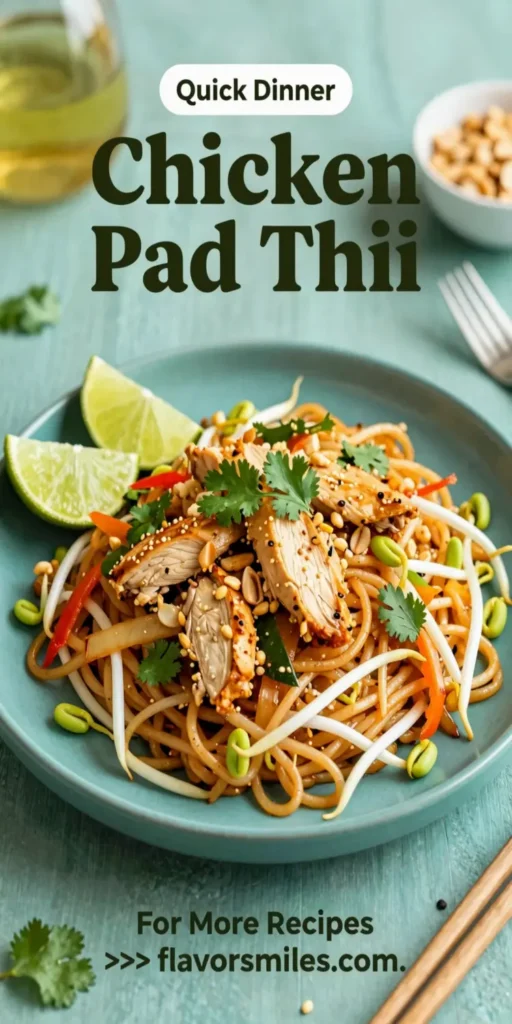
Chicken Pad Thai is a noodle dish traditionally made with rice noodles, chicken, eggs, and a combination of vegetables, all stir-fried together in a savory-sweet sauce. Typically garnished with crushed peanuts, lime, and bean sprouts, this dish is popularly known for its delightful harmony of sweet, salty, and tangy flavors. The beauty of Chicken Pad Thai lies in its improvisational nature; you can adjust the ingredients to suit your preferences.
Why You’ll Love This
You will love Chicken Pad Thai because it brings the bustling flavors of Thai street food right into your kitchen. This recipe is quick to prepare, making it a perfect dinner choice for busy weeknights. The texture of the noodles paired with tender chicken and crunchy vegetables creates a satisfying meal that everyone will enjoy. Furthermore, the ingredients are accessible and affordable, fitting perfectly into a budget-friendly meal plan. Cooking Pad Thai also provides a fantastic opportunity for meal prep, allowing you to whip up several servings at once and enjoy them throughout the week.
Ingredients You’ll Need
- 12 ounces rice noodles: These serve as the base for your dish, giving it a chewy texture that’s characteristic of Pad Thai.
- 1 pound boneless, skinless chicken breasts: Cut into thin strips; they cook quickly and soak in the flavors of the sauce.
- 3 tablespoons vegetable oil: This is used for stir-frying and enhances flavor while preventing sticking.
- 2 eggs: Lightly beaten, they add protein and richness, binding the ingredients together.
- 2 cups bean sprouts: Fresh and crunchy, they add a delightful texture and freshness to the dish.
- 1 cup green onions: Chopped, they lend a hint of onion flavor and a vibrant green color.
- 1/4 cup fish sauce: This is pivotal for achieving the signature salty umami flavor of Pad Thai.
- 3 tablespoons tamarind paste: Essential for that tangy sweetness characteristic of the dish.
- 2 tablespoons sugar: Balances the flavors by providing sweetness; adjust based on your preference.
- 1 tablespoon chili powder: Adds a touch of heat; you can adjust to your desired spice level.
- 1/4 cup crushed peanuts: For garnish, they add crunch and a nutty flavor when sprinkled on top.
- 1 lime: Cut into wedges for serving; the acidity brightens the dish up and enhances the overall flavor.

How to Make
- Prepare the rice noodles: Begin by soaking the rice noodles in warm water for about 30 minutes until they soften, then drain them. This process ensures they cook evenly and do not become mushy during stir-frying.
- Cook the chicken: Heat 1 tablespoon of vegetable oil in a large pan over medium-high heat. Add the chicken strips and season with salt. Stir-fry for about 5-7 minutes until the chicken is cooked through and golden brown. Remove them from the pan and set aside.
- Sauté vegetables: In the same pan, add the remaining oil. Toss in the green onions and bean sprouts, stir-frying for about 2 minutes until they’re slightly tender but still crisp. This preserves their bright colors and nutrients.
- Add the eggs: Push the vegetables to one side of the pan and pour the beaten eggs onto the other side. Scramble the eggs quickly and mix them with the vegetables once fully cooked.
- Incorporate the noodles and sauce: Add the drained rice noodles to the pan along with fish sauce, tamarind paste, sugar, and chili powder. Use large spoons or spatulas to toss everything together, ensuring the noodles are evenly coated and heated through.
- Finish the dish: Once the noodles are heated and all ingredients are mixed well, fold in the cooked chicken. Cook for another minute or so to allow flavors to meld, then remove from heat.
Variations & Substitutions
Vegetarian Pad Thai: To make a vegetarian version, simply replace the chicken with tofu or an assortment of vegetables like bell peppers and zucchini. You can use the same flavors from the sauce, adjusting the tamarind paste if needed, to keep the taste vibrant and delicious.
Seafood Pad Thai: For seafood lovers, consider substituting the chicken with shrimp or a mix of your favorite seafood. When using shrimp, ensure they are cleaned and deveined, cooking them until they are pink and opaque.
Spicy Pad Thai: If you enjoy spice, feel free to increase the amount of chili powder or add some sliced fresh chilies. Additionally, a sprinkle of crushed red pepper flakes can elevate the heat for fire enthusiasts!
Nut-Free Variation: Substitute peanut butter with sunflower seed butter or simply omit the nuts altogether if allergies are a concern. Garnish with sesame seeds instead for some added texture and flavor.
Common Mistakes to Avoid
One common mistake is overcooking the noodles. Ensure you soak them correctly and rinse thoroughly before adding them to the dish to maintain the desired texture. Another pitfall is not using adequate heat. Cooking at high heat helps to achieve that characteristic stir-fry flavor. Lastly, skimping on the sauce can lead to bland Pad Thai. Don’t hesitate to add more fish sauce and tamarind to achieve the perfect balance of flavors.
Storage, Freezing & Reheating Tips
To store Chicken Pad Thai, let it cool completely before transferring it to an airtight container. It can be refrigerated for up to 3 days. If you prefer to freeze it, do so in a freezer-safe bag for up to 2 months. When reheating, either use a microwave or a stove on low heat, adding a splash of water or broth to prevent it from drying out. Always ensure the dish is heated evenly and all ingredients are warmed through thoroughly for safe eating.
Frequently Asked Questions
Can I use other proteins besides chicken for Pad Thai?
Absolutely! You can substitute chicken with shrimp, beef, tofu, or even skip the protein altogether for a vegetarian option. The key is to adjust the cooking time accordingly for each type of protein, ensuring it’s cooked properly.
What can I serve with Chicken Pad Thai?
Chicken Pad Thai pairs well with a refreshing side salad or spring rolls. You can also serve it with a side of Thai iced tea to complement the vibrant flavors of the Pad Thai itself.
Is Pad Thai gluten-free?
Yes, if you use gluten-free soy sauce or tamari in place of regular fish sauce and ensure that all other ingredients are gluten-free. The rice noodles are naturally gluten-free, making this a fantastic option for those with gluten sensitivities.
How can I make Pad Thai spicier?
To increase the heat, consider adding more chili powder or incorporate fresh chili peppers during the cooking process. You may also add a dash of sriracha to the sauce mixture for that extra kick!
Can I make Pad Thai ahead of time?
For the best results, it’s recommended to serve Pad Thai fresh as the noodles can become sticky and mushy after a few hours or days. However, if you prepare components ahead of time and cook them just before serving, that ensures a fresher meal while saving prep time!
Conclusion: Chicken Pad Thai is a delightful and versatile dish that’s easy to prepare at home. This recipe not only delivers on flavor but also presents an opportunity to explore and experiment with ingredients based on your taste preferences. Enjoy the satisfaction of a home-cooked meal that inspires creativity in the kitchen. Dive into this amazing dish, and you may just find it becoming a staple in your household!