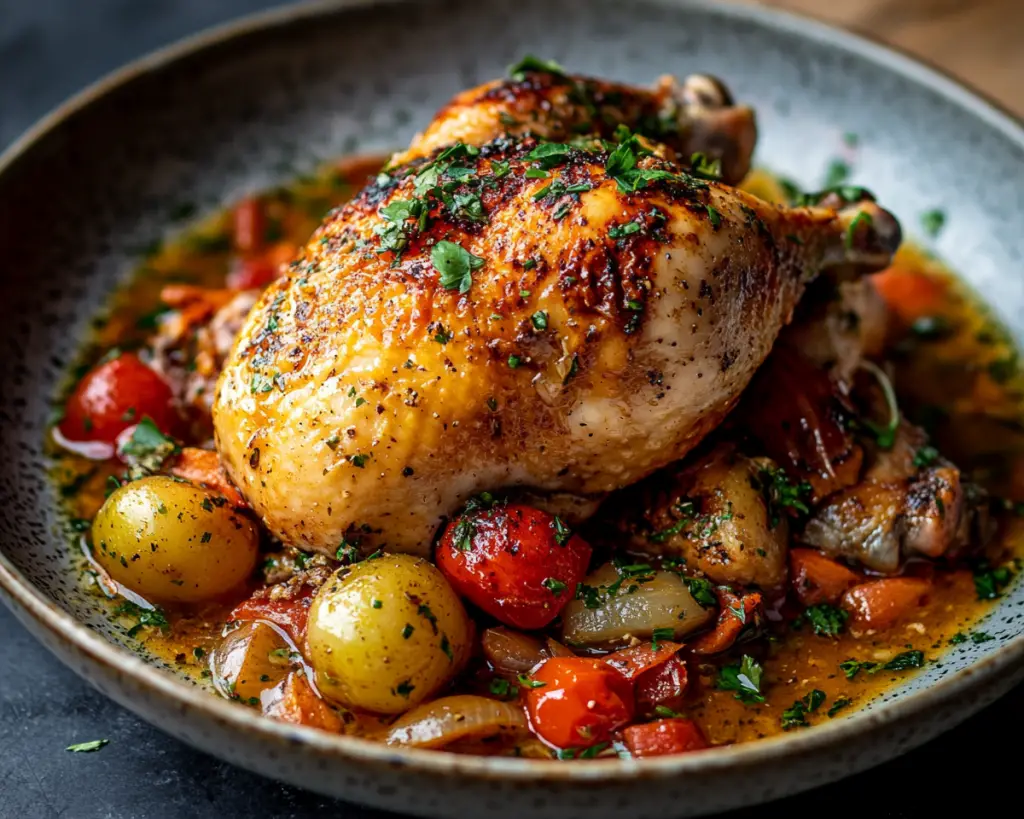
Prep time: 15 minutes
Cook time: 45 minutes
Total time: 1 hour
Servings: 4
If you’ve ever found yourself craving a dish that is hearty, comforting, and richly infused with flavors, look no further than Chicken Chasseur, also known as Classic French Hunter’s Chicken. This elegant dish boasts tender chicken simmered in a sumptuous sauce made from herbs, garlic, tomatoes, and mushrooms. During my culinary adventures, this dish has always stood out as a family favorite, especially on chilly evenings when you want something warm and fulfilling to share around the dinner table.
What makes Chicken Chasseur so special is its blend of rustic appeal and restaurant-worthy flair. This dish will not only leave your taste buds satisfied but also make your kitchen smell amazing while it simmers. In this article, you’ll learn not just how to make Chicken Chasseur, but why it’s a go-to dish for both busy parents and culinary novices. From the ingredients you need to the cooking methods that bring the flavors to life, I’m here to guide you through each step with warmth and encouragement.
What Is Chicken Chasseur – Classic French Hunter’s Chicken?
Chicken Chasseur is a traditional French dish that translates to “Hunter’s Chicken,” reflecting its rustic roots. The dish is believed to have originated in the mountainous regions of France, where hunters would relish their game with simple, local ingredients like mushrooms and herbs, creating a delightful combination of flavors. This meal is characterized by its rich and aromatic sauce, which is often made from chicken stock, white wine, and a variety of fresh herbs, such as thyme and parsley.
The texture of Chicken Chasseur is one of its many delights; the chicken comes out succulent and juicy, enhanced by the velvety sauce that clings to it. When you take a bite, you can expect a burst of flavors from the herbs and the slight acidity from the tomatoes—creating a perfectly balanced dish that is both comforting and sophisticated. Pair it with crusty bread or creamy mashed potatoes to soak up that divine sauce, and you have an unforgettable meal that is sure to impress.
One of the most appealing aspects of Chicken Chasseur is its versatility. You can adapt the recipe based on the seasons or what you have on hand. For instance, if you prefer a lighter dish, you can substitute chicken thighs for breasts, yielding even more flavor. As you navigate this recipe, you’ll discover myriad ways to customize it to your tastes while retaining its core essence.
Why You’ll Love This
There are countless reasons to fall in love with Chicken Chasseur. First and foremost is its **wonderful flavor** profile. The combination of savory herbs, aromatic garlic, and the richness of the chicken creates a dish that feels luxurious, yet it is surprisingly easy to prepare. Furthermore, the **cooking method** used to make Chicken Chasseur—simmering the chicken in a flavorful broth—ensures that the meat remains tender and succulent, which is something you will appreciate while eating.
The dish is not only tasty; it is quite **cost-effective** as well. Chicken is generally budget-friendly, and by using seasonal vegetables and herbs, you can create a wholesome meal without breaking the bank. Plus, because it’s such a relatable, home-cooked dish, you won’t feel guilty about serving it multiple times a month. As a busy parent myself, I appreciate any meal that is both simple to prepare and brings the family together.
Moreover, Chicken Chasseur is incredibly versatile. Depending on your dietary restrictions or flavor preferences, it can easily be adjusted. For those who prefer a lighter sauce, feel free to use less cream or substitute it with a healthier option. Vegetarians can also join the feast—simply swap out chicken for hearty mushrooms and opt for vegetable stock, capturing the essence of the dish while catering to different diets.
Ingredients You’ll Need
- Chicken thighs or breasts: These are the main protein in the dish. Thighs usually offer more flavor and moisture but breasts work beautifully too. You could use boneless or bone-in, depending on your preference.
- Olive oil and butter: A combination of these fats gives the chicken a rich taste and allows for proper browning.
- Shallots: Milder than onions, shallots add a touch of sweetness and depth to the sauce.
- Garlic: Essential for adding aromatic flavor, garlic is a must in many French recipes.
- Mushrooms: Preferably cremini or button mushrooms, they add an earthy, savory note that complements the dish beautifully.
- White wine: A dry white wine enhances the sauce’s flavor. If you prefer to avoid alcohol, chicken stock can be used instead.
- Chicken stock: This provides the liquid base for the sauce, enriching its taste.
- Tomatoes: Fresh or canned, these will give the sauce a lovely acidity and vibrant color.
- Fresh herbs: A mix of parsley, thyme, and bay leaves adds freshness and aromatic notes.
- Salt and pepper: Essential for seasoning, allowing all the flavors to shine through.
- Heavy cream (optional): Adding a bit of cream at the end creates a richer, thicker sauce.
You may also consider substituting shallots with sweet onions or using different herbs like rosemary for a unique twist. Don’t shy away from experimenting; that’s the joy of cooking!
How to Make
- Prepare the ingredients: Begin by gathering all your ingredients for a smooth cooking process. Chop the shallots, garlic, and mushrooms. If using fresh herbs, finely chop them as well. The better organized you are, the less stressful the cooking will be.
- Brown the chicken: In a large skillet or Dutch oven, heat a mixture of olive oil and butter over medium-high heat. Once hot, season the chicken with salt and pepper, and sear it for about 5-7 minutes on each side until golden brown. This browning adds depth to the dish by creating a rich flavor base. After browning, remove the chicken and set it aside.
- Sauté the aromatics: In the same skillet, add the shallots and garlic, stirring for about 2-3 minutes until they are translucent and fragrant. Make sure to scrape up the brown bits from the bottom of the skillet, as they contain immense flavor. Then, toss in the mushrooms and continue to sauté for another 5 minutes, allowing them to soften and absorb the flavors.
- Add the liquids: Pour in the white wine, letting it simmer for about 3-4 minutes. This will allow the alcohol to evaporate while enriching the sauce. Afterward, add the chicken stock and tomatoes. Stir gently to combine all these delicious ingredients.
- Return the chicken: Once the liquids are bubbling, reduce the heat to low and return the browned chicken to the skillet, nestling it among the mushrooms and sauce. You can add bay leaves and half of your chopped herbs at this point. Cover and let it simmer for about 30 minutes, or until the chicken is cooked through and fork-tender.
- Finish the sauce: When the chicken is perfectly cooked, you can stir in the remaining fresh herbs and, if desired, add a splash of heavy cream for richness. Taste and adjust seasoning if necessary. If you want a thicker sauce, you can let it simmer for a few more minutes uncovered.
- Serve: To serve your Chicken Chasseur, plate the chicken alongside some of that luscious sauce. It pairs beautifully with crusty bread, fluffy rice, or creamy mashed potatoes. Garnish with a sprinkle of freshly chopped parsley for that burst of color and flavor.
Cooking Chicken Chasseur is an exercise in patience and love. Don’t rush the process; allow those flavors to meld together while the chicken cooks slowly, soaking in all the aromatic goodness.
Variations & Substitutions
Vegetarian Variation: For a vegetarian option, replace the chicken with a mix of hearty mushrooms such as portobello and shiitake. Use vegetable broth instead of chicken stock. This variation allows the dish to maintain its essence while being plant-based. You might also introduce lentils or chickpeas for added protein, making it a satisfying meal for vegetarians and meat-lovers alike. The earthy flavors of the mushrooms will harmonize with the other ingredients, delivering a cozy vibe that feels comforting yet light.
Low-Carb Version: If you’re following a low-carb or keto diet, you can replace potatoes or rice with cauliflower rice or zucchini noodles for a lighter take. The sauce will still be rich and flavorful while keeping the meal lower in carbohydrates. To amplify the **hearty flavors**, consider adding more mushrooms and a splash of cream, giving you a sauce that is still buttery and indulgent but aligns with your dietary needs.
Herb Variations: To further develop deep flavors, experiment with different fresh herbs. Instead of the classic parsley and thyme, try using rosemary and tarragon. These output distinctively aromatic flavors while adding an unforgettable twist. Fresh basil is also an excellent choice for something summery, and even a sprinkling of nutmeg can offer a cozy warmth, perfect for autumn evenings.
Common Mistakes to Avoid
One common mistake is rushing the browning of the chicken. Properly browning adds crucial flavor to the dish. If the pan is overcrowded, the chicken will steam rather than sear; thus, always give the chicken enough space!
Another pitfall is not seasoning adequately. Seasoning at different stages is essential for building a robust flavor. As a rule of thumb, taste the dish at each stage, and don’t hesitate to adjust the seasoning to your personal preference.
Lastly, be cautious about overcooking the chicken. Cooking it too long can result in a dry, tough texture. Always rely on a meat thermometer—chicken should reach an internal temperature of 165°F (75°C). If you don’t have a thermometer, look for juices that run clear instead of pink.
Storage, Freezing & Reheating Tips
Chicken Chasseur can be stored in the refrigerator for up to 3 days in an airtight container. If you plan on freezing it, ensure it’s cooled completely before transferring to a freezer-safe container. It can last up to 3 months in the freezer. To reheat, thaw overnight in the refrigerator. Reheat gently either in the microwave or over low heat on the stove, adding a splash of chicken stock or water to retain its moisture and prevent drying.
For best practices regarding food safety, always ensure that chicken dishes are sealed properly to minimize the risk of cross-contamination. Remember: when in doubt, discard any leftovers that appear questionable in taste, texture, or smell.
Frequently Asked Questions
Can I use frozen chicken for this recipe?
Yes, you can use frozen chicken, but it’s best to thaw it beforehand. Thawing helps ensure even cooking. Cooking straight from frozen can lead to uneven cooking, which can compromise the chicken’s texture and flavor.
What can I serve with Chicken Chasseur?
This dish pairs wonderfully with mashed potatoes, bread, or rice to soak up the savory sauce. A side of sautéed green beans or a fresh salad can also balance out the richness of the dish, making for a well-rounded meal.
Can I use other proteins instead of chicken?
Absolutely! While chicken is traditional, proteins such as rabbit or duck can offer an interesting twist on the classic dish. Use the same method, adjusting cooking times to fit the specific protein you’re working with.
What kind of wine should I use?
A dry white wine like Sauvignon Blanc or Chardonnay works beautifully for Chicken Chasseur. Always choose a wine that you enjoy drinking, as its flavor will concentrate during cooking.
Can I make Chicken Chasseur ahead of time?
Yes, preparing Chicken Chasseur ahead of time can enhance the flavors. Simply store in the refrigerator after cooking, and reheat when ready to serve. Many casseroles get better with a day of rest, allowing flavors to meld beautifully!
Conclusion:
In summary, Chicken Chasseur is a wonderful, flavorful dish that comes together beautifully without requiring an elaborate culinary background. Its balance of rich flavors, comforting textures, and versatility makes it a staple in many homes. Whether you’re new to cooking or a seasoned chef, I encourage you to try your hand at this delightful dish. Customize it to your liking and make it your own—your family and friends will thank you for the comforting meal. Don’t forget to share your experience, as cooking is not just about feeding but also about creating memories!