Prep time: 30 minutes
Cook time: 15 minutes
Total time: 45 minutes
Servings: 4 servings
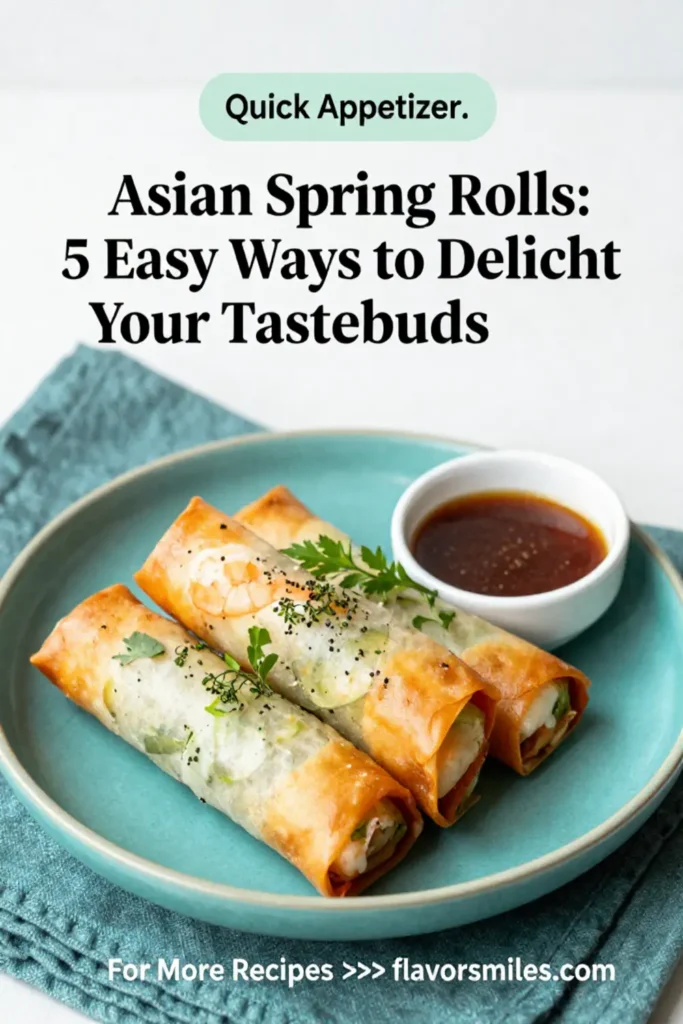
Spring brings with it a burst of flavors and color, and what better way to celebrate this than with delightful **Asian Spring Rolls**? These crispy, fresh rolls are not just visually appealing but also a treat for the tastebuds. Whether you’re preparing for a family dinner, a get-together with friends, or simply treating yourself, these spring rolls offer numerous variations and can be easily tailored to suit anyone’s taste.
What Is Asian Spring Rolls Recipes: 5 Easy Ways to Delight Your Tastebuds?
Asian Spring Rolls are traditional, crispy wrappers filled with a variety of ingredients, such as fresh vegetables, proteins, and savory sauces, often enjoyed as appetizers or light meals. They are particularly popular in many Asian cuisines, notably Vietnamese and Chinese. Making these spring rolls at home can be both rewarding and fun, allowing you to personalize the fillings and dip sauces according to your preference.
Why You’ll Love This
These spring rolls are not only easy to make but also incredibly versatile. You can fill them with your choice of vegetables, proteins, or even fruits! They can be served fresh or fried, making them perfect for any occasion. Plus, the process of rolling the spring rolls can offer a fun activity for families or gatherings, allowing everyone to join in. Dip them in some homemade peanut sauce or sweet chili sauce, and you have a delicious dish that’s sure to impress.
Ingredients You’ll Need
- Rice paper wraps: Essential for providing a light and crispy texture. They are easy to work with as they soften quickly in warm water.
- Shredded carrots: Adds a sweet crunch and vibrant color to your rolls.
- Cucumber: Offers a refreshing crunch. Use julienned cucumber for better texture.
- Bell peppers: Any color works! They add sweetness and a satisfying crunch.
- Fresh herbs: Mint and cilantro enhance the freshness of the rolls.
- Protein: Choose from shrimp, chicken, or tofu according to your preference.
- Dipping sauce: A sweet chili sauce or creamy peanut sauce pairs wonderfully with these spring rolls.
How to Make
- Start by preparing your vegetables and protein. For shrimp, boil them until they turn pink and then slice them in half. For tofu, press to remove excess moisture, then cube and pan-fry until golden.
- Next, soak the rice paper wraps in warm water for about 10-15 seconds until they soften. Make sure not to soak them too long as they can become too sticky to handle.
- Lay the softened wrap on a clean, flat surface and start layering. Place a few pieces of protein at the bottom, followed by a handful of shredded carrots, cucumber strips, bell pepper slices, and a few fresh herbs.
- To roll, fold the sides over the filling first, then roll from the bottom to the top. Make sure to keep the roll tight to prevent the filling from spilling out.
- Repeat the process until your filling is used up. Serve with your preferred dipping sauce as a light appetizer or snack!
Variations & Substitutions
Vegetable Spring Rolls: For a lighter option, simply skip the protein and load up on colorful vegetables. You can add ingredients like avocado, radishes, or even pineapple for a tropical twist. The crunch from the fresh veggies combined with the softness of the rice paper provides a pleasing contrast, making each bite refreshing.
Shrimp Spring Rolls: If you love seafood, adding shrimp to your spring rolls can elevate the flavor. Simply cook the shrimp until they are pink and tender. Combining the shrimp with mango slices can also add a sweet and tangy flavor to the rolls, paired with a spicy dip for a perfect balance.
Chicken Spring Rolls: For meat lovers, shredded cooked chicken breast works wonderfully in these rolls. You can season the chicken with soy sauce and sesame oil for an Asian flair. Adding slaw can increase the texture, providing a delightful crunch.
Pork Spring Rolls: Another fantastic option is using ground pork. Sauté the pork with ginger and garlic for an aromatic base. For an authentic taste, add some shredded cabbage and carrots mixed with the pork filling.
Vegan Spring Rolls: Using tofu as your protein and loading up on veggies is a great way to create vegan-friendly spring rolls. Marinate the tofu in soy sauce for added flavor, and don’t forget to get creative with the veggies, possibly adding some pickled vegetables for a zingy taste.
Common Mistakes to Avoid
When making spring rolls, people often make the mistake of using too many fillings which can lead to tearing the rice paper. Be sure to keep your fillings light to maintain the integrity of the roll. Additionally, another common error is not soaking the rice paper correctly; if it’s too dehydrated, it will crack, and if soaked too long, it can become too sticky. Practice makes perfect in mastering the rolling technique, so don’t be discouraged if your first roll isn’t perfect.
Storage, Freezing & Reheating Tips
To store spring rolls, place them in an airtight container and refrigerate for up to two days. It’s essential to separate them with parchment paper to avoid sticking. Freezing is also an option; tightly wrap them in plastic wrap and store in an airtight container for up to a month. To reheat the spring rolls, place them in a preheated oven at 375°F for about 10 minutes until warming through. Make sure to keep an eye on them, as you want to keep their crispy texture intact.
Frequently Asked Questions
Can spring rolls be made ahead of time? Yes, spring rolls can be prepared a few hours ahead. It’s best to keep them covered with a damp cloth to maintain their moisture. They can also be kept in the fridge for a couple of days, but they are best when enjoyed fresh.
What is the best way to serve spring rolls? Spring rolls can be served chilled or at room temperature. They are best paired with a dipping sauce like sweet chili or peanut butter sauce. The combination of flavors will enhance the freshness of the rolls.
Can you use frozen ingredients? Yes, frozen vegetables or pre-cooked proteins can be used, but ensure they are completely thawed and drained of excess moisture before using. This will prevent the spring rolls from becoming soggy.
Are spring rolls gluten-free? Yes, as long as you use rice paper wraps, which are typically gluten-free. However, make sure to check the label on your sauces, as some may contain gluten.
How do you prevent rice paper from sticking together? The best way to prevent sticking is to separate the rolls with parchment paper when stacking them. A light coating of oil can also help reduce stickiness if needed.
Conclusion: Making Asian Spring Rolls is not just about the ingredients but also about the experience of creating something unique and delicious. It’s a versatile dish that fits any occasion, whether it’s a quick snack or a centerpiece for your meal. By following these steps and tips, you can create a dish that will impress and delight everyone at your table. Enjoy the art of rolling your own spring rolls and the joy of sharing them with loved ones!