Prep time: 30 minutes
Cook time: 2 hours
Total time: 2 hours 30 minutes
Servings: 8 servings
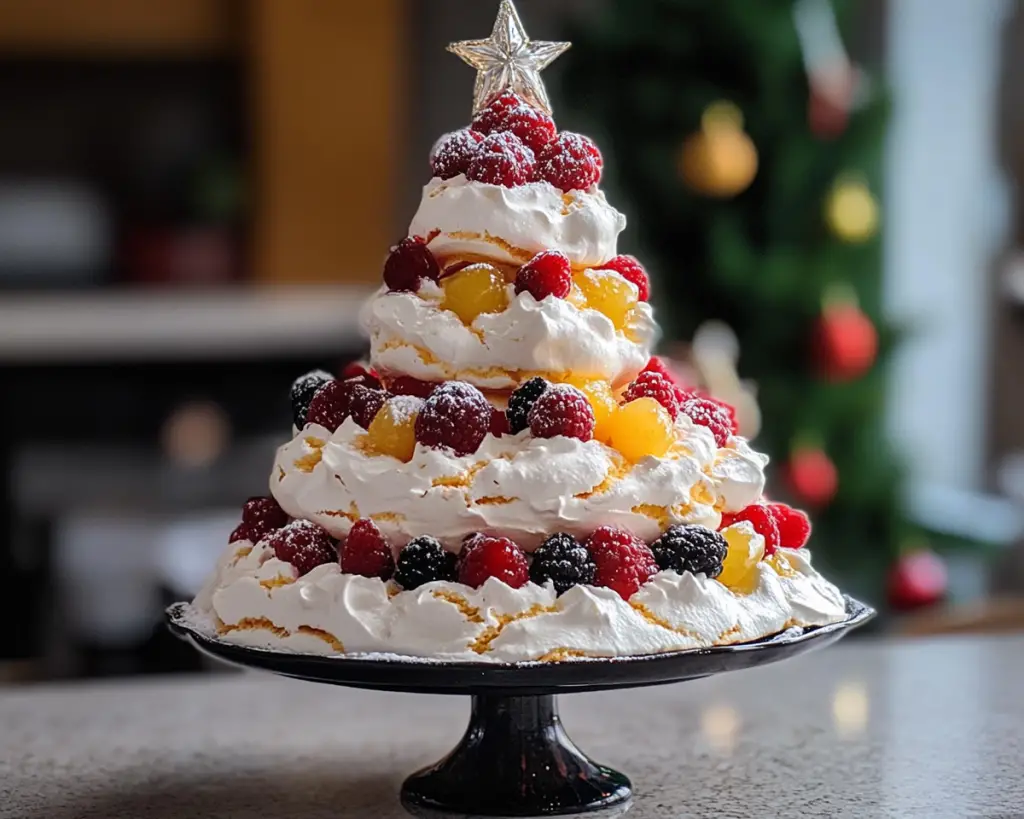
Creating a stunning dessert can make all the difference for a gathering, especially during festive occasions like Christmas. Imagine a dessert centerpiece that not only dazzles the eyes but also tickles the taste buds. The **Pavlova Christmas Tree** is precisely that! This showstopper is not just beautiful but also surprisingly simple to make. It layers a crunchy exterior with a soft, marshmallow-like interior, topped with a luscious assortment of fruits and whipped cream, making it a breathtaking dessert for any holiday table. In this article, you will discover how to create this masterpiece, along with tips for perfecting your Pavlova and variations to suit your taste.
What Is Can You Make This Stunning Pavlova Christmas Tree Recipe?
Originating from New Zealand and Australia, the **Pavlova** is a meringue-based dessert named after the famous ballet dancer Anna Pavlova. This dessert is famous for its airy structure and crisp exterior, while the inside remains delightfully soft and chewy. The **Pavlova Christmas Tree** elevates this traditional dessert to festive heights. The meringue base is shaped into tree-like layers, making it an eye-catching focal point for any holiday celebration.
A classic Pavlova is characterized by its sweet meringue, which is made from egg whites and sugar, whipped to perfection. The combination of airiness, sweetness, and the contrasting textures of the creamy topping and fresh fruits makes this dessert an irresistible choice. Each bite offers a delightful crunch that melts in your mouth, followed by the velvety smoothness of whipped cream and the bright flavors of fruits. This dessert is adaptable, allowing you to use seasonal fruits for a personalized touch.
Why You’ll Love This
Beyond its beautiful presentation, the **Pavlova Christmas Tree** is a dessert that everyone can enjoy. It’s naturally gluten-free, which means it caters to a broad range of dietary needs. The ease of preparation makes it perfect even for kitchen novices. You don’t need to be a pastry chef to create this impressive dessert; you simply need some egg whites, sugar, and your favorite toppings.
What sets the Pavlova apart from other desserts, such as cakes or tarts, is its lightness. While cakes can sometimes feel heavy or overly rich, the Pavlova remains airy and refreshing, making it ideal after a hearty holiday meal. Common misconceptions include the belief that meringues are difficult to make; however, once you understand the basics of whipping egg whites and knowing when to stop, you’ll find it’s much more straightforward than it appears.
It’s also worth noting that you can get creative with flavors and toppings. While traditional recipes may call for berries, you can incorporate tropical fruits or even chocolate, making this dessert versatile to suit your preferences.
Ingredients You’ll Need
To craft your gorgeous Pavlova Christmas Tree, gather the following ingredients:
- Egg Whites: The backbone of meringue, providing structure and fluffiness. Ensure they are at room temperature for better whipping.
- Caster Sugar: Finer than granulated sugar, it dissolves more easily, creating a smoother meringue. You can substitute with superfine sugar if needed.
- White Vinegar: This helps stabilize the egg whites, preventing them from deflating.
- Cornflour (Cornstarch): This ingredient contributes to the chewy interior texture, providing that perfect Pavlova experience.
- Heavy Cream: For whipping, it adds richness and creaminess, balancing the sweetness of the meringue.
- Vanilla Extract: A small addition that enhances the overall flavor. Consider using pure vanilla extract for the best results.
- Fresh Fruits: Such as strawberries, kiwis, and pomegranates for decoration and flavor. The freshness and acidity of the fruits cut through the sweetness of the Pavlova.
- Mint Leaves: Optional, for garnish and bright flavor.
Each ingredient plays a pivotal role in creating that iconic Pavlova texture and flavor. For those with dietary restrictions like veganism, there are alternatives such as aquafaba (the liquid from canned chickpeas) that can be used in place of egg whites.
How to Make
Follow these step-by-step instructions to craft your Pavlova Christmas Tree:
- Preheat the Oven: Start by preheating your oven to 120°C (250°F). Line a baking tray with parchment paper, ensuring the surface is as smooth as possible for easier meringue application.
- Prepare Your Egg Whites: In a clean mixing bowl, add the egg whites, ensuring no yolk or oil contamination. Using a hand mixer or stand mixer, begin beating at a low speed. Gradually increase to high, whisking until soft peaks form. This step usually takes 2-3 minutes.
- Add Sugar Gradually: Once you have soft peaks, begin adding the caster sugar, one tablespoon at a time. Mixing well after each addition. Continue to beat until the mixture is glossy, and stiff peaks form, which may take another 5-7 minutes. You want the sugar to be fully dissolved; rub a little between your fingers to check.
- Mix in Stabilizers: Gently fold in the white vinegar and cornflour. Be careful not to deflate the meringue as you do this. The mixture should be glossy and thick, indicating it’s ready for baking.
- Shape the Meringue: Spoon your meringue onto the prepared parchment, shaping it into tree layers, with the base being the widest part. Aim for three to four layers, using a spatula to create a rough texture for added aesthetic appeal.
- Bake the Meringue: Place the tray in the preheated oven and bake for 1.5 to 2 hours, until the meringue is firm to the touch and has a very light golden color. Avoid opening the oven door while baking to maintain heat.
- Cool Down: Once done, turn off the oven and leave the meringue inside to cool completely. This step is crucial for preventing cracks. You’ll want to achieve that light, airy puff without any collapse.
- Prepare the Topping: Whip the heavy cream in a separate bowl until soft peaks form. Add the vanilla extract as you whip to incorporate flavor. The texture should be smooth and able to hold its shape.
- Assemble Your Pavlova Tree: Once the meringue layers are completely cooled, carefully stack them with whipped cream spread between each layer. Feel free to create a fun optical illusion by slightly staggering the layers.
- Decorate: Top the assembled tree with fresh fruits and mint leaves, creating a beautiful and vibrant finish. Don’t hold back on the fruit — the exaggeration in color and flavor makes for a visually stunning garnishing.
With these simple steps, you’ll have a remarkable centerpiece that will surely impress guests and loved ones.
Variations & Substitutions
Berries Galore
For a berry-centric **Pavlova Christmas Tree**, focus on seasonal berries such as blueberries, raspberries, and strawberries. These not only add vibrant colors but also a contrast to the sweetness of the meringue. The tartness of the berries complements the creamy whipped topping beautifully. When using berries, consider macerating them with a touch of sugar to enhance their flavor and make a delightful coulis to drizzle over the top.
Tropical Twist
If you prefer an exotic spin, consider a tropical variation with pineapple, mango, and passion fruit. The bright and juicy fruits provide a refreshing zing, perfect for a summer-themed holiday. You could also add toasted coconut flakes to the meringue for a subtle crunch that complements the tropical flavors.
Chocolate Lovers
For those with a sweet tooth, incorporating chocolate is an excellent option. Drizzle melted chocolate over the assembled Pavlova or mix cocoa powder directly into the meringue to create a chocolate Pavlova base. Follow with toppings of banana slices and chocolate ganache for a decadent touch. This variation may lend itself to holiday gatherings where rich desserts are favored.
Nutty Delight
Consider adding ground nuts to the meringue mix, such as finely chopped almonds or hazelnuts for added flavor and crunch. This nutty texture pairs exceptionally well with creamy toppings and will keep your guests coming back for more. You can also sprinkle additional nuts on top after assembling for presentation and crunch.
Common Mistakes to Avoid
Creating the perfect Pavlova can be a bit challenging if you’re unfamiliar with meringue. One common mistake is not ensuring your mixing bowl and beaters are entirely clean. Any grease or residue can prevent egg whites from whipping to their full potential. Always use a glass or metal bowl, as plastic may harbor oils.
Another issue arises from incorrectly measuring your sugar. Too little sugar can cause the meringue to collapse, while too much can cause it to be overly runny. Use a kitchen scale to measure for accuracy.
Finally, **do not open the oven door** while your Pavlova is baking. As tempting as it may be to check on your creation, sudden temperature changes can lead to cracks and collapse. When the baking time is up, turn off the oven and leave the door closed to cool gradually.
Storage, Freezing & Reheating Tips
When it comes to storing your Pavlova, it’s essential to treat it with care to maintain its texture. The meringue can absorb moisture from whipped cream and fruits, leading to a soggy experience. It’s best to store meringue layers and toppings separately until you’re ready to serve.
You can keep the baked meringue in an airtight container at room temperature for up to two days. However, if you are planning to freeze it, wrap the layers tightly in plastic wrap and then in aluminum foil. This method will preserve its quality in the freezer for up to three months. Thaw it in the refrigerator before assembly.
If you have leftover assembled Pavlova, it can be stored in the refrigerator for up to 24 hours, but consume it the same day if possible for best results. The whipped cream may begin to deflate over time, and the fruits may lose some of their texture.
Frequently Asked Questions
Can I use older egg whites for the Pavlova?
Yes, older egg whites can be beneficial for making meringue because they whip to a greater volume. However, ensure they’re still fresh. Day-old egg whites create a more stable structure for Pavlova, especially when aged in the fridge.
What type of sugar is best for meringue?
Caster sugar is recommended because it dissolves more easily than granulated sugar, providing a smoother texture in your meringue. You can make your own caster sugar by processing granulated sugar in a food processor for a few seconds.
Can I make the Pavlova ahead of time?
Absolutely! You can prepare the meringue a day in advance and store it at room temperature. Just wait to assemble it until the day of serving, adding your toppings right before to maintain its crisp texture.
What if my Pavlova cracks?
Cracking is common and can occur for various reasons, including temperature fluctuations or overbaking. Even if it cracks, it can still taste divine! Just cover it with whipped cream and fruits, making the cracks less noticeable.
Can I add flavoring to the meringue?
Certainly! You can add flavorings like cocoa powder, almond extract, or citrus zest to enhance the flavor of your meringue. Just be cautious not to add too much liquid, which could affect the structure.
Conclusion:
Creating a stunning **Pavlova Christmas Tree** is not just about following a recipe—it’s about bringing joy to your kitchen and your loved ones. This dessert shines in its versatility, making it a fantastic choice for holiday celebrations. Whether you stick to the traditional flavors or mix it up with variations, the crunch and sweet creaminess will turn heads and delight taste buds. So, gather your ingredients, unleash your creativity, and share this wonderful dessert with others. You won’t regret it; it’s bound to entice and satisfy at any festive gathering. Feel free to customize it to make it your own, and don’t forget to share your creations!