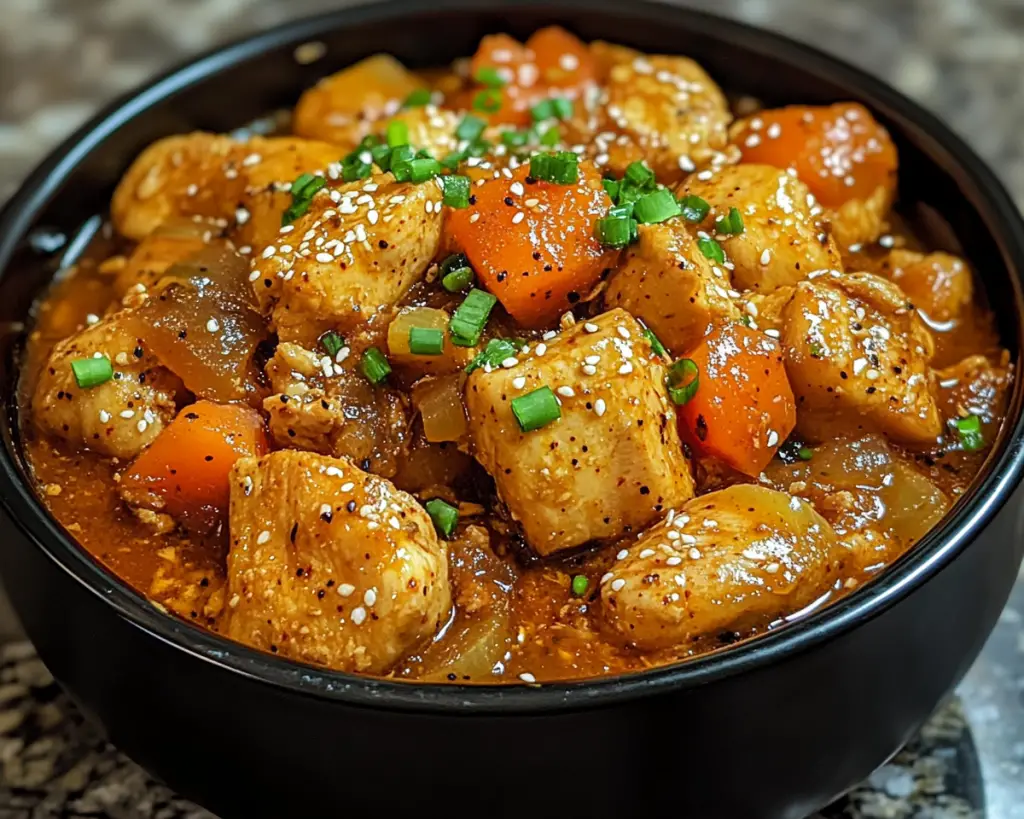
Prep time: 15 minutes
Cook time: 6 hours
Total time: 6 hours 15 minutes
Servings: 6
Slow Cooker Korean Chicken Stew is a comforting and flavorful dish that transports you straight to the heart of Korean cuisine. With its tender chicken, vibrant vegetables, and a deeply satisfying broth, this stew is the answer to your weeknight dinner dilemmas. Whether you are a busy parent trying to keep up with your family’s hectic schedule, a beginner in the kitchen, or simply someone looking to explore new flavors, this recipe has you covered. You’ll discover not only the delicious combination of sweet, spicy, and savory in this stew but also tips on how to make it easier, variations to try, and common mistakes to avoid.
What Is Slow Cooker Korean Chicken Stew (Comforting & Flavorful)?
Slow Cooker Korean Chicken Stew, also known as Dakjjim, is a traditional Korean dish that is often enjoyed as a hearty meal, especially during chilly weather. Originating in Korea, this stew brings together flavors that are distinctly Korean, creating a comforting dish that soothes the soul. It is characterized by its tender pieces of chicken that fall off the bone and a broth that is rich with the essence of soy sauce, garlic, and gochujang, a Korean chili paste that adds a touch of heat and depth.
The texture of the broth is thick and luscious, thanks to the starch released from the vegetables during the cooking process. You can expect a lovely balance of spice and sweetness, making every spoonful a delightful surprise. Not only does this dish warm you up, but it also satisfies your palate with its robust flavors. This recipe not only highlights the natural flavors of the ingredients but allows room for personalization based on your own tastes, making it a staple that you’ll come back to time and again.
Why You’ll Love This
There are many reasons why Slow Cooker Korean Chicken Stew is a recipe you’ll want to add to your regular rotation. First and foremost, the taste is unmatched. The combination of savory, sweet, and a touch of spicy creates a flavor profile that will excite your taste buds. Additionally, using a slow cooker simplifies the cooking process, allowing you to set it and forget it while you go about your day. You can return to a steaming, aromatic meal that feels like a warm hug on a plate.
Cost-effectiveness is another strong point; this recipe utilizes affordable ingredients that are often staples in your pantry. Moreover, it is versatile and can be tailored to accommodate various dietary preferences and restrictions. If you are looking to eat healthier, you can easily substitute some ingredients without sacrificing flavor. For example, using boneless skinless chicken breast can reduce fat, while adding more vegetables can boost the nutritional profile.
One common misconception is that slow-cooked meals are bland or one-dimensional. This dish defies that stereotype with its bold flavors and satisfying textures. Using aromatics like garlic and ginger, along with the umami-rich soy sauce and gochujang, ensures that your stew will be anything but boring. Each bite is an experience that showcases the incredible harmony between the various components of the dish.
Ingredients You’ll Need
- Bone-in chicken thighs: These add rich flavor and become tender when cooked slowly.
- Potatoes: They provide heartiness and absorb the flavors of the stew.
- Carrots: Their natural sweetness complements the savory elements.
- Onions: Essential for adding depth to the flavor.
- Gochujang: This Korean chili paste provides heat and umami.
- Soy sauce: For seasoning, it adds saltiness and a savory twist.
- Garlic: Enhances the flavor profile and adds aroma.
- Ginger: Offers a zesty flavor and aids digestion.
- Sesame oil: Provides a nutty finish.
- Green onions: For garnish and added freshness.
- Water or chicken broth: Forms the base of the stew.
- Black pepper: For additional seasoning.
Each ingredient serves a specific role in creating the robust flavor and satisfying texture of the stew. For example, the bone-in chicken thighs are critical; while skinless chicken breasts are a healthier option, they can dry out in long cooking times. If you’re aiming to reduce calories, consider using skinless thighs instead.
The combination of fresh vegetables like potatoes, carrots, and onions not only makes the dish heartier but ensures you’re also getting your daily servings of vegetables. As for the aromatics, don’t skip the garlic and ginger; they are fundamental to Korean cooking, providing both health benefits and unforgettable flavors.
How to Make
To create this delightful Slow Cooker Korean Chicken Stew, follow these simple yet effective steps:
- Prepare your ingredients: Begin by peeling and chopping your vegetables. Dice the potatoes into bite-sized pieces, slice the carrots, and chop the onions. Additionally, mince the garlic and ginger. Having everything ready will make the cooking process smoother.
- Brown the chicken: To enhance the flavor, consider browning the chicken thighs in a skillet over medium heat. This step is optional; however, it adds a layer of richness. Simply sear each side for about 4-5 minutes until golden brown.
- Layer in the slow cooker: Place the chicken at the bottom of the slow cooker. This allows for even cooking. Follow with the chopped potatoes, carrots, and onions. Sprinkle in the minced garlic and ginger, and drizzle the sesame oil over the top.
- Add your liquids: In a small bowl, mix together the soy sauce, gochujang, and black pepper. Pour this mixture over the vegetables and chicken. Then add enough water or chicken broth to cover the ingredients completely.
- Cook low and slow: Cover the slow cooker and set it on low for 6-8 hours or high for 3-4 hours. This method allows the chicken to become tender and the flavors to meld beautifully. If you choose the high setting, check at the 3-hour mark for doneness.
- Finish and serve: Once the cooking time is up, check that the chicken is fully cooked and tender. You can shred it directly in the pot for easier serving. Before serving, taste the broth and adjust seasonings if necessary. Garnish with sliced green onions for a fresh pop.
To enhance the sensory experience, take a moment to inhale the incredible aroma that fills your kitchen as the stew cooks. This inviting scent will entice your family and even neighbors, creating a warm atmosphere.
Variations & Substitutions
Vegetarian Korean Stew: If you’re looking to make this recipe vegetarian-friendly, substitute chicken with firm tofu or veggie proteins like mushrooms. Using vegetable broth in place of chicken broth will keep the flavors rich, and hearty root vegetables like parsnips can offer a lovely sweetness.
Spicy Version: For those who crave an extra kick, increasing the amount of gochujang or adding gochugaru, Korean red pepper flakes, can elevate the heat. Pairing this spiciness with a touch of sugar will balance the flavors beautifully.
Coconut Milk Addition: Incorporating a can of coconut milk can yield a creamy texture and an exotic twist to the dish. This variation is perfect for those who enjoy a more tropical flavor profile, softening the spices and adding a richness that elevates the overall experience.
Low-Carb Option: For a low-carb alternative, you can replace potatoes with cauliflower florets. They will absorb the flavors of the stew wonderfully while keeping it lighter. This is also a great option for anyone following a ketogenic diet.
Asian-inspired Add-ins: Feel free to add other vegetables or proteins that suit your preferences. Bok choy, bell peppers, or even zucchini can introduce new textures and flavors. You can also toss in some rice noodles just before serving for an added heartiness.
Every variation can change the dish’s flavor profile while keeping the essence of the Korean Chicken Stew intact. Don’t hesitate to experiment and make this recipe truly your own!
Common Mistakes to Avoid
One common mistake is using chicken breasts instead of thighs, as they tend to dry out when slow-cooked. Always opt for bone-in, skin-on chicken thighs for the most flavorful and tender results. Another frequent error is not seasoning enough; be sure to taste and adjust the seasoning toward the end of the cooking process.
A common problem is overcooking the vegetables, leading them to become mushy. Adding denser vegetables first and softer ones in the last hour of cooking can help maintain their textures. Additionally, ensure not to lift the lid of the slow cooker too often; each time you do, you release heat that can prolong cooking times.
Lastly, remember to use the right amount of liquid. Too little can lead to a stew that is more like a stir-fry, while too much can dilute the flavors. Aim for a well-balanced liquid to ingredient ratio for the best outcome.
Storage, Freezing & Reheating Tips
Storing leftovers properly is crucial for maintaining the best flavor and preventing spoilage. Allow the stew to cool completely before transferring it into airtight containers. You can store it in the refrigerator for up to three days. For longer storage, consider freezing it. Portion it into freezer-safe containers or bags; this way, you can enjoy individual servings at a later time.
When reheating your stew, always ensure it reaches an internal temperature of 165°F for safe consumption. You can reheat it on the stovetop over medium heat, stirring occasionally, or use the microwave in short intervals, stirring in between.
For the best results when using frozen stew, allow it to thaw overnight in the refrigerator first for even heating. You may need to add a splash of broth or water during reheating to achieve your desired consistency.
Frequently Asked Questions
Can I use other types of meat besides chicken?
Absolutely! This recipe is highly versatile. You can use beef, pork, or even a mix of different proteins. Just ensure that you adjust the cooking time accordingly, as different meats require varying lengths of time to become tender.
Can I make this dish without a slow cooker?
Yes, you can! This stew can also be made on the stovetop in a large pot. Simply follow the same preparatory steps but cook it on low heat for about 1.5 to 2 hours, checking periodically until the chicken is tender.
Is this stew gluten-free?
To make this dish gluten-free, substitute regular soy sauce with gluten-free tamari. Most other ingredients in this stew are naturally gluten-free, so with this small change, you can enjoy the flavors without worry.
What can I serve with Korean Chicken Stew?
This stew is delicious on its own but pairs beautifully with steamed rice or quinoa. You could also serve it with a side of kimchi or pickled vegetables to add a tangy kick.
How do I make this dish spicier?
If you love heat, consider increasing the quantity of gochujang or adding gochugaru for additional spiciness. You can also include fresh chilies or red pepper flakes to elevate the spice level to your liking.
Conclusion:
Slow Cooker Korean Chicken Stew is not just a meal; it’s a comforting experience that warms the heart and soul. With its flexible ingredients and easy-to-follow method, it invites culinary creativity while delivering consistent satisfaction. Whether you enjoy it as is or add your unique touch, every bowl is packed with nourishing goodness. Don’t hesitate to give it a try, adapt it to your family’s taste, and share it with friends. After all, comfort food is best enjoyed together. Get cooking and savor the vibrant flavors of Korea in your very own kitchen!