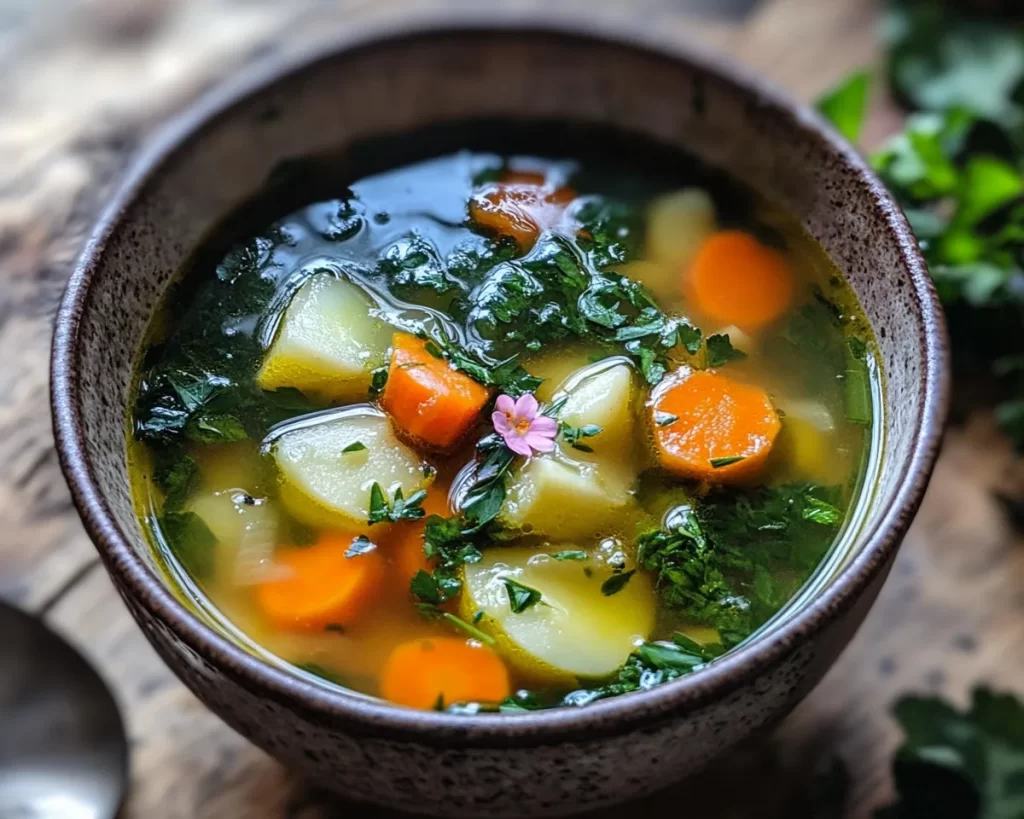
Prep time: 20 minutes
Cook time: 30 minutes
Total time: 50 minutes
Servings: 4
Spring is an exciting time in the kitchen, bursting with fresh flavors and new ingredients. One dish that perfectly encapsulates the essence of the season is the delightful Spring Vegetable Soup. This vibrant broth not only warms your soul but also celebrates the beautiful, fresh produce available during the spring months. Imagine enjoying a bowl filled with crisp asparagus, tender peas, and colorful carrots, each spoonful inviting you into a garden of nourishing goodness.
This recipe is special because it offers a light yet satisfying meal that highlights the best of spring vegetables. You will learn how to enhance these ingredients to create a soup that’s not only full of flavor but also healthful. Preparing this soup can start an engaging cooking experience, especially for busy parents or anyone trying to enjoy quick yet delicious meals on a budget.
What Is Spring Soup: Spring Vegetable Soup (Light)?
Spring Vegetable Soup is a simple yet exquisite dish that invites the spirit of the season right into your kitchen. Originating in various cultures, this soup is often made using a medley of fresh vegetables that come into season during spring. Think of it as a celebration of the earth’s bounty after the long winter months. The texture is light and refreshing, thanks to ingredients like tender asparagus, vibrant peas, and sweet carrots, simmered to perfection to enhance their flavors.
The soup is characterized by its fragrant broth which harmonizes with the excitement of early spring. Each bowl carries a burst of flavor, making this dish a perfect candidate for those looking to infuse their diet with wholesome, nutrient-rich ingredients. The key to the flavor lies not only in the vegetables but also in the careful seasoning that takes the broth from ordinary to extraordinary, creating a delightful experience for your palate.
The flavor palette ranges from the sweetness of spring peas to the earthiness of asparagus, creating a beautiful balance. This soup is beneficial not just for its taste but also for its nutritional profile, boasting a variety of vitamins and minerals that are essential for overall health. This dish can easily be adjusted to suit dietary preferences, making it an ideal choice for almost anyone.
Why You’ll Love This
You’ll find many reasons to fall in love with this Spring Vegetable Soup. First and foremost, the taste is absolutely enchanting. The combination of fresh vegetables creates a medley of flavors that sings of springtime, making every spoonful feel festive and celebratory. Ease is another compelling reason—this recipe is incredibly straightforward and can be whipped up in under an hour, making it perfect for busy weeknights or weekend meal prep.
Furthermore, its cost-effectiveness is a significant benefit. You can create a large, hearty soup using in-season vegetables that are typically less expensive than out-of-season alternatives. This aspect makes it a fantastic option for both meal planning and budget cooking. Additionally, this soup is nourishing, providing essential nutrients while keeping calories in check. It’s a light meal that doesn’t skimp on flavor, making it suitable for anyone looking to maintain a balanced diet.
Some common misconceptions about vegetable soup suggest that it is bland or lacks substance. This recipe dispels that notion entirely. With the careful selection of fresh ingredients and seasoning, you can expect a symphony of flavors. Whether you are serving it as a starter or as a main dish alongside crusty bread, this soup will certainly impress.
Ingredients You’ll Need
Crafting your Spring Vegetable Soup requires a selection of fresh, high-quality ingredients. Here’s what you’ll need:
- 2 tablespoons olive oil – This healthy fat is essential for sautéing the vegetables and adds richness to the broth.
- 1 medium onion, diced – Onions form the aromatic base of the soup, enhancing its overall flavor.
- 2 cloves garlic, minced – Adding a fragrant note, garlic complements the vegetables beautifully.
- 3 medium carrots, sliced – Sweet and tender, carrots provide a crunchy texture and a hint of sweetness.
- 1 cup asparagus, cut into 1-inch pieces – A spring vegetable superstar, asparagus adds both vibrant color and a unique taste.
- 1 cup green peas, fresh or frozen – Their sweetness balances the earthiness of the other veggies.
- 4 cups vegetable broth – The base of your soup, choose a high-quality broth for the best flavor.
- Salt and pepper, to taste – Essential for seasoning, always adjust to suit your personal preference.
- 1 tablespoon lemon juice – Adds brightness, elevating the overall flavor profile.
- Fresh herbs (parsley, thyme, or dill) for garnish – These not only enhance the taste but also provide a beautiful finishing touch.
Each ingredient plays a crucial role in shaping the flavor and texture of the soup. If you’re exploring substitutions, consider replacing olive oil with butter for a richer taste or using homemade broth for added depth. You can also switch out the vegetables based on what’s in season or what you have on hand.
How to Make
Creating your Spring Vegetable Soup is simple and rewarding. Follow these step-by-step instructions for a delicious result.
- Heat the olive oil: In a large pot over medium heat, add the olive oil. Allow it to warm until it shimmers, approximately one minute. This step is crucial as it helps in sautéing the vegetables and releasing their essential flavors.
- Sauté the onions and garlic: Add the diced onions to the pot and sauté for about 5 minutes until they turn translucent. Then, add the minced garlic, stirring for another minute until fragrant. Be cautious not to burn the garlic, as it can turn bitter.
- Add carrots: Stir in the sliced carrots and cook for an additional 5 minutes. At this stage, you will begin to notice the sweet aroma wafting through the kitchen as the carrots soften and release their natural sugars.
- Add asparagus and peas: Next, add the asparagus pieces and green peas. Stir well to combine all the ingredients. Another 5 minutes of sautéing will bring out the colors and flavors of these vegetables, making them tender yet crisp.
- Pour in the broth: Slowly pour the vegetable broth into the pot, ensuring the vegetables are fully submerged. Increase heat to bring the soup to a boil, then reduce to a simmer. Allow it to cook for about 15-20 minutes, or until all vegetables are tender.
- Season and finish: After cooking, season the soup with salt and pepper to taste. Stir in the lemon juice to add brightness. A squeeze of lemon can transform your soup, elevating its flavors distinctly. Before serving, garnish with fresh herbs for added aroma and a pop of color.
The textures should be a beautiful combination of tender vegetables and a rich yet light broth. This balance is essential for creating an inviting and satisfying dish.
Variations & Substitutions
Herb-Infused Variation: For those who enjoy a more aromatic soup, consider adding fresh herbs like basil or thyme during cooking. Fresh herbs can enhance the flavor remarkably and create a delightful aroma. This variation is perfect for herb lovers or anyone looking to brighten their dish. Simply chop the fresh herbs and add them just before serving to retain their vibrant flavor.
Protein-Packed Variation: If you want to make your soup heartier, add proteins such as shredded chicken, chickpeas, or lentils. Chickpeas or lentils would not only contribute to the nutritional value but also add a satisfying texture. This variation is especially suitable for those seeking a more balanced meal. Be sure to adjust cooking time based on your protein of choice.
Spicy Kick Variation: For those who enjoy a little heat, consider adding crushed red pepper flakes or a diced jalapeño while sautéing the onions and garlic. This variation will provide a warm kick that can elevate the soup and provide depth to the flavors. Perfect for anyone who enjoys spicy foods, this little adjustment can make a significant impact.
Creamy Variation: If you prefer a creamier texture, reduce the broth by half and blend a portion of the soup before serving. You can also add a splash of coconut milk or heavy cream, which will soften the flavors and add a luscious mouthfeel. This variation could appeal to individuals who appreciate a smooth and velvety soup.
Common Mistakes to Avoid
One common mistake in making vegetable soup is not adequately seasoning the broth. A lack of seasoning can lead to a bland soup that fails to inspire. Always taste as you go and adjust according to your palate, considering that flavor intensifies as the soup simmers.
Another mistake is overcooking the vegetables. Overcooked vegetables lose their vibrant colors and nutrients, turning mushy instead of tender. To avoid this, refer to the timings provided in the steps, and keep an eye on the texture as they cook.
Additionally, using low-quality broth can lead to disappointing results. High-quality vegetable broth creates a flavorful base for your soup, so choose carefully. If you’re using a store-bought option, read the label for added sugars or preservatives that may affect flavor negatively.
Lastly, forgetting to add a finishing touch—like a splash of lemon juice or fresh herbs—can make your soup feel incomplete. These final additions not only brighten the flavors but also enhance aroma and presentation.
Storage, Freezing & Reheating Tips
Proper storage is critical to maintaining the freshness of your Spring Vegetable Soup. Allow the soup to cool to room temperature before transferring it to an airtight container. Refrigerate for up to 3-4 days. When reheating, do so gently on the stovetop or in the microwave. Stir occasionally to ensure even heating.
For longer storage, consider freezing the soup. To freeze, pour cooled soup into freezer-safe containers, leaving some space at the top to allow for expansion. It can be stored in the freezer for up to 3 months. To reheat from frozen, thaw overnight in the refrigerator and then heat on the stovetop or microwave.
Food safety is essential, so ensure any leftovers are promptly refrigerated. If unsure about the freshness of the soup, rely on your senses—look, smell, and taste carefully before consuming.
Frequently Asked Questions
Can I use frozen vegetables instead of fresh?
Absolutely! Frozen vegetables are often picked and frozen at their peak freshness, making them a convenient and equally nutritious alternative to fresh produce. Just note that cooking times might be slightly shorter since they are pre-cooked during the freezing process.
How can I make this soup vegan?
This recipe is naturally vegan, but always check your vegetable broth to ensure there are no animal-based ingredients. Using plant-based oils and avoiding dairy will keep your soup entirely vegan-friendly.
Can I add other vegetables to the mix?
Definitely! Variety is the spice of life. Feel free to include vegetables like zucchini, bell peppers, or even potatoes. Just ensure they have similar cooking times to maintain texture and consistency.
Is this soup gluten-free?
Yes! The ingredients used are gluten-free. Just double-check your broth packaging to ensure it hasn’t been processed with gluten-containing ingredients.
How do I serve the soup?
Serve your Spring Vegetable Soup as is for a light meal, or consider pairing it with a loaf of crusty bread for something heartier. A sprinkle of fresh herbs or a dollop of pesto on top can enhance both flavor and presentation.
Conclusion:
Spring Vegetable Soup is a nourishing and vibrant dish that showcases the beauty of seasonal produce. Its versatility and ease of preparation make it an excellent choice for healthy eating amid busy schedules. I encourage you to try this recipe, customize it to your taste preferences, and share your cooking experiences with family and friends. This soup not only warms the body but also the heart, inviting everyone to enjoy the delightful flavors of spring. Don’t hesitate—whip up a batch today and enjoy the comforting embrace of home-cooked goodness!