Prep time: 15 minutes
Cook time: 20 minutes
Total time: 35 minutes
Servings: 4
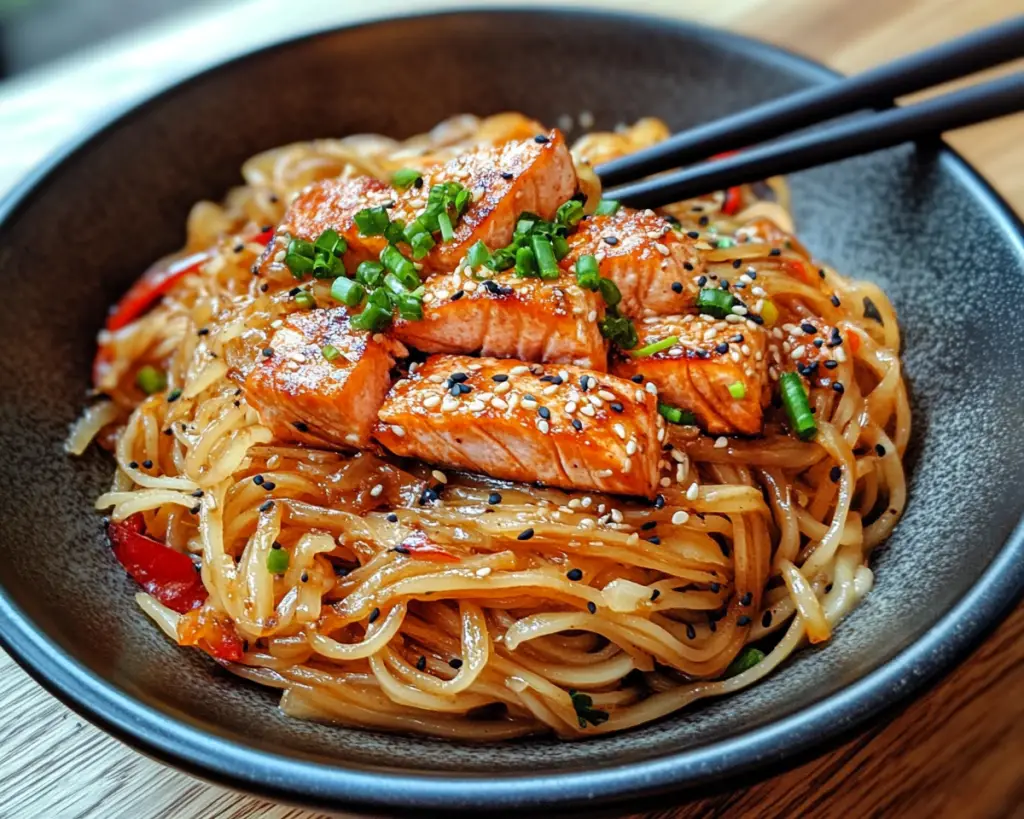
Sticky Sweet Spicy Asian Salmon Rice Noodles is more than just a meal; it’s a flavor-packed adventure that transports you directly to the streets of Asia with every bite. Imagine the tender, flaky salmon coated in a rich and tangy sauce that plays perfectly off the chewy rice noodles. The aroma wafting from your kitchen will have you daydreaming about your next culinary escapade. This dish is perfect for busy weeknights, family gatherings, or simply when you want to treat yourself to something extraordinary yet easy to prepare.
What makes this recipe special is its wonderful balance of flavors and textures. You have the crispness of fresh vegetables mingling with the savory sweetness of the sauce, all resting on a bed of soft, slippery rice noodles. As you follow along, you’ll discover tips for achieving the perfect glaze on your salmon, how to cook the noodles just right, and even some fun variations to personalize the dish.
Now, let’s dive into a detailed breakdown of what this dish involves — you’ll be ready to impress yourself and those around you in no time!
What Is 🍜 Sticky Sweet Spicy Asian Salmon Rice Noodles (Bold Flavor Dinner)?
Sticky Sweet Spicy Asian Salmon Rice Noodles can be considered an homage to various Asian cuisines, combining flavors and techniques to create a dish that is uniquely irresistible. The essence of this dish lies in its **marinated salmon**, which is both tender and bursting with umami. The marinade typically includes ingredients like soy sauce, honey, garlic, and ginger, which together form a **sticky glaze** that clings to the salmon, enhancing its natural richness.
The rice noodles serve as the perfect vehicle for all this flavor, providing the necessary chewiness to contrast with the soft, flaky fish. These noodles are versatile and quick-cooking, making them ideal for a busy weeknight. Additionally, fresh vegetables like bell peppers and snap peas offer a crunch that brightens the dish, making each bite an exciting experience.
The flavors of this dish are a delightful blend of sweet, spicy, and savory. The sweetness of the honey balances the saltiness of the soy sauce, while the chili flakes add just the right amount of heat to keep your taste buds awake and alive. The complex layers of flavor in this dish make it satisfying enough to serve at gatherings or simply savor on a quiet evening alone, showing just how versatile this recipe can be.
Why You’ll Love This
The beauty of Sticky Sweet Spicy Asian Salmon Rice Noodles lies in its multifaceted appeal. First and foremost, the **taste** is an explosion of flavors that will keep you coming back for seconds. The unique blend of sweet and spicy satisfies cravings across the board, making it a solid choice for adult palates and kids who might be a bit picky.
In terms of **ease**, the recipe is straightforward and requires minimal cooking skills, making it perfect for beginners or those who are often short on time. You can have this delicious meal on the table in under 40 minutes, meaning you hardly need to sacrifice quality for convenience. This dish is also a great option for **budget cooking**. The ingredients are largely affordable staples, especially if you purchase your protein and fresh vegetables in advance.
One common misconception is that Asian cuisine is complicated and requires specialty ingredients that are difficult to find. However, this recipe utilizes commonly available items that you can generally find in any grocery store. It’s essential to remember that the beauty of cooking is in adjusting to your preferences; with a little creativity, you can make this dish uniquely your own!
Ingredients You’ll Need
- Salmon fillets: The star of the dish, salmon not only provides protein but is also loaded with **Omega-3 fatty acids**, promoting heart health. If you’re looking for alternatives, try using skinless chicken thighs or tofu for a vegetarian option.
- Soy sauce: This ingredient is critical for achieving that deep umami flavor. Use low-sodium soy sauce if you prefer to cut back on salt.
- Honey: Natural sweetness comes from honey, adding a rich flavor. Maple syrup or agave nectar can be excellent substitutes for those avoiding processed sugars.
- Garlic: Freshly minced garlic adds a beautiful aroma and flavor. In a pinch, you can use garlic powder, but the fresh version will always yield better results.
- Ginger: A touch of fresh ginger brings a warm heat that complements the dish perfectly. Ground ginger can also work but won’t provide the same texture or boldness.
- Rice noodles: These will serve as the base for the dish. You can use **soba** or **udon noodles** as alternatives, which have different textures and flavors.
- Bell peppers: Thinly sliced bell peppers add color and crunch. Feel free to mix and match your favorite varieties, such as red, yellow, or green.
- Snap peas: Giving a refreshing bite, snap peas can be substituted with broccoli florets or sliced carrots for variety.
- Chili flakes: For added heat, chili flakes or sriracha can be adjusted to suit your spice tolerance. If you love heat, feel free to sprinkle in more!
- Sesame oil: A drizzle of this oil infuses a nutty flavor that ties everything together. Olive oil can be used in a pinch, although it won’t have the same distinct aroma.
With these ingredients, not only will you create a stunning dish, but you’ll also explore a range of textures and flavors that nourish and excite.
How to Make
- Start by marinating the salmon. In a small bowl, whisk together the soy sauce, honey, minced garlic, and ginger. Place the salmon fillets in a shallow dish and pour the marinade over them, ensuring they are completely covered. Let the salmon marinate for at least 15 minutes. This step is crucial as it allows the flavors to permeate the fish.
- While the salmon is marinating, prepare your rice noodles according to the package instructions. Typically, this requires soaking them in hot water for about 10 to 12 minutes until soft. Be sure not to overcook them; they should be al dente since they will also cook slightly in the final stir-fry.
- Next, heat a large skillet over medium-high heat and add a drizzle of sesame oil. Once the oil is hot, carefully remove the salmon from the marinade, reserving the marinade for later. Cook the salmon fillets skin-side down for about 5 minutes, allowing the skin to crisp up. Gently flip the fillets and cook for another 4–5 minutes until cooked through and easily flakes with a fork. Remove the salmon and set it aside.
- In the same skillet, add a little more sesame oil if needed and toss in the sliced bell peppers and snap peas. Stir-fry the vegetables for about 4–5 minutes until they’re just tender yet still crisp. This will enhance their natural sweetness and add even more color to your dish.
- Once the vegetables are cooked, add the drained rice noodles to the skillet along with the reserved marinade. Toss everything together gently, allowing the noodles to absorb the flavors from the sauce. You may need to add a splash of water if the noodles seem too dry. Continue to toss until everything is heated through, about 2-3 minutes.
- Finally, gently flake the cooked salmon over the noodle mixture and stir to combine without breaking up the salmon too much. This will ensure that every bite has a bit of that delicious fish. Serve immediately, garnishing with extra chili flakes if you like a little more heat!
This process not only creates a delightful and balanced dish but also highlights your culinary skills, making you feel accomplished and satisfied.
Variations & Substitutions
Teriyaki Salmon Variation: If you want to take it up a notch, consider using a store-bought or homemade teriyaki sauce instead of the marinade. The teriyaki will add a deeper **sweet and savory** flavor that pairs well with the rice noodles and vegetables. This variation is especially appealing to those who love the traditional flavors of Japanese cuisine. Just make sure to adjust the cooking time slightly, as teriyaki sauce tends to caramelize at high heat.
Vegetarian Option: For a vegetarian twist, replace the salmon with **tofu** or **tempeh**. Both are excellent sources of protein and can absorb flavors beautifully. Simply marinate the tofu in the same marinade as the salmon and cook until golden and crispy. The texture will differ from salmon but will still be incredibly satisfying and nutritious. You can also add more vegetables like bok choy or zucchini to enhance the dish further.
Gluten-Free Version: To make this dish gluten-free, simply swap out the regular soy sauce for **tamari** or coconut aminos. These alternatives boast similar flavors without the gluten. Additionally, ensure that the rice noodles you choose are certified gluten-free. This option allows everyone to enjoy the dish without concern for dietary restrictions.
Spicy Garlic Sauce Variation: For those who crave heat, consider whipping up a **spicy garlic sauce** instead of the marinade. Combine soy sauce, minced garlic, chili paste, and a little lime juice for acidity. This will give your salmon and noodles an added kick. You can make this as spicy as you’d like, appealing to those who enjoy bolder flavors.
Common Mistakes to Avoid
One common mistake is overcooking the salmon. Salmon can become dry and unappetizing if cooked for too long. To avoid this, keep an eye on the cooking time and use a fork to check if the fish flakes easily. It should still have a little translucency in the center when you remove it from the heat, as it will continue cooking residual heat.
Another mistake is neglecting the noodles. It’s easy to forget about the rice noodles while you’re focused on marinating or cooking the salmon. Over-soaked or overcooked noodles can become mushy, ruining the entire dish. To combat this, set a timer while soaking them and taste them periodically just before they’re supposed to be ready.
Lastly, people often underestimate the power of seasoning. While the marinade should provide initial flavor, don’t skip on tasting the dish during the cooking process. You may find it needs a little extra soy sauce or a dash of lime juice to bring everything together beautifully.
Storage, Freezing & Reheating Tips
For leftover Sticky Sweet Spicy Asian Salmon Rice Noodles, store them in an airtight container in the refrigerator. They will stay fresh for up to 3 days, making this a great option for meal prep. When reheating, it’s best to do so on the stovetop rather than the microwave to maintain the noodles’ texture. Just add a splash of water and a small amount of oil to prevent sticking.
If you want to prepare the dish ahead of time for later enjoyment, consider freezing the salmon separately from the noodles and vegetables. Cooked salmon can be frozen in a sealed container for up to 2 months. For the noodles, it’s best to avoid freezing them, as they may become mushy upon reheating. Instead, prepare fresh noodles when you’re ready to eat. Always remember to check for any sign of freezer burn and consume stored food within safe periods to maintain quality.
Frequently Asked Questions
Can I use frozen salmon for this recipe?
Absolutely! You can use frozen salmon; just make sure to thaw it completely before marinating and cooking to ensure even flavor and texture. A good practice is to place it in the refrigerator overnight to allow for an even thaw.
How can I make this dish less spicy?
If you’re looking to tone down the heat, reduce the amount of chili flakes or omit them entirely. Also, consider serving the dish with a side of **cucumber salad**, which can help counterbalance any spiciness with its coolness.
What type of rice noodles should I use?
The best type of rice noodles for this dish are the thin vermicelli noodles, as they absorb the flavors beautifully and provide the right texture. If you prefer something heartier, wide rice noodles also work well.
Can I add more vegetables to this dish?
Certainly! Feel free to add your favorite vegetables; options like bok choy, carrots, or broccoli can enhance the dish. Just make sure to adjust the cooking time to ensure that everything is nicely cooked but retains some crispness.
Is this recipe suitable for meal prep?
Yes, this recipe is excellent for meal prep! You can prepare the salmon and noodles in advance and store them separately, allowing you to mix and heat them up when you’re ready to eat. Just be mindful of the texture of the noodles.
Conclusion:
Sticky Sweet Spicy Asian Salmon Rice Noodles is more than just a dish; it’s an experience that brings the comforting boldness of Asian cuisine straight to your home. With its sweet, spicy, and savory components, every bite is a blend of exquisite flavors that is sure to satisfy. I encourage you to try this recipe and explore the potential variations or substitutions to make it your own. Don’t hesitate to share this fantastic culinary adventure with friends and family, and may your cooking journey always be warm and fulfilling!