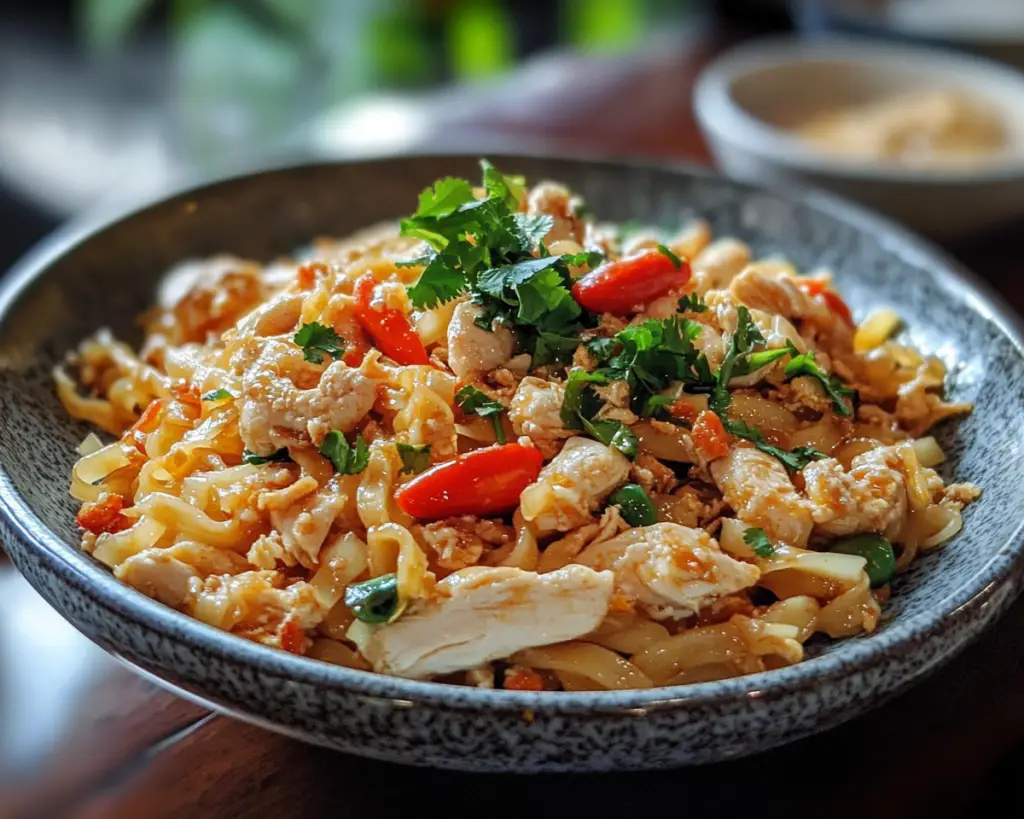
Prep time: 20 minutes
Cook time: 15 minutes
Total time: 35 minutes
Servings: 4 servings
Indulging in the rich, enticing flavors of Thai cuisine can be a delightful experience that transports you to a bustling market in Bangkok. Imagine savoring a plate of deliciously stir-fried rice noodles, tender chicken, and vibrant vegetables, all brought together with aromatic spices. This is exactly what you’ll encounter when you make 🍜 Kuay Tiew Kua Gai, or Thai Chicken Stir-Fried Rice Noodles. This dish is not only comforting and satisfying, but it’s also straightforward to prepare at home. By the end of this article, you’ll have a complete understanding of how to create this wonderful meal, along with tips and variations to make it your own.
Kuay Tiew Kua Gai is a beloved dish in Thailand known for its versatility and robust flavors. The main ingredients are flat rice noodles, chicken, and a medley of vegetables, all stir-fried together in a perfectly seasoned sauce. The noodles provide a chewy texture while the chicken adds protein to keep you satisfied. The combination of soy sauce, oyster sauce, and other seasonings creates a rich taste that will prompt you to go back for seconds. This dish is perfect for families looking for a quick meal or anyone eager to explore the joys of Thai cooking in their own kitchen.
In this article, you’ll learn exactly how to make Kuay Tiew Kua Gai, from start to finish. You’ll discover tips for cooking the perfect noodles, choosing the right vegetables, and seasoning your dish for maximum flavor. Additionally, we’ll explore various ways to customize this recipe based on dietary preferences and share solutions to common pitfalls in preparation. This is a dish that all—from busy parents to novice cooks—can master and enjoy together!
What Is 🍜 Kuay Tiew Kua Gai Thai Chicken Stir-Fried Rice Noodles?
Kuay Tiew Kua Gai is a classic Thai dish that embodies the essence of Thai street food, known for its quick cooking time and rich flavors. The dish originates from Thailand, a country renowned for its vibrant culinary traditions. The main component of Kuay Tiew Kua Gai is its flat, wide rice noodles, which are known for their excellent ability to absorb sauces and flavors.
The texture of these noodles, tender yet slightly chewy, makes them a perfect base for the dish. Cooking them quickly over high heat allows for a slight char, giving them an exquisite flavor that complements the juicy chicken pieces. The addition of fresh vegetables, such as bean sprouts or Chinese chives, adds a crunchy contrast, enhancing the overall dining experience. The interplay of savory and slightly sweet flavors from the combination of soy sauce and oyster sauce creates a balance that is hard to resist.
In Thai culture, food is more than just sustenance; it is a way to bring people together. Kuay Tiew Kua Gai reflects this sentiment by being a dish that can serve as a hearty meal for families or a quick bite for busy street-goers. Whether enjoyed in a home kitchen or a street cart in Thailand, this dish carries with it a sense of community and enjoyment, making it a wonderful recipe to share with loved ones.
Why You’ll Love This
One of the most appealing aspects of Kuay Tiew Kua Gai is its **quick preparation** time. In just about 35 minutes, you can whip up a flavorful and hearty dish that can easily satisfy the whole family. It’s a perfect weeknight meal when you need something quick yet satisfying. Additionally, it’s cost-effective; using simple and readily available ingredients, you can create a dish that tastes as if it came straight from your favorite Thai restaurant.
Another reason to love this recipe is its **versatility**. You can adapt it based on your dietary needs or preferences, such as swapping chicken for shrimp or tofu. This means that whether you are accommodating picky eaters or have specific dietary restrictions, you’re still able to enjoy this delicious Thai classic. Moreover, using fresh vegetables allows you to incorporate whatever you have in your fridge, which makes it a fantastic way to reduce food waste.
Lastly, the stunning array of flavors and textures makes this dish a true delight. The contrast between the chewy noodles, tender chicken, and crunchy vegetables creates an enjoyable culinary experience. The rich, slightly sweet, and smoky flavor profile will have your taste buds singing and make you want to cook this dish again and again!
Ingredients You’ll Need
To prepare this mouthwatering dish, gather the following ingredients:
- Flat Rice Noodles: The base of the dish; they provide a chewy texture. Look for fresh noodles if possible, but dried ones will work too.
- Chicken Breast: Boneless and skinless chicken adds lean protein. You can substitute with tofu for a vegetarian option.
- Vegetable Oil: Necessary for frying; it helps achieve that delightful stir-fry effect.
- Garlic: Minced garlic will impart a fragrant aroma, enhancing overall flavor.
- Oyster Sauce: Adds a savory depth; if you’re vegetarian, you can use a plant-based alternative.
- Soy Sauce: For additional seasoning and flavor; low-sodium versions are preferable if you’re watching your salt intake.
- White Pepper: This adds a subtle heat and unique flavor; use freshly ground for best results.
- Bean Sprouts: For crunch and freshness; you can substitute them with shredded carrots or cucumbers.
- Chinese Chives (or Green Onions): These add a fresh, herbal note; they can be replaced with regular chives or spring onions.
Each ingredient plays a crucial role in the overall taste and texture of the dish. A tip to remember is to ensure all your ingredients are prepped and ready to go before you start cooking. Stir-frying happens quickly, and having everything at your fingertips will make the process smoother.
How to Make
Now that you have gathered all your ingredients, let’s dive into the step-by-step guide on how to prepare Kuay Tiew Kua Gai.
- Prep the Rice Noodles: If you’re using dried rice noodles, soak them in warm water for about 30 minutes or until they are pliable. If using fresh noodles, you can skip this step. After soaking, drain the noodles and set them aside. This ensures that they’ll become tender while cooking quickly, avoiding a mushy texture.
- Prepare the Chicken: Slice the chicken breast thinly against the grain. This helps to ensure tenderness and allows for quick cooking. If you are using tofu, be sure to press out excess moisture and cut it into similar-sized pieces for even cooking.
- Heat the Oil: In a large skillet or wok, heat about 2 tablespoons of vegetable oil over medium-high heat. You want the oil to shimmer but not smoke. This is essential to create that authentic stir-fried texture. If your oil starts smoking, it might make the dish taste burnt.
- Add Garlic: Add minced garlic to the hot oil and stir-fry for about 30 seconds until it becomes fragrant. Be cautious not to let it brown too much, as burnt garlic can impart a bitter taste to your dish.
- Cook the Chicken: Add the sliced chicken to the pan and cook for about 3-4 minutes, stirring frequently until the chicken is no longer pink. This is your protein base, providing flavor and texture. Ensure the chicken pieces are nicely seared for an enhanced taste.
- Stir In the Sauce: In a small bowl, mix together the oyster sauce, soy sauce, and white pepper. Once the chicken has browned, pour this mixture over the chicken in the skillet. Stir to coat evenly, letting the flavors mingle. You should start to smell those beautiful aromas coming together!
- Add Noodles and Vegetables: Gently add the drained rice noodles along with the bean sprouts and Chinese chives into the skillet. Using tongs, toss everything together so that the noodles are well-coated with the sauce and all the ingredients are mixed. This should take about 2-3 minutes.
- Taste and Adjust: Now is a great time to taste your dish. If you want more flavor, add a bit more soy sauce or oyster sauce according to your preference. This is where you have the freedom to adjust it to your liking.
- Serve: Once everything is heated through and the flavors are balanced, remove the skillet from the heat. Serve hot, garnished with additional chives if desired. You may also sprinkle some crushed peanuts or chili flakes for an extra kick.
Cooking is all about personal touches, and even though this guide gives a basic structure, don’t hesitate to improvise as you grow more comfortable with the process. Enjoy the aromas and colorful appearance of your dish as you take it to the table.
Variations & Substitutions
Vegetarian Version: To make a vegetarian version of Kuay Tiew Kua Gai, simply substitute the chicken with tofu, tempeh, or even a variety of mushrooms like shiitake or portobello for added depth of flavor. You can include vegetables such as bell peppers, carrots, or broccoli for a colorful and nutritious meal. Additionally, replace the oyster sauce with a vegetarian alternative, usually made from mushrooms or soy sauce. This will maintain the rich umami flavor without the animal products.
Seafood Variation: If you prefer seafood, you can create a delicious seafood version by replacing the chicken with shrimp or a mix of your favorite seafood like squid or fish. Remember to add the seafood last, as it cooks fairly quickly. Ensure the shrimp turns a pleasant pink color and the fish is just cooked through to maintain its soft texture. This variation not only adds a unique flavor but elevates the dish to a whole new level.
Gluten-Free Option: If you’re following a gluten-free diet, you can easily adapt this recipe. Look for gluten-free soy sauce or tamari, and ensure that the rice noodles you choose are made from 100% rice. Always check the packaging, as some brands may blend different types of flour. For crunch and texture, consider adding sliced bell peppers or snap peas, which complement the flavors beautifully without gluten.
Common Mistakes to Avoid
Making Kuay Tiew Kua Gai may seem straightforward, but there are some common pitfalls that could affect the outcome. One critical warning is overcooking the noodles. If your noodles are too soft, they will fall apart and lose their appealing texture. Be sure to follow the soaking instructions closely and monitor them when you cook them in the skillet.
Another common mistake is under-seasoning. Each ingredient plays a role in flavor development, so don’t shy away from tasting and adjusting as you cook. Use the sauces generously, as they will form the heart of the dish. Lastly, always ensure your ingredients are prepped and ready to go before you start cooking; stir-frying is a quick process, and things can burn if you aren’t prepared.
Storage, Freezing & Reheating Tips
To store any leftover Kuay Tiew Kua Gai, place the dish in an airtight container and refrigerate for up to 3 days. For best results, reheat in a skillet over low heat, allowing the noodles to warm through without becoming rubbery. You may want to add a splash of water or additional soy sauce to help steam the noodles and revive their initial texture.
If you have a batch you want to freeze, it’s best to do so before cooking. You can freeze the prepped ingredients separately, but it may be convenient to have a fully cooked dish ready. When frozen properly, it should be consumed within 2-3 months. Always thaw in the refrigerator overnight before reheating to ensure food safety.
Frequently Asked Questions
Can I use other proteins besides chicken?
Absolutely! You can use shrimp, tofu, beef, or even a mix of vegetables to suit your preference. Just make sure to cook them appropriately, as each protein has different cooking times.
What if I can’t find flat rice noodles?
If flat rice noodles are unavailable, you can substitute them with other types of noodles such as linguine or even gluten-free noodles. Keep in mind that the texture and flavor may differ slightly.
Is this dish spicy?
This dish is generally not spicy, but you can customize the spice level by adding red pepper flakes or fresh chilies according to your taste.
Can I prepare this dish in advance?
While Kuay Tiew Kua Gai is best served fresh, you can prep the ingredients ahead of time and store them in the refrigerator. This way, you can easily stir-fry everything together in no time when you’re ready to eat.
What can I serve with this dish?
You can serve Kuay Tiew Kua Gai with a side of fresh cucumber salad, spring rolls, or a light soup for a balanced meal. Slices of lime can also add a fresh zest to the dish, enhancing its flavor profile.
Conclusion:
In summary, Kuay Tiew Kua Gai is not only a delicious and satisfying dish but also a fantastic choice for those seeking a quick and versatile meal. Its robust flavors, ease of preparation, and ability to accommodate various dietary preferences make it a must-try in your cooking repertoire. Don’t hesitate to customize it to suit your tastes, and remember that cooking is an adventure. Gather your favorite ingredients and give this delightful recipe a shot—you won’t be disappointed! Share it with friends and family, and let the vibrant flavors of Thailand light up your dining table.